RBI Transfer Of Contingency Reserves: Mechanics Of The Transaction
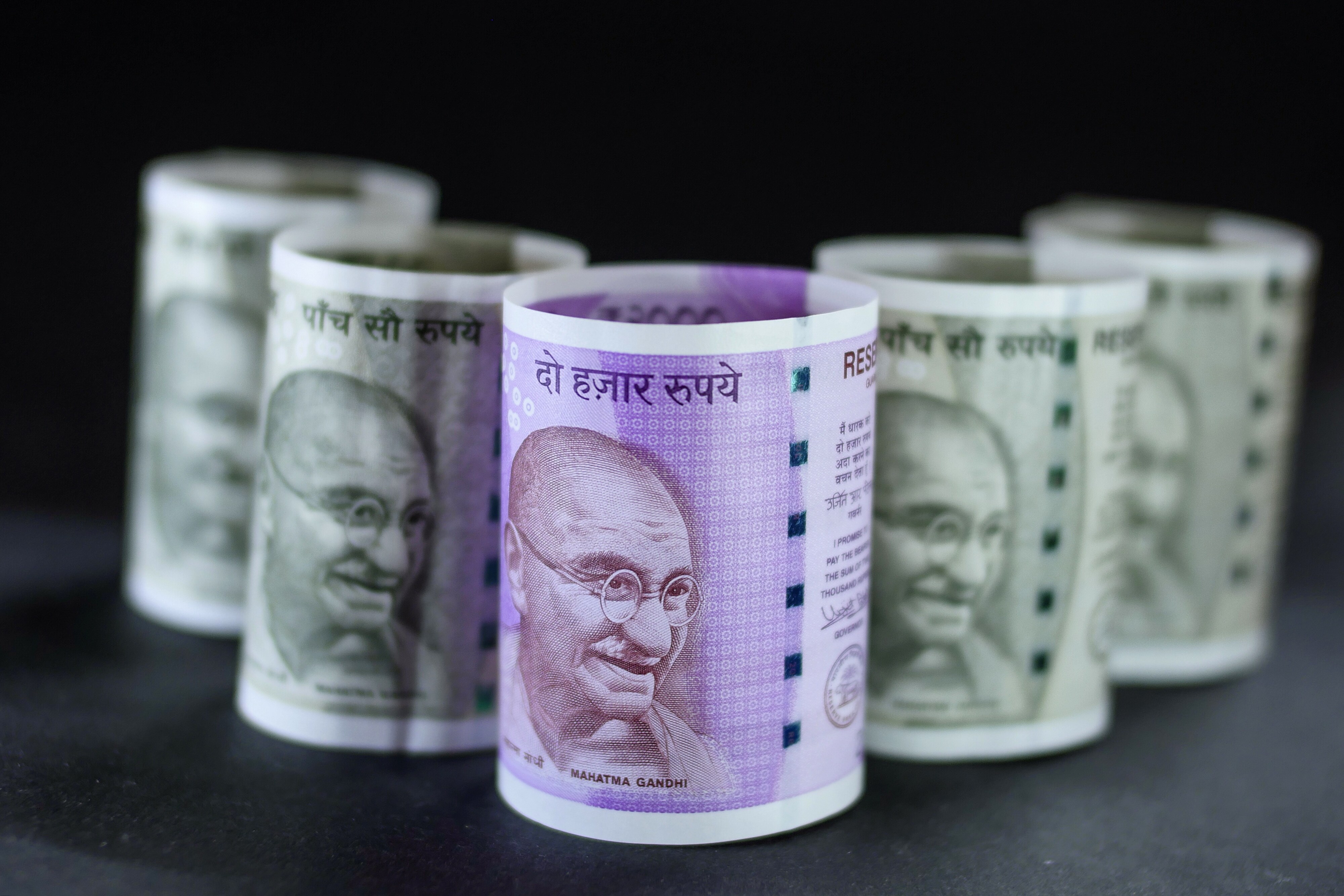
The central board of the Reserve Bank of India on Monday decided to transfer Rs 1.76 lakh crore to the Government of India. This amount includes a one-time transfer of Rs 52,637 crore from RBI's contingency reserves, following the recommendations of the Bimal Jalan committee.
With the decision made, the question now being asked is how this transfer would be executed. The transfer has already taken place as of the end of Monday, according to a person familiar with the matter.
Accounting Entry Transfer
The amount has been transferred as an accounting entry from RBI's general account to the government account, the person quoted above said.
It has been shown as a debit in RBI's general account and a credit in the government's account with the central bank, the person said. There has been no sale of assets—either domestic government bonds or foreign assets—to generate the funds, according to this person.
The central board's statement indicated as much. “The central board decided to maintain the realised equity level at 5.5 percent of balance sheet and the resultant excess risk provisions of Rs 52,637 crore were written back,” the statement read.
An RBI spokesperson declined to comment on the matter.
Printing More Currency?
If the RBI is not selling any bonds to generate cash that it can then transfer to the government, then how is it balancing its books?
To understand this, it is important to look at the liability and asset sides of the RBI's balance sheet.
The reserves, including the contingency reserves, sit on the liabilities side of the RBI's balance sheet. If it has written back some of these reserves, the liabilities fall. However, the RBI has to ensure that its assets and liabilities are balanced, which can be achieved by either reducing assets or increasing liabilities.
To do this, it has three options:
- It can sell domestic assets in the form of government bonds.
- It can sell some of its foreign currency assets.
- It can create additional liabilities via the issue of fresh currency in circulation.
If the RBI is not selling government bonds or foreign exchange reserves—both of which will be disruptive—it will eventually create fresh liquidity.
Former RBI Deputy Governor R Gandhi explained that the central bank's balance sheet has two sets of liabilities—monetary and non-monetary. Reserves are part of the non-monetary liabilities. “So now that it has been decided to transfer some part of those reserves to the government, that amount will now become part of the monetary liabilities, which is typically currency in circulation,” Gandhi said. “To that extent, additional money will be created.”
HR Khan, who also served at the RBI as deputy governor, said there would be no need to sell bonds to generate the funds needed for the transfer to the government. “It would be an adjustment within the liability side of the balance sheet. “From provisions and other liabilities, the amount moves to the government account within the RBI.”
Eventually as the money is spent, more currency is created.
Implications Of More Currency Creation
Since more currency is being created, will the impact of this be inflationary?
The additional flow will mean additional liquidity once the government spends the money, said Gandhi. “In an indirect way, the flow would eventually come to the banking system in the form of liquidity,” he said, adding that since inflation remains in control and the Monetary Policy Committee is in ‘accommodative' mode, the additional liquidity is consistent with the prevailing economic scenario.
As far as any inflationary impact is concerned, you have to see where the money goes, said Indranil Sen Gupta, economist at Bank of America-Merrill Lynch.
Rahul Bajoria, chief economist (India) at Barclays, said the total amount of Rs 1.76 lakh crore being transferred could have a 10-15-basis-point on inflation theoretically. “But given the current state of aggregate demand and the starting point of the fiscal deficit, we don't think it will have a significant inflationary impact,” Bajoria said.
Watch: R Gandhi Explains The Mechanics Of RBI's Surplus Transfer

-
Navigating Energy Crossroads: S Jaishankar's Call For Diversified Supply Chains At G20 Ministerial Meeting

As geopolitical fault lines continue to test maritime trade routes and commodity flows, Jaishankar's message remains pertinent: true economic resilience requires open markets, protected transit lines, and a genuine commitment to multilateral cooperation rather than coercion.
-
Indians Are Travelling, But Not Every Journey Is A Holiday | The Week In Whys
Pilgrims, patients and working women are the real travellers, and the system hasn't quite caught up with them.
-
Getting To Work Costs Women More | The Reason Why
It is not just about women paying more than men. It is about women paying much more in cities than in villages.
-
AI Bias In Investing Cannot Be Eliminated, But It Can Be Governed
Framing is a particularly important example as identical financial information presented in terms of gains rather than losses can lead an LLM to reach a different assessment.
-
Joining The Dots | Dark Skies, Steady Diya: Why Hope Holds This Diwali
With war, a weak rupee and foreign outflows weighing on sentiment, policymakers at the NDTV World Summit and market veterans at NDTV Profit Ignite: Diwali Edition offered the same advice: stay invested and filter out the noise.
-
The Curious Case of Equitas Small Finance Bank And A CEO Who Quit For Stock
PN Vasudevan believes persistent investor concerns over a perceived conflict of interest had become a governance overhang on Equitas Small Finance Bank's stock, even as the lender improved profitability and asset quality.
-
Talking Points This Week: AI Cash Burn, A Tiger Comeback And An India That Still Finds Its Own Path
India is not immune to higher oil or tighter global liquidity, yet its earnings base is broader, its domestic policy levers are still available.
-
Foreign Investors Own Half Of HDFC Bank and ICICI Bank. An LTCG Cut Could Matter Most Here
Foreign portfolio investors have US$115 billion parked in HDFC Bank, ICICI Bank. If the government cuts long-term capital gains tax, Jefferies says returning foreign money could land here first.
-
'Never Seen This Level Of Negativity': Sandeep Tandon Says The Next Rally May Be Closer Than You Think
Veteran investor Sandeep Tandon says foreign selling is easing, large-caps are due a comeback and mid-caps are crowded, while he turns positive on gold, power and pharma this Diwali.
-
Indians Stay With Family, Not In Hotels | The Reason Why
India still lacks enough clean, reliable and affordable hotels for budget-conscious travellers.










