RBI Says No Machines Being Used In Its Offices For Counting Scrapped Notes
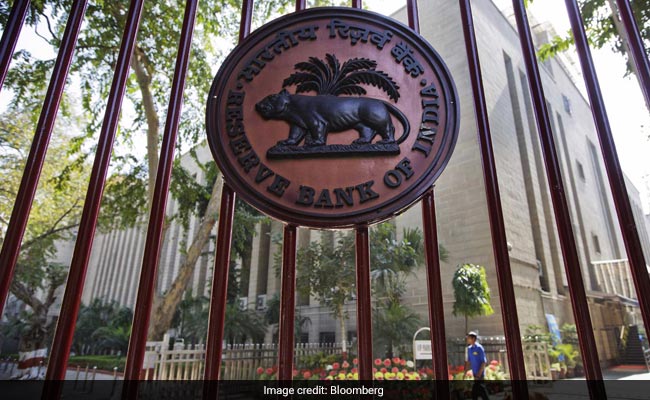
New Delhi: The Reserve Bank of India (RBI) has said counting machines are "not being used" for tallying the total number of demonetised notes of Rs 500 and Rs 1,000 in any of its offices, according to an RTI reply. The central bank also refused to give the total number of personnel deployed for counting of the scrapped notes, saying compiling the information would "disproportionately divert" its resources. In its annual report for 2016-17 released on August 30, the RBI had said Rs 15.28 lakh crore, or 99 per cent of the demonetised Rs 500 and Rs 1,000 notes, have returned to the banking system.
The central bank in the annual report, which was for the year ended June 30, 2017, said that only Rs 16,050 crore out of the Rs 15.44 lakh crore in the old high denomination notes have not returned.
As on November 8, 2016, when the note ban was announced by Prime Minister Narendra Modi, there were 1,716.5 crore pieces of Rs 500 and 685.8 crore pieces of Rs 1,000 notes in circulation, totalling Rs 15.44 lakh crore, it had said.
"Counting machines are not being used for the purpose in any offices of Reserve Bank of India," the RBI said in the RTI reply dated August 10.
The central bank also said no counting machines were taken on lease to reconcile the total figure of the junked notes.
It was asked to give details about machines being used for counting the Rs 500 and Rs 1,000 notes.
The central bank also denied sharing information on the total number of personnel deployed for counting of the old notes.
"Compiling the information would disproportionately divert the resources, the information sought cannot be furnished as per Section 7 (9) of RTI Act, 2005," the RBI said in its reply to the RTI query filed by a correspondent of news agency Press Trust of India.
The Section says that information shall ordinarily be provided in the form in which it is sought unless it would disproportionately divert the resources of the public authority or would be detrimental to the safety or preservation of the record in question.
To a query seeking the dates of beginning of the counting of the demonetised notes, it said "the processing of notes is a continuous activity".
The RBI did not give any specific reply when asked about the last date of counting of the demonetised notes.
"Subject to future corrections based on verification process when completed, the estimated value of specified bank notes received as on June 30, 2017, is Rs 15.28 trillion (lakh crore)," the central bank had said in its annual report.
While the counterfeit currency notes made up for a minuscule number, the RBI post-demonetisation spent Rs 7,965 crore on printing new Rs 500 and Rs 2,000 and other denomination notes, more than double the Rs 3,421 crore spent in the previous year, it said.
Finance Minister Arun Jaitley had said demonetisation, which had slowed down economic activity and put common man at much inconvenience, was aimed at flushing out black money, eliminating fake currency, striking at the root of terror financing, converting non-formal economy into formal one to expand tax base and employment and giving a big boost to digitisation of payments to make India a less-cash economy.

-
Midterm Rally Lasted A Day. The Hard Reality Of A Divided US May Last Two Years | Opinion

Between a contested AI boom, a debt ceiling that arrives in 2027 and a president with every incentive to act alone, the next two years may prove more volatile than the first day's rally suggests.
-
Blue Wave Will Derail the AI Trade but Won't Dismantle the AI Era | Unhedged Position
The Democrats' sweep of the US Congress will see politics collide with economic forces both over the long and short term.
-
It's Time To Take The GST Council's Bet On Trust Global
Payment records can prove India's services exports, and clear, proportionate rules can bring foreign digital sellers into the tax net.
-
Opinion | India at 38: From Innovation Overperformer to Innovation Powerhouse
India now has 453 VC-backed deep science startups, 18 of them late-stage, after 117 percent growth since 2020. Laurus Labs, at USD 9.3 billion, is the most valuable deep science company in any middle-income economy outside China.
-
Navigating Energy Crossroads: S Jaishankar's Call For Diversified Supply Chains At G20 Ministerial Meeting
As geopolitical fault lines continue to test maritime trade routes and commodity flows, Jaishankar's message remains pertinent: true economic resilience requires open markets, protected transit lines, and a genuine commitment to multilateral cooperation rather than coercion.
-
Indians Are Travelling, But Not Every Journey Is A Holiday | The Week In Whys
Pilgrims, patients and working women are the real travellers, and the system hasn't quite caught up with them.
-
Getting To Work Costs Women More | The Reason Why
It is not just about women paying more than men. It is about women paying much more in cities than in villages.
-
AI Bias In Investing Cannot Be Eliminated, But It Can Be Governed
Framing is a particularly important example as identical financial information presented in terms of gains rather than losses can lead an LLM to reach a different assessment.
-
Joining The Dots | Dark Skies, Steady Diya: Why Hope Holds This Diwali
With war, a weak rupee and foreign outflows weighing on sentiment, policymakers at the NDTV World Summit and market veterans at NDTV Profit Ignite: Diwali Edition offered the same advice: stay invested and filter out the noise.









