RBI Rate Cut Unlikely As Dollar, Crude Rates Rise: Assocham
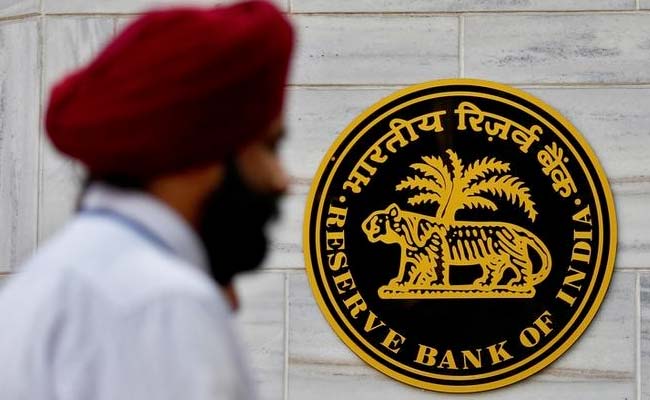
New Delhi: The Reserve Bank of India is unlikely to cut interest rates despite the India Inc's wish, given continuous pressure on the rupee and other global factors impacting it, industry lobby Assocham said on Sunday.
"The prospects for cut in the policy interest rates by the Reserve Bank of India (RBI) may be adversely affected by continuous pressure on the rupee against the dollar, firming of the US interest rates along with the hardening of the crude oil prices," a statement by the industry association said.
The Associated Chambers of Commerce and Industry of India issued the statement here citing its study on the unfolding macro-economic scenario.
"It is true that there is an ample liquidity in the banking system following demonetisation and lowering of inflation both at the WPI (wholesale price index) and CPI (consumer price) levels, but then this cannot be taken as a normal situation," it said.
"Once the scrapped Rs 500 and Rs 1,000 notes are replaced and fresh currency is injected back into the system fully, the ball game would change," it adeded.
"Besides, there are certain commodities like sugar and wheat which are witnessing firming of prices."
Assocham said the biggest risks were emanating from the sharp strengthening of the US dollar, raking in international money back into the American economy, as seen in the huge outflows, from emerging markets putting pressure on their currencies.
"While India may get consolation from the fact that we are less affected, the fact is we are amongst the largest crude oil importers in the world and net importing country."
"So, the dollar strengthening has a direct and immediate impact on the country's overall balance of payment position and would lead to inflation in the medium term," the statement added.
The US Federal Reserve on Wednesday increased its key interest rate by 25 basis points in the first rate hike in 2016 and just the second in a decade.
It raised rates by 0.25 percentage points to a range of 0.50 per cent and 0.75 per cent.
"We are slowly moving away from a highly beneficial position of low crude oil prices and a stable and strong rupee which made the landed cost of energy quite cheap," Assocham President Sunil Kanoria said in the statement.
"This has helped the government finances as also benefited the consumers," he said.
"Now, we are getting into the reverse position where crude oil is firming up and rupee is becoming weaker. Thus, it would be a double whammy of increased import bill in dollar terms and on top of it, higher landed cost on account of weaker rupee," he added.
The industry association also said the play-out of the November 8 demonetisation measure remains to be seen in terms of impact on the Gross Domestic Product (GDP), while uncertainty over implementation of the Goods and Services Tax (GST) has increased.
"Thus, however much we in the industry might like to see lowering of interest rates, the macro picture may make it a difficult proposition", it said.
In a surprise move earlier in December, the RBI kept its key lending rate unchanged, citing global and local uncertainties.
The RBI's Monetary Policy Committee (MPC), during its second bi-monthly monetary policy review -- the fifth of the fiscal -- kept the repurchase rate, or the short-term lending rate it charges on borrowings by commercial banks, unchanged at 6.25 per cent.
According to the panel, its decision to keep the key lending rates unchanged was taken after considering various global and local factors, such as a likely hike in the US interest rates.
Commenting on the move, Kanoria said, "A cut in interest rate would not have made much of difference to the credit offtake in the midst of the industry being over-leveraged and the consumer demand remaining tepid because of scrapping of high-value currency notes."
(This story has not been edited by NDTV staff and is auto-generated from a syndicated feed.)

-
Opinion | India at 38: From Innovation Overperformer to Innovation Powerhouse

India now has 453 VC-backed deep science startups, 18 of them late-stage, after 117 percent growth since 2020. Laurus Labs, at USD 9.3 billion, is the most valuable deep science company in any middle-income economy outside China.
-
Navigating Energy Crossroads: S Jaishankar's Call For Diversified Supply Chains At G20 Ministerial Meeting
As geopolitical fault lines continue to test maritime trade routes and commodity flows, Jaishankar's message remains pertinent: true economic resilience requires open markets, protected transit lines, and a genuine commitment to multilateral cooperation rather than coercion.
-
Indians Are Travelling, But Not Every Journey Is A Holiday | The Week In Whys
Pilgrims, patients and working women are the real travellers, and the system hasn't quite caught up with them.
-
Getting To Work Costs Women More | The Reason Why
It is not just about women paying more than men. It is about women paying much more in cities than in villages.
-
AI Bias In Investing Cannot Be Eliminated, But It Can Be Governed
Framing is a particularly important example as identical financial information presented in terms of gains rather than losses can lead an LLM to reach a different assessment.
-
Joining The Dots | Dark Skies, Steady Diya: Why Hope Holds This Diwali
With war, a weak rupee and foreign outflows weighing on sentiment, policymakers at the NDTV World Summit and market veterans at NDTV Profit Ignite: Diwali Edition offered the same advice: stay invested and filter out the noise.
-
The Curious Case of Equitas Small Finance Bank And A CEO Who Quit For Stock
PN Vasudevan believes persistent investor concerns over a perceived conflict of interest had become a governance overhang on Equitas Small Finance Bank's stock, even as the lender improved profitability and asset quality.
-
Talking Points This Week: AI Cash Burn, A Tiger Comeback And An India That Still Finds Its Own Path
India is not immune to higher oil or tighter global liquidity, yet its earnings base is broader, its domestic policy levers are still available.
-
Foreign Investors Own Half Of HDFC Bank and ICICI Bank. An LTCG Cut Could Matter Most Here
Foreign portfolio investors have US$115 billion parked in HDFC Bank, ICICI Bank. If the government cuts long-term capital gains tax, Jefferies says returning foreign money could land here first.










