RBI To Maintain Status Quo On Rate Cuts Amid Optimistic Growth In March Quarter: Report
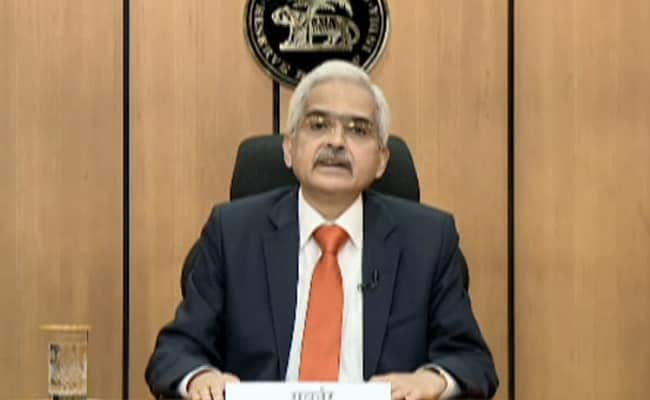
The Reserve Bank of India (RBI) Governor Shaktikanata Das-led Monetary Policy Committee (MPC) began its three-day deliberations on Wednesday, June 2, as economists and rating agencies expect the maintenance of status quo on benchmark rates, amid the severity of the second wave of the COVID-19 pandemic. According to credit rating agency Brickwork Ratings, the central bank's rate-setting committee is likely to maintain the status quo on lending rates in view of optimistic growth in the March quarter. (Also Read: Reserve Bank Of India Expected To Keep Rates Steady, May Take Take Liquidity Measures )
Expectations from RBI Monetary Policy Committee
Dr M Govinda Rao, Chief Economic Advisor of Brickwork Ratings said that the Reserve Bank is likely to continue with G-sap auctions in order to maintain the yields on government securities in check. He expects that the inflation rate may remain close to the upper bound target of six per cent in the near term. The central bank's committee may continue to pause on the interest rates by maintaining the accommodative stance to support growth as long as inflation remains within the target range of the monetary policy framework, he explained.
''The better-than-expected GDP numbers provide much-needed comfort to the MPC on the growth outlook. With the imposition of partial lockdown-like restrictions to contain the virus spread in several parts of the country, the downside risk on growth recovery has intensified....Considering the risk of inflation emanating from the rising commodity prices and input costs, Brickwork Rating expects the RBI MPC to adopt a cautious approach and hold the repo rate at four per cent,'' said Dr Rao.
Economic Growth Outlook
- According to the credit rating agency, the Reserve Bank is unlikely to undertake the heavy lifting that it did last year by expanding liquidity, for the fear of other adverse macroeconomic consequences.
- The estimates of the gross domestic product (GDP) released by the government were more optimistic than what the market had expected. In the financial year 2020-21, the economy contracted by 7.3 per cent, and the agriculture sector witnessed a growth of 3.6 per cent, while the services and industry sectors contracted by 8.4 per cent and seven per cent, respectively.
- The economic growth of 1.6 per cent recorded in the January-March quarter of the financial year 2020-21 brings optimism on the recovery front, however, the growth in the fourth quarter was largely due to low base effect. During the March quarter, all major sectors registered growth, including the manufacturing and construction sectors that picked up a faster pace in the quarter.
Inflation Rates
Under the current situation, maintaining retail inflation at four per cent with a margin of two per cent on either side may pose challenges, according to Brickwork Ratings. The central bank will have to be vigilant as the current ease in retail inflation is driven mostly due to a favourable base and weaker demand.
The Reserve Bank tracks the retail inflation - or the rate of increase in consumer prices as determined by the consumer price index (CPI). Meanwhile, the RBI in its bi-monthly monetary policy review in April 2021 targeted the retail inflation at 5.2 per cent in the first half of the current fiscal 2021-22, and mandated to keep it within the range of two per cent - six per cent band with four per cent as a medium-term target.
In April, retail inflation eased to a three-month low of 4.29 per cent on the account of easing of food prices such as vegetables and cereals, according to government data.

-
India Exports Capital. Why Not Export Trusteeship?

The big question, then, is whether India can build an institution that global borrowers, investors, banks, and lawyers can trust, even without an Indian connection.
-
France's Economy & Politics Are In Crisis | The Reason Why
Let's look at how the French economy and politics evolved under Nicolas Sarkozy, Franois Hollande and Emmanuel Macron.
-
You May Inherit The Business. You Must Earn Its Credibility.
Succession tests the founder's ability to share authority as much as it tests the next generation's readiness to assume it.
-
Signing Deals Is One Thing; Making Them Work Is Another | The Week In Whys
Sometimes, things don't turn out as planned. Indian companies have lost some bids to rivals, some projects won't produce until 2030.
-
FOMC Wall, PERM Suspension, Hospital Stocks | Talking Points This Week
A PERM suspension would directly affect green-card sponsorship rather than H-1B visas, so the near-term earnings impact could remain relatively limited. The key question is whether this marks a new phase in US scrutiny of Indian IT.
-
Everything, Everywhere, All At Once: Dalal Street's Week To Forget | Joining The Dots
Visa curbs, a Starlink spat and cancer drug caps: what connects this week's shocks for Indian markets
-
India Is Going Abroad For Critical Minerals. But It May Take Years To Pay Off | The Reason Why
Although India's steps are in the right direction, they remain modest compared with India's growing dependence.
-
When Everyone Has AI, What Gives You An Edge?
India's young workforce is entering an uncertain world of work where powerful AI tools are becoming widely accessible. The advantage will belong to those who combine deep expertise with digital fluency, and the distinctly human capabilities that technology cannot manufacture.
-
Wrong Labels, High Pesticide Residues Holding Back Agri Exports | The Reason Why
India needs stronger domestic food-safety and labelling standards, with best practices becoming part of everyday business for farmers, traders and food companies.
-
India Is Easy To Enter, Harder To Attract | The Week In Whys
The question is no longer just whether India can attract companies and capital. It is how much value they create here, how deeply they invest, and whether India remains relatively attractive when they have plenty of other options.










