RBI Lowers Merchant Discount Rate For Small Debit Card Transactions
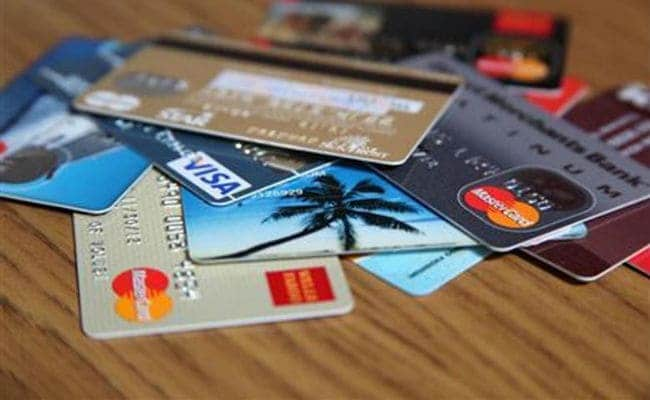
Mumbai: To encourage digital transactions, the Reserve Bank today decided to slash MDR charges on payments made through debit cards and do away with levies on small transactions through mobile phones and Internet from January 1 to March 31.
The Merchant Discount Rate (MDR) for debit card payments, including for payments made to government, will be capped at 0.25 per cent for transactions up to Rs 1,000 and 0.5 per cent between Rs 1,000-2,000, RBI said in a notification.
The existing MDR cap is 0.75 per cent for transactions up to Rs 2,000 and 1 per cent for over Rs 2,000. However, there is no RBI cap on MDR on credit card payments.
RBI said reduced charges will "come into effect from January 1, 2017 and shall be applicable till March 31, 2017.
In the intervening period, Reserve Bank will review the framework for charges for electronic payment transactions, in consultation with the stakeholders. Similarly, it has asked banks and prepaid payment
instrument issuers not to levy any charges for transactions up to Rs 1,000 from January 1 to March 31. This would cover transactions through Immediate Payment Service (IMPS), USSD-based *99# and Unified Payment Interface (UPI) systems.
The relaxations, RBI said are in tandem with initiatives taken by the government to "incentivise greater adoption of digital payments by large sections of the society."
Post demonetisation of old Rs 500 and Rs 1000 banknotes, several banks including SBI, ICICI Bank, Axis Bank and Yes Bank have waived MDR charges on debit card transactions till December 31.
Merchant discount rate is the rate charged to a merchant by a bank for providing debit and credit card services. The rate is determined based on factors such as volume, average ticket price, risk and industry.
As of October 2015, there were 61.5 crore debit card users and 2.3 crore credit card holders in the country.
Government has announced a slew of measures, both for customers and merchants, to encourage digital payments in the country ever since it sucked out a large portion of cash circulating in the economy.
Steps have been taken to make petrol, railway tickets and insurance policies of PSU companies cheaper if bought through debit/credit cards or other digital modes.
Besides, a lucky draw cashback reward scheme for consumers and merchants will start from the Christmas till mid of April for Rs 50-3,000 transactions through digital means.
(Except for the headline, this story has not been edited by NDTV staff and is published from a syndicated feed.)

-
Where You Live Shapes How You Get To Work | The Reason Why

Two-wheelers are the most popular way to get to work in India, accounting for nearly 43% of workplace commutes.
-
High US Salaries, No Green Card Certainty: The Financial Calculation Facing Indian H-1B Families
The suspension of PERM processing at eight technology employers does not cancel existing H-1B visas. What it does is force a question many Indian families have been avoiding: is the US salary worth tying your career and family plans to one employer?
-
Unhedged Position: Can India See An Indonesia-Style Time Correction?
The Nifty is trading below levels it first clocked in 2024. Is there, then, as I have suggested in the headline, potential that the current time correction drags on painfully for the next three-five, even ten years?
-
Navigating Friction And Energy Realities: An Analysis Of Marco Rubio's October Visit To India
Occurring at a critical juncture marked by stalled trade negotiations and escalating geopolitical pressures over global energy supplies, the visit offers a profound window into modern US-India relations.
-
India Exports Capital. Why Not Export Trusteeship?
The big question, then, is whether India can build an institution that global borrowers, investors, banks, and lawyers can trust, even without an Indian connection.
-
France's Economy & Politics Are In Crisis | The Reason Why
Let's look at how the French economy and politics evolved under Nicolas Sarkozy, Franois Hollande and Emmanuel Macron.
-
You May Inherit The Business. You Must Earn Its Credibility.
Succession tests the founder's ability to share authority as much as it tests the next generation's readiness to assume it.
-
Signing Deals Is One Thing; Making Them Work Is Another | The Week In Whys
Sometimes, things don't turn out as planned. Indian companies have lost some bids to rivals, some projects won't produce until 2030.
-
FOMC Wall, PERM Suspension, Hospital Stocks | Talking Points This Week
A PERM suspension would directly affect green-card sponsorship rather than H-1B visas, so the near-term earnings impact could remain relatively limited. The key question is whether this marks a new phase in US scrutiny of Indian IT.
-
Everything, Everywhere, All At Once: Dalal Street's Week To Forget | Joining The Dots
Visa curbs, a Starlink spat and cancer drug caps: what connects this week's shocks for Indian markets









