RBI Kicks Off Special Liquidity Scheme For NBFCs
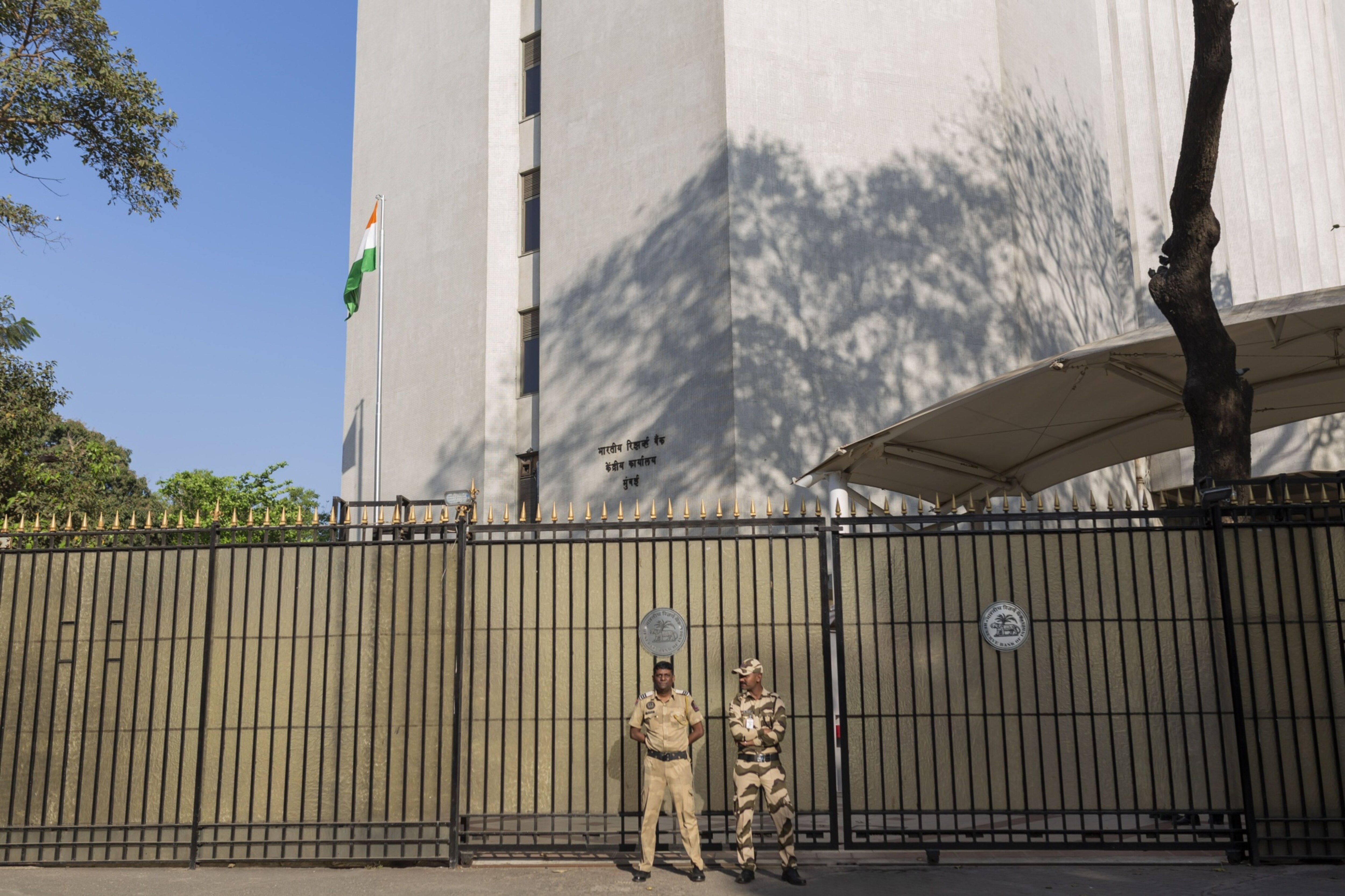
The Reserve Bank of India issued guidelines for a special liquidity facility to support the country's non-bank lenders.
The facility, under which a special purpose vehicle will purchase short-term debt securities of non-bank finance companies and housing finance companies, was announced by the government in May.
According to a notification issued by the central bank on Wednesday:
- SBI Capital Markets has set up a special purpose vehicle to manage the scheme.
- The special purpose vehicle will purchase the short-term papers from eligible NBFCs/HFCs.
- The special purpose vehicle will buy investment grade commercial papers and non-convertible debentures with a residual maturity of not more than three months. This can be primary issuance or secondary market purchases.
- NBFCs/HFCs can utilise the proceeds under this scheme solely for the purpose of extinguishing existing liabilities.
- Purchases will be made only till September 2020.
In May, the government had said the special purpose vehicle will issue securities, guaranteed by the Government of India. These securities would be purchased by the RBI. The guarantee amount was capped at Rs 30,000 crore.
The notification does not give details on the purchase by the RBI and how they would be classified within the central bank's balance sheet.
The RBI has laid down strict criteria for NBFCs and HFCs tapping the facility.
- Only investment grade NBFCs, including microfinance institutions, and HFCs will be eligible.
- The capital adequacy ratio of these NBFCs/HFCs should not be below the regulatory minimum.
- Their net NPA should not be more than 6% as on March 31, 2019.
- They should have made net profit in at least one of the last two preceding financial years.
- They should not have been reported under the SMA-1 or SMA-2 category by any bank during last one year prior to August 2018. SMA-1 accounts are those that are overdue by 30 days, and SMA-2 are those overdue by more than 30 days.
- They should comply with the requirement of the SPV for an appropriate level of collateral from the entity, which, however, would be optional and to be decided by the SPV.
The government will provide an unconditional and irrevocable guarantee to the special securities issued by the SPV, it said in a separate statement on Wednesday.
In a separate set of FAQs, SBI Caps said that the yield on securities that the SPV invests in will be decided by the investment committee. The SPV will purchase papers either from the primary or secondary debt markets.
Responding to BloombergQuint's queries, SBI Caps said the securities should be standard in the sellers' books as on date of sale, when there shouldn't be any default.
While the scheme will purchase debt papers with a maximum maturity of 90 days issued till September-end, these timelines may be modified by the government, it said.
How Far Will It Help?
When the government announced a nationwide lockdown in late March, bond markets began drying up for non-AAA rated non-bank lenders. Concerns about asset quality also made banks wary lending to NBFCs in this environment.
Since then markets have approved marginally. Still, some non-bank lenders may need regulatory support to meet repayments.
According to data from ICRA, Rs 1.2 lakh crore worth of commercial papers issued by NBFCs alone are expected to mature between June 2020 and June 2021. Of this, Rs 65,000 crore will come up for redemption between July and September-end this year.
Some of the entities with repayments coming up could benefit from the special liquidity facility. As of May 2020, AA-rated NBFCs had cash and sanctioned funding lines up to 12% of their assets under management. A-rated NBFCs had 20% and BBB-rated entities had 15% of AUM in the form of cash and sanctioned funding lines.
“The logic for the scheme is tied to the loan moratorium which ends in August,” Karthik Srinivasan, group head of financial sector ratings, ICRA Ratings, told BloombergQuint. “If the assets-side collections for NBFCs remains weak while liabilities are due for repayment during the coming months, this measure will allow lenders to push back or rollover the debt for three months.”
It will be helpful for entities that cannot raise funds from the CP (commercial paper) or bond markets, depending on which entities can get funding from the SPV and the rates charged on the debt papers, he said.
Raman Agarwal, co-chairman of Finance Industry Development Council, said since only three-month securities can be purchased by the SPV, there could be less demand from the sector as a whole, and only stressed companies would apply for funds.
The whole objective of this SPV is exclusively for NBFCs to pay their liabilities and it is not for further business. So there is still a requirement to ensure there is sufficient liquidity in the system for further on-lending whereas the SPV addresses the debt refinancing issue which is a smaller problem for the sector.Raman Agarwal, Co-Chairman, FIDC
According to Srinath Sridharan, a former NBFC executive and industry expert, the SPV model is an excellent idea and might work very well for lending institutions as well as for those banks and mutual funds who have an exposure to NBFC debt papers which are due for redemptions shortly.
However, there are a few aspects that remain unclear, he said.
“First, will the scheme end up providing cheaper, easier funds even to those NBFCs/HFCs who don't need emergency funds and have sufficient liquidity? What would be the measure of that in assessing the eligibility ? Secondly, will be there exposure limits for groups,” Sridharan asked.
This story has been updated based on a revised FAQ put up by SBI Caps which does not specify a limit for investment in a single NBFC/HFC by the trust.

-
Opinion | India at 38: From Innovation Overperformer to Innovation Powerhouse

India now has 453 VC-backed deep science startups, 18 of them late-stage, after 117 percent growth since 2020. Laurus Labs, at USD 9.3 billion, is the most valuable deep science company in any middle-income economy outside China.
-
Navigating Energy Crossroads: S Jaishankar's Call For Diversified Supply Chains At G20 Ministerial Meeting
As geopolitical fault lines continue to test maritime trade routes and commodity flows, Jaishankar's message remains pertinent: true economic resilience requires open markets, protected transit lines, and a genuine commitment to multilateral cooperation rather than coercion.
-
Indians Are Travelling, But Not Every Journey Is A Holiday | The Week In Whys
Pilgrims, patients and working women are the real travellers, and the system hasn't quite caught up with them.
-
Getting To Work Costs Women More | The Reason Why
It is not just about women paying more than men. It is about women paying much more in cities than in villages.
-
AI Bias In Investing Cannot Be Eliminated, But It Can Be Governed
Framing is a particularly important example as identical financial information presented in terms of gains rather than losses can lead an LLM to reach a different assessment.
-
Joining The Dots | Dark Skies, Steady Diya: Why Hope Holds This Diwali
With war, a weak rupee and foreign outflows weighing on sentiment, policymakers at the NDTV World Summit and market veterans at NDTV Profit Ignite: Diwali Edition offered the same advice: stay invested and filter out the noise.
-
The Curious Case of Equitas Small Finance Bank And A CEO Who Quit For Stock
PN Vasudevan believes persistent investor concerns over a perceived conflict of interest had become a governance overhang on Equitas Small Finance Bank's stock, even as the lender improved profitability and asset quality.
-
Talking Points This Week: AI Cash Burn, A Tiger Comeback And An India That Still Finds Its Own Path
India is not immune to higher oil or tighter global liquidity, yet its earnings base is broader, its domestic policy levers are still available.
-
Foreign Investors Own Half Of HDFC Bank and ICICI Bank. An LTCG Cut Could Matter Most Here
Foreign portfolio investors have US$115 billion parked in HDFC Bank, ICICI Bank. If the government cuts long-term capital gains tax, Jefferies says returning foreign money could land here first.










