RBI Keeps Repo Rate Steady But Cuts Inflation Projection
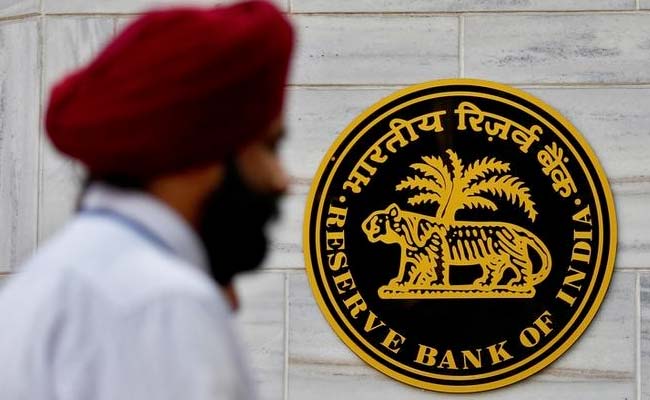
The Reserve Bank of India (RBI) kept its repo or key interest rate unchanged at 6.25 per cent on Wednesday, as widely expected, while lowering projections for inflation and striking a less hawkish tone in a policy statement. In a Reuters poll of economists, 56 of the 60 analysts expected the RBI to maintain status quo on repo rate. The reverse repo rate was also left unchanged at 6 per cent. At the same time, the RBI cut banks' statutory liquidity ratio or SLR by 50 basis points to 20 per cent of total deposits starting on June 24.
Statutory liquidity ratio (SLR) is a mandated requirement for commercial banks under which the lenders are required to maintain in the form of government approved securities before extending credit to customers. Significantly, however, the RBI cut its projection for consumer inflation to 2-3.5 per cent in April to September, down from 4.5 per cent earlier, and to 3.5-4.5 per cent in October to March, down from 5 per cent. The change in forecast comes after consumer prices rose in April at their lowest annual rate in at least five years, slowing to 2.99 per cent from 3.89 per cent in March, well below the RBI's target of 4.0 per cent.
The RBI said the risks to its inflation were "evenly balanced", a tweak in its language from its statement in April when it cited "upside risks" to inflation. "The decision of the MPC is consistent with a neutral stance of monetary policy in consonance with the objective of achieving the medium-term target for consumer price index (CPI) inflation of 4 per cent within a band of +/- 2 per cent, while supporting growth," the RBI said in a statement.
The vote by the central bank's monetary policy committee was 5-1, the first split in the five meetings that have taken place since the MPC was formed last September. The statement did not say how the dissenting member, Ravindra H Dholakia, a professor, voted.
The RBI last changed the policy rate with a 25 basis points cut in October, though it surprised analysts with a 25 basis point hike in its reverse repo rate in April.
Analysts say several factors point to more benign inflation in the future, including the likelihood of above-average monsoon rains, falling commodity prices, and a 5 per cent rally in the rupee vs the dollar that has made imports cheaper.
The RBI said it wanted to see more evidence that the easing of inflation seen in April would endure, citing, for example, sticky core inflation due to rising rural wage growth and strong consumption demand. The implementation of the GST is not expected to have a material impact on overall inflation, the central bank added. Inflation data for May will be released next week.
Cautioning about the upside risks to inflation, the RBI said, "At the current juncture, global political and financial risks materialising into imported inflation and the disbursement of allowances under the 7th central pay commission's award are upside risks."
The RBI also cautioned that "the risk of fiscal slippages, which, by and large, can entail inflationary spillovers, has risen with the announcements of large farm loan waivers".
India's economy grew at a slower-than-expected rate of 6.1 per cent in the January-March quarter - its slowest pace in more than two years and down from 7 per cent in the previous quarter, although analysts expect growth to accelerate this year.
The RBI has adjusted its projection for growth value-added (GVA), a measure of growth it prefers, to 7.3 per cent in the year to March 2018, down from its previous projection of 7.4 per cent, with "risks evenly balanced".
(With inputs from Reuters)

-
High US Salaries, No Green Card Certainty: The Financial Calculation Facing Indian H-1B Families

The suspension of PERM processing at eight technology employers does not cancel existing H-1B visas. What it does is force a question many Indian families have been avoiding: is the US salary worth tying your career and family plans to one employer?
-
Swiggy vs Eternal: Food Delivery's Two Rivals Are No Longer In The Same Race
Eternal is building a private AI assistant, dark.ai. Swiggy is still working out how to make Instamart pay, with an operating loss of Rs 895 crore in the July-September quarter while Blinkit stayed profitable.
-
Where You Live Shapes How You Get To Work | The Reason Why
Two-wheelers are the most popular way to get to work in India, accounting for nearly 43% of workplace commutes.
-
Unhedged Position: Can India See An Indonesia-Style Time Correction?
The Nifty is trading below levels it first clocked in 2024. Is there, then, as I have suggested in the headline, potential that the current time correction drags on painfully for the next three-five, even ten years?
-
Navigating Friction And Energy Realities: An Analysis Of Marco Rubio's October Visit To India
Occurring at a critical juncture marked by stalled trade negotiations and escalating geopolitical pressures over global energy supplies, the visit offers a profound window into modern US-India relations.
-
India Exports Capital. Why Not Export Trusteeship?
The big question, then, is whether India can build an institution that global borrowers, investors, banks, and lawyers can trust, even without an Indian connection.
-
France's Economy & Politics Are In Crisis | The Reason Why
Let's look at how the French economy and politics evolved under Nicolas Sarkozy, Franois Hollande and Emmanuel Macron.
-
You May Inherit The Business. You Must Earn Its Credibility.
Succession tests the founder's ability to share authority as much as it tests the next generation's readiness to assume it.
-
Signing Deals Is One Thing; Making Them Work Is Another | The Week In Whys
Sometimes, things don't turn out as planned. Indian companies have lost some bids to rivals, some projects won't produce until 2030.
-
FOMC Wall, PERM Suspension, Hospital Stocks | Talking Points This Week
A PERM suspension would directly affect green-card sponsorship rather than H-1B visas, so the near-term earnings impact could remain relatively limited. The key question is whether this marks a new phase in US scrutiny of Indian IT.









