RBI, Government Tensions To Re-Surface In December 14 Meeting: Report
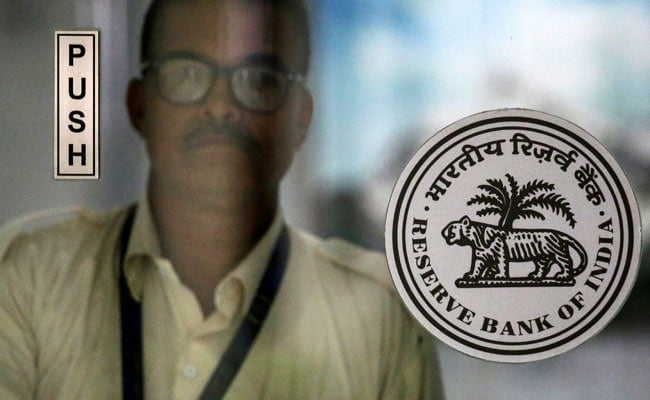
For all the cordiality on show at the end of Reserve Bank of India's last board meeting, tensions could re-surface when it next gathers on December 14 as the government aims to ramp up pressure for changes in the way the central bank operates. A majority of the 18-member board, now stacked with government nominees, intends to press for reduced curbs on lending and governance changes that would give the board more say, according to three sources with direct knowledge of what was said when the board last met on November 19.
Like the government, most board members feel that RBI should be "more transparent and accountable" for its decisions, said one source, who was also aware of discussions held subsequently within the government.
Prior to the November meeting, senior officials in Prime Minister Narendra Modi's administration had cranked up pressure, publicly and privately, on policy matters, raising fears among former central bankers that the RBI was at risk of losing independence.
With a general election due by May, and voters concerned about weak farm incomes and whether enough jobs are being created, PM Modi is keen to stimulate the economy and is looking for the RBI to allow easier lending policies.
"The relationship between the RBI and the government is like a stretched rubber now," said a former top RBI official. "Once stretched the rubber will never return to its original size. The memory of this significant assault on the autonomy of the central bank will last for a long time."
The worsening atmosphere between the government in New Delhi and the central bank in Mumbai fed media speculation earlier this month that RBI Governor Urjit Patel might consider resigning.
In the past, the board has acted as little more than an advisory body, but under the 1934 law that established the central bank it has the ability to possess real teeth and force policy change.
To speed along its transformation, the government has appointed experts from various fields, including accounting, technology and finance to the board.
At its next meeting, it is likely to review how the central bank and the board engage, as well as the functioning of the sub-committees of the board, the sources said.
"The next board will take up the agenda pending from the earlier two meetings," a second source said. "This mainly includes governance at the central bank, the relationship between the board and the RBI and other related issues."
Those other issues could include providing more liquidity support to a weakened non-banking finance sector, functioning of the sub-committees of the central board and easing lending curbs on 11 state-run banks who are under a prompt corrective action plan (PCA) imposed by the RBI.
"RBI governance, PCA and liquidity are our top priorities,” said the first source, adding he expected the RBI to accept the that viewpoint sooner rather than later.
Ex-RBI officials, including a governor and a deputy governor, said that never before has the board tried to interfere in the central bank's regulatory functions.
The Finance Ministry and RBI spokesmen did not have a comment for this story.
"HOSPITAL INFECTION" RISK
Top government officials have pressed the RBI to ease capital rules for banks, provide more liquidity to the shadow banking sector, support lending to small businesses and let the government use more of the RBI's surplus reserves to boost the economy.
At its meeting last week, the RBI's board had decided that a sub-committee will look into the matter of easing curbs for the 11 banks and make recommendations to the board.
That decision had followed on from the October board meeting, which noted an improvement among some banks under the PCA, based on parameters including bad loan recovery, higher deposit growth.
At that time, the RBI had wanted to wait a while longer to see if the improvement was sustained before lifting the curbs, a third source said. But the government believes waiting would invite more risks and expects the RBI to lift curbs on four of the lenders.
"We can't leave a patient in the hospital for a longer period as it faces a risk of catching an infection or spreading infection among other patients," the second source said, adding that the PCA list could not be a static one.
Unhappy about such pressure, late last month RBI Deputy Governor Viral Acharya warned that undermining central bank independence could be "catastrophic".
That triggered a public spat between the two sides and tension in the run-up to the board meeting last month at which the RBI agreed to relax an international capital norm for banks.
The board also entrusted the government and the RBI to set up a committee to decide on a specific method of transferring surplus reserves from the central bank to the government, a thorny matter for both sides.
"The main issue that underlines the rift is that the government feels that there has been inadequate interactions and consultations between the government and the RBI on all these issues," said the third source.

-
Why Amazon And Flipkart Are Struggling To Beat Meesho In India's Smaller Cities

With 274 million users and lowest-cost logistics, Meesho is defending its value commerce crown against giants like Amazon and Flipkart.
-
High US Salaries, No Green Card Certainty: The Financial Calculation Facing Indian H-1B Families
The suspension of PERM processing at eight technology employers does not cancel existing H-1B visas. What it does is force a question many Indian families have been avoiding: is the US salary worth tying your career and family plans to one employer?
-
Swiggy vs Eternal: Food Delivery's Two Rivals Are No Longer In The Same Race
Eternal is building a private AI assistant, dark.ai. Swiggy is still working out how to make Instamart pay, with an operating loss of Rs 895 crore in the July-September quarter while Blinkit stayed profitable.
-
Where You Live Shapes How You Get To Work | The Reason Why
Two-wheelers are the most popular way to get to work in India, accounting for nearly 43% of workplace commutes.
-
Unhedged Position: Can India See An Indonesia-Style Time Correction?
The Nifty is trading below levels it first clocked in 2024. Is there, then, as I have suggested in the headline, potential that the current time correction drags on painfully for the next three-five, even ten years?
-
Navigating Friction And Energy Realities: An Analysis Of Marco Rubio's October Visit To India
Occurring at a critical juncture marked by stalled trade negotiations and escalating geopolitical pressures over global energy supplies, the visit offers a profound window into modern US-India relations.
-
India Exports Capital. Why Not Export Trusteeship?
The big question, then, is whether India can build an institution that global borrowers, investors, banks, and lawyers can trust, even without an Indian connection.
-
France's Economy & Politics Are In Crisis | The Reason Why
Let's look at how the French economy and politics evolved under Nicolas Sarkozy, Franois Hollande and Emmanuel Macron.
-
You May Inherit The Business. You Must Earn Its Credibility.
Succession tests the founder's ability to share authority as much as it tests the next generation's readiness to assume it.
-
Signing Deals Is One Thing; Making Them Work Is Another | The Week In Whys
Sometimes, things don't turn out as planned. Indian companies have lost some bids to rivals, some projects won't produce until 2030.










