RBI Board Meets Today Under New Chief Amid Worries About Autonomy
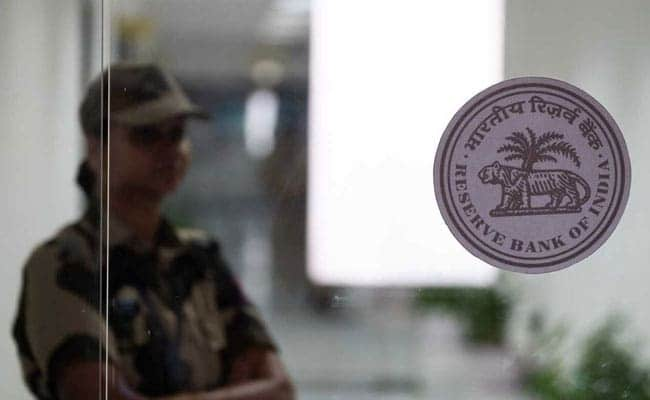
The RBI board will meet on Friday with much of the hostility of the past two months with the government having eased, and new worries emerging about the institution's independence. Prime Minister Narendra Modi has a new ally at the Reserve Bank of India in Governor Shaktikanta Das, who may be more amenable to the government's requests to ease lending restrictions on state-run banks and hand over more of its capital to the state. Das, 61, took office two days after Urjit Patel abruptly resigned as governor on Monday.
The 18-member board, which includes monetary policy makers, finance ministry representatives and industrialists, is expected to discuss a proposal by the government for closer supervision of the central bank. Such a move may erode investor confidence and have a bearing on the credit rating of one of the world's fastest-growing major economies.
Easing lending restrictions on some of the nation's weakest state-run banks will also be discussed. It was originally broached in October by the board then led by Patel. At a meeting in November, the central bank had agreed to form a panel to study its capital structure.
(Also Read: In His Own Tweets: What New RBI Governor Shaktikanta Das Thinks)
No Fireworks
"I don't think there will be any fireworks," Raghbendra Jha, an economics professor at the Australian National University, said, referring to the Patel-era tussle with the government over the institution's autonomy. "Personal frictions between the main actors -- now that doesn't exist."
That view was echoed by Swaminathan Gurumurthy, a nationalist and journalist appointed by the Modi government as an independent board member in August. He backed the new governor's conciliatory approach to the government.
Inside the board, Gurumurthy offered resistance to Patel. Pressure from the government had prompted Viral Acharya, the deputy governor in charge of monetary policy, to caution the government of a market backlash should the central bank's independence be undermined.
"I don't know if the relationship is good or not, but we have to have stakeholders consultation," said Das, who was PM Modi's key lieutenant when he unveiled his controversial plan to invalidate 86 per cent of the currency notes in late 2016.. "The government is not just a stakeholder but also runs the country, economy and manages major policy decisions."
That line of thought found endorsement from Finance Minister Arun Jaitley.
The government having a view that's different from the central bank's is "not a confrontation," Jaitley said on Thursday. "If the government of the day is not able to convey difficulties in the system it will be failing in its duty."
Tight Leash
The central bank has so far kept a tight leash on liquidity, restricted some weak banks from lending and refused to bailout the shadow banking sector. The latter had been at the forefront of new lending in the past three years, which in turn fueled domestic consumption and economic growth.
PM Modi is keen to keep growth going ahead of a national election early next year and as recent data showed the economy's expansion may be under threat. Gross domestic product growth in the three months to September slowed to 7.1 per cent from the 8.2 per cent pace seen in the previous quarter.
The new governor has said supporting growth is very much part of the RBI's mandate, a sharp contrast from his predecessor who stuck to the central bank's inflation-targeting mandate. Das's comments stoked a rally in sovereign bonds, which extended gains for a third day Thursday on speculation the RBI will shift to a neutral policy stance from the current hawkish bias.
"With Das at the helm, we now think the RBI will call a halt to the tightening cycle," Shilan Shah and Mark Williams, economists at Capital Economics, wrote in a note. "We no longer expect a rate increase at the next meeting in February."
While that might provide short term relief to investors, the chief worry remains: how much ground will the RBI cede?

-
A New Samvat Wishlist: Inclusive Prosperity And Human Development

India has strengthened its economic foundations through infrastructure, digital access and enterprise. Its next growth chapter must deepen productivity, create better livelihoods and widen participation in prosperity.
-
Love, Sex Aur Dhokha: The Audacious Plot To Spy On Jensen Huang
A Taipei dinner, a Singapore chip buyer and a suspected Chinese asset: inside the alleged spy operation that got close to NVIDIA's Jensen Huang.
-
Ten Things I Learnt This Samvat
Patience can be a trap. Cheap stocks can stay cheap. Leverage can wipe you out. What did Samvat 2082 teach us? Niraj Shah writes on 10 lessons from the year gone by.
-
Talking Points This Week: Tech Nerves, FII Buying, And A Faraway Banking Shock
The global markets are not shining this Diwali. The exception in the large markets is, India.
-
Midterm Rally Lasted A Day. The Hard Reality Of A Divided US May Last Two Years | Opinion
Between a contested AI boom, a debt ceiling that arrives in 2027 and a president with every incentive to act alone, the next two years may prove more volatile than the first day's rally suggests.
-
Blue Wave Will Derail the AI Trade but Won't Dismantle the AI Era | Unhedged Position
The Democrats' sweep of the US Congress will see politics collide with economic forces both over the long and short term.
-
It's Time To Take The GST Council's Bet On Trust Global
Payment records can prove India's services exports, and clear, proportionate rules can bring foreign digital sellers into the tax net.
-
Opinion | India at 38: From Innovation Overperformer to Innovation Powerhouse
India now has 453 VC-backed deep science startups, 18 of them late-stage, after 117 percent growth since 2020. Laurus Labs, at USD 9.3 billion, is the most valuable deep science company in any middle-income economy outside China.
-
Navigating Energy Crossroads: S Jaishankar's Call For Diversified Supply Chains At G20 Ministerial Meeting
As geopolitical fault lines continue to test maritime trade routes and commodity flows, Jaishankar's message remains pertinent: true economic resilience requires open markets, protected transit lines, and a genuine commitment to multilateral cooperation rather than coercion.









