RBI Battles Against Rupee Slump With Multi-Pronged Strategy
(Bloomberg) -- India's central bank is fighting on several fronts to slow the rupee's decline to fresh records, with little respite in sight.
The Reserve Bank's challenges include crashes in forward dollar premiums to rising open interest in futures that adds to pressure on the currency. Strategists say that the pressure will continue amid shrinking interest rate differentials with the US, elevated oil prices fueling domestic inflation and a widening trade deficit.
“The RBI has been intervening in all markets to defend the rupee,” said Dhiraj Nim, economist and FX strategist at Australia & New Zealand Banking Group Ltd. “The pressure on the rupee remains, and the central bank will have to continue intervening to smoothen the depreciation path.”
The rupee was steady at 78.95 a dollar on Thursday, with this year's losses at 5.9%. Goldman Sachs Group Inc. became the latest to downgrade its rupee forecast and now sees the currency at 81 to a dollar over twelve months versus 78 earlier.
RBI's stated stance is that it intervenes to curb currency volatility and not influence its direction. Below are charts showing the central bank's intervention on different fronts.
Spot Market
The spot forex market has been the central bank's traditional intervention route to ease currency volatility. The nation's forex reserves are down $43 billion this year amid the interventions and revaluation on strength in the dollar. This time, the RBI has been careful in spending its reserves amid higher crude prices and record outflows from domestic equities.
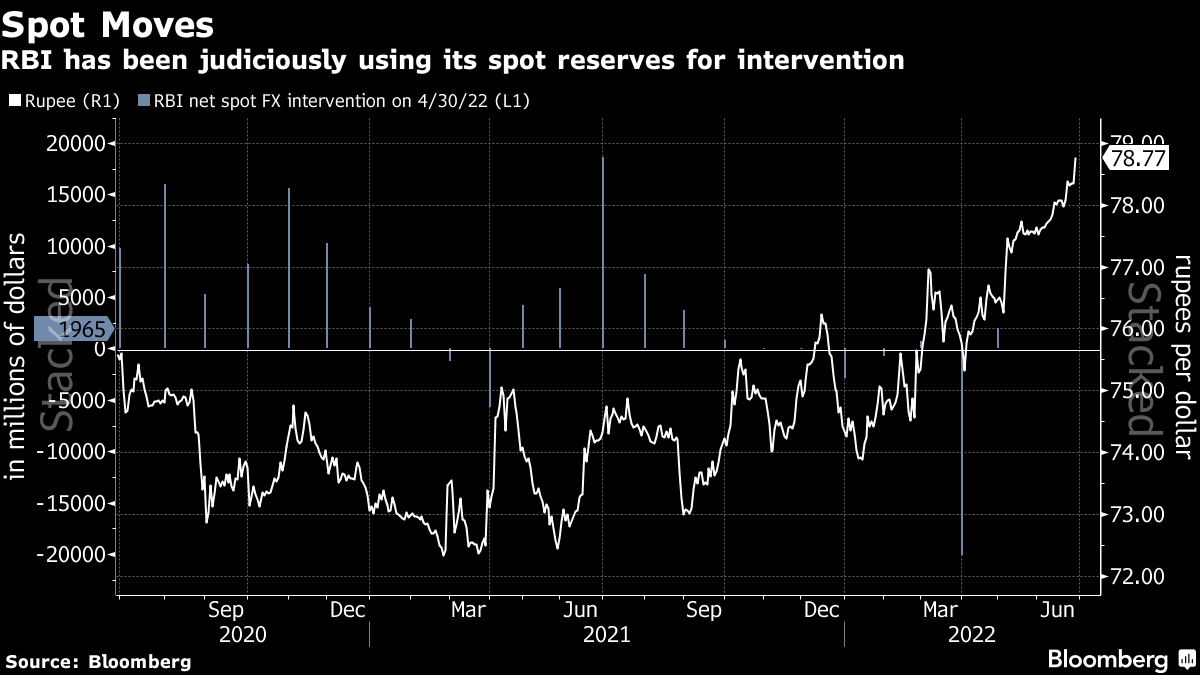
QuantEco Research expects the currency to drop to 81 to a dollar by March, while substantial FX reserves and India's long-term economic potential will buffer any precipitous decline of the currency.
Onshore Forwards Market
The RBI has been dipping into its $64 billion long-dollar book to offset some of its spot intervention. The monetary authority is entering into buy/sell swaps to offset some impact of the spot sales on reserves and money market liquidity, according to Vivek Kumar, an economist at QuantEco Research. That has sent dollar/rupee forward premiums crashing to levels not seen in a decade.
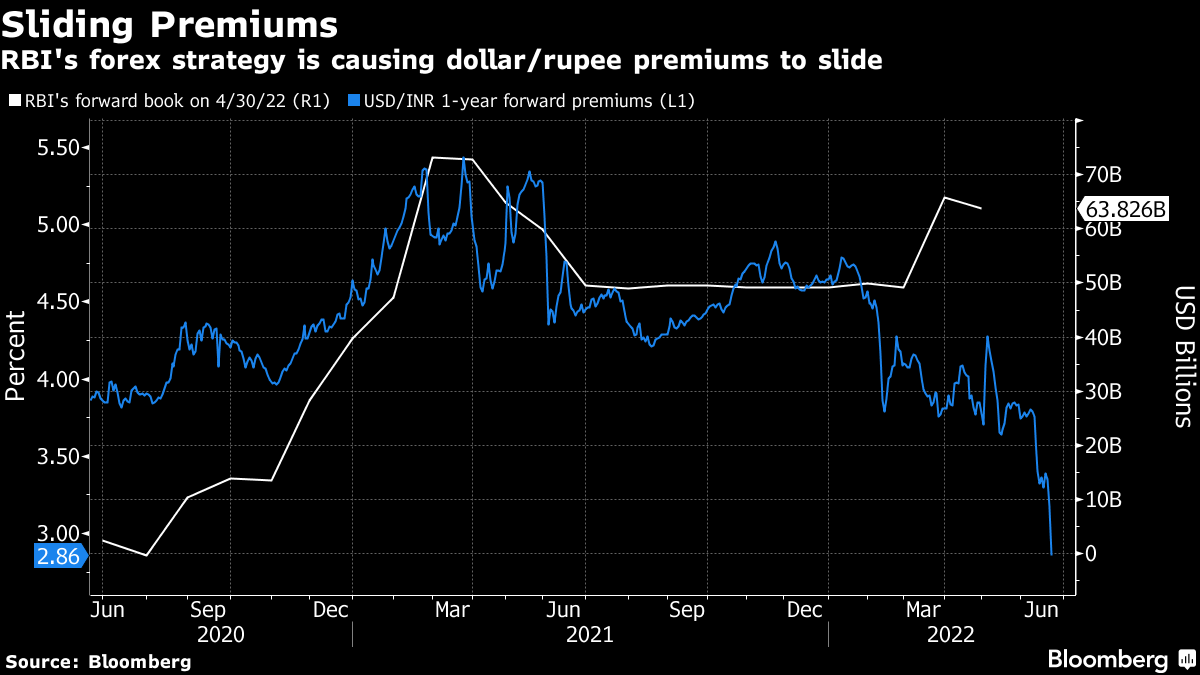
The cash dollar shortage and fall in premiums may end up weighing on the rupee by encouraging importers to demand dollars and disincentivize any carry trades, according to Emkay Global Financial Services Ltd.
NDF Market
The RBI has been a late entrant into the offshore market. It allowed domestic banks to trade in overseas markets only two years ago. A special hub in the western Indian state of Gujarat, where an onshore NDF market has started, is also drawing liquidity.
The moves helped narrow the spread between onshore and offshore markets from 100 basis points in March 2020 to little difference between the two.
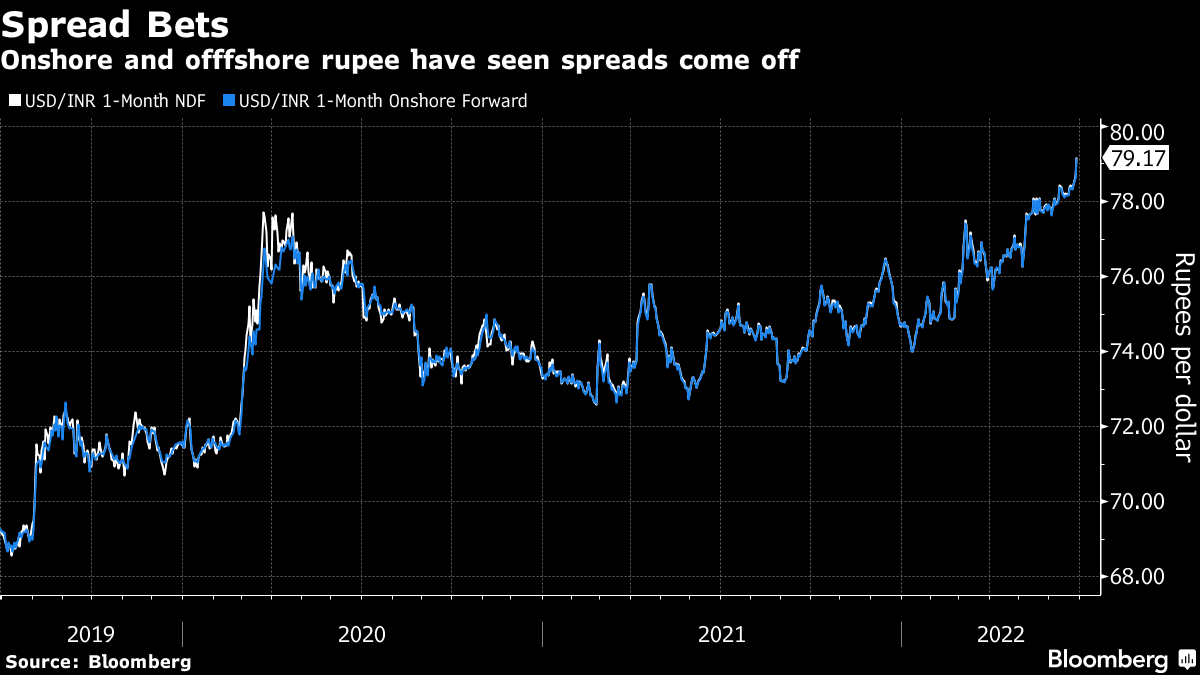
“If we want today, because of the presence of Indian banks, we can wipe out the arbitrage in two minutes,” RBI Deputy Governor Michael Patra, said on Friday. “The NDF market has now become an ally.”
Currency Futures
The RBI has been active in the futures market in recent months. The impact was visible Tuesday as there was a huge build-up of open interest positions on expiry day, adding to pressures on the currency. The central bank is said to have rolled over some of its contracts to July maturity, a person familiar with the matter told Bloomberg News.
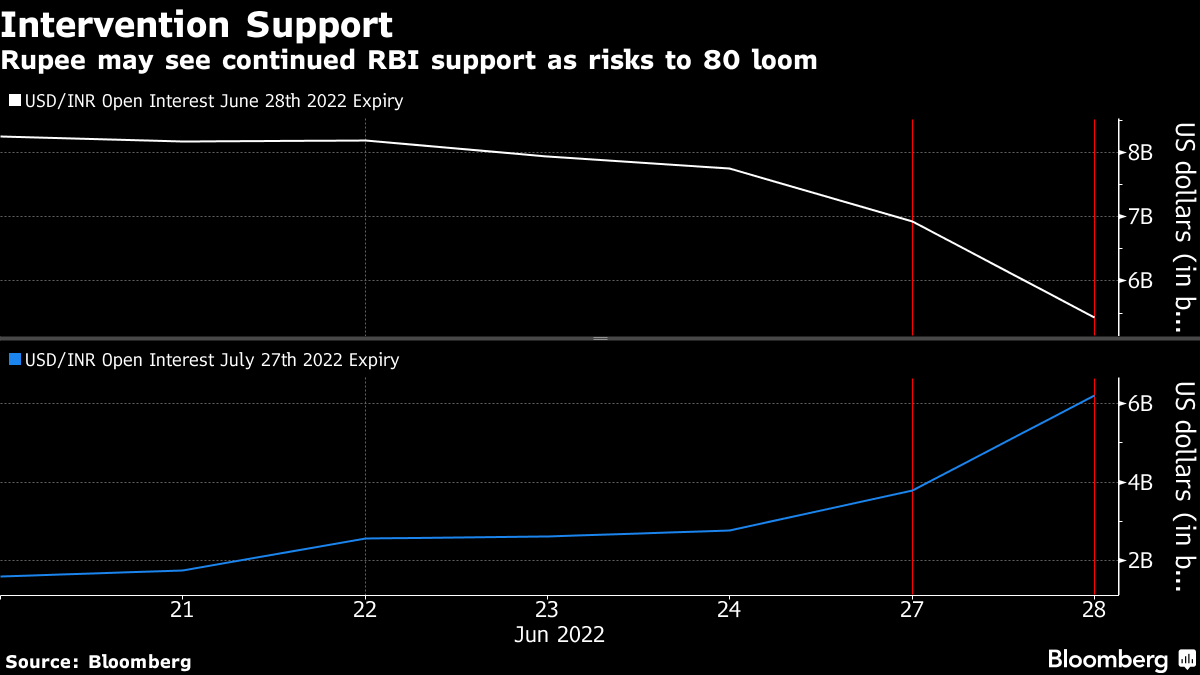
The RBI's intervention in the futures markets is smart as they will not lose dollars with the contracts being settled in rupees while still influencing spot markets with smaller amounts, said Bhaskar Panda, a senior vice president at HDFC Bank Ltd.
(Adds Goldman Sachs forecast in fourth graph, updates prices)
More stories like this are available on bloomberg.com
©2022 Bloomberg L.P.

-
A New Samvat Wishlist: Inclusive Prosperity And Human Development

India has strengthened its economic foundations through infrastructure, digital access and enterprise. Its next growth chapter must deepen productivity, create better livelihoods and widen participation in prosperity.
-
Love, Sex Aur Dhokha: The Audacious Plot To Spy On Jensen Huang
A Taipei dinner, a Singapore chip buyer and a suspected Chinese asset: inside the alleged spy operation that got close to NVIDIA's Jensen Huang.
-
Ten Things I Learnt This Samvat
Patience can be a trap. Cheap stocks can stay cheap. Leverage can wipe you out. What did Samvat 2082 teach us? Niraj Shah writes on 10 lessons from the year gone by.
-
Talking Points This Week: Tech Nerves, FII Buying, And A Faraway Banking Shock
The global markets are not shining this Diwali. The exception in the large markets is, India.
-
Midterm Rally Lasted A Day. The Hard Reality Of A Divided US May Last Two Years | Opinion
Between a contested AI boom, a debt ceiling that arrives in 2027 and a president with every incentive to act alone, the next two years may prove more volatile than the first day's rally suggests.
-
Blue Wave Will Derail the AI Trade but Won't Dismantle the AI Era | Unhedged Position
The Democrats' sweep of the US Congress will see politics collide with economic forces both over the long and short term.
-
It's Time To Take The GST Council's Bet On Trust Global
Payment records can prove India's services exports, and clear, proportionate rules can bring foreign digital sellers into the tax net.
-
Opinion | India at 38: From Innovation Overperformer to Innovation Powerhouse
India now has 453 VC-backed deep science startups, 18 of them late-stage, after 117 percent growth since 2020. Laurus Labs, at USD 9.3 billion, is the most valuable deep science company in any middle-income economy outside China.
-
Navigating Energy Crossroads: S Jaishankar's Call For Diversified Supply Chains At G20 Ministerial Meeting
As geopolitical fault lines continue to test maritime trade routes and commodity flows, Jaishankar's message remains pertinent: true economic resilience requires open markets, protected transit lines, and a genuine commitment to multilateral cooperation rather than coercion.









