Rate Hike Timing Still a Question: Bank of England
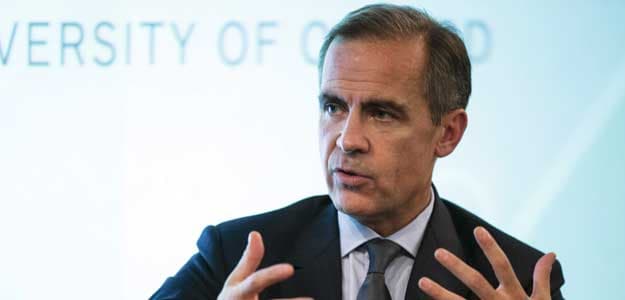
London: Bank of England Governor Mark Carney said he did not know when British interest rates should start to rise, once again sounding vaguer than before about when the central bank might begin easing the economy off record-low borrowing costs.
"The question in my mind is when is the appropriate time for interest rates to increase, and that is strongly consistent with the strength of the domestic economy," Mr Carney told members of Britain's parliament on Tuesday.
The BoE surprised many investors earlier this month when it showed no sign that it was gearing up for an increase in interest rates, saying Britain's near-zero inflation would pick up only slowly even if rates stay on hold throughout next year.
Mr Carney said then that the BoE would raise rates when the time was right.
Before that, he had said a decision on whether to raise rates would come into sharper focus around the end of this year. But that was before the deepening of the slowdown in the global economy which has kept most BoE rate-setters on the fence.
The cautious tone of the BoE has contrasted with the clearer message from the Federal Reserve that a first US rate rise is likely to come next month.
Mr Carney has struggled previously with his attempts to give a clear steer on when rates might go up. His guidance was first knocked off course by a surprise plunge in Britain's unemployment rate and then by the slump in global oil prices.
Britain's economy grew faster than any other big developed nation last year and will be among the top performers in 2015. But wage growth remains below pre-crisis levels and the latest inflation data showed prices fell in the 12 months to October.
Only one of the BoE's nine monetary policymakers has voted for a rate hike in recent months.
Financial markets have been betting on a first BoE rate hike only in early 2017, although most economists expect the Bank to move well before then, probably in the first half of 2016.
In his comments to lawmakers on Tuesday, Mr Carney showed he still expected borrowing costs to rise eventually, saying the economy would increasingly require a higher level of neutral rates as it recovered from the financial crisis.
"I do think that the real equilibrium interest rate in the United Kingdom has turned positive and as some of the headwinds... reduce. It will in most likelihood continue to rise," he said.
But Mr Carney also said productivity was more likely to exceed than undershoot the BoE's latest forecasts, reducing the pressure on inflation, a view shared by relatively dovish Monetary Policy Committee member Gertjan Vlieghe.
Sterling fell earlier on Tuesday after the BoE's chief economist Andy Haldane said he saw more downside risks to growth and inflation than reflected in the Bank's latest economic outlook, and he reiterated his view that the BoE's next move might be a rate cut.
"I see the balance of risks around UK GDP growth and inflation as skewed materially to the downside, more so than embodied in the November 2015 Inflation Report," Mr Haldane said in an annual statement to parliament's Treasury Committee.
The only policymaker on Tuesday who sounded close to raising rates was Kristin Forbes, who restated her view that rates would need to rise "sooner rather than later" though labour market pressures were not yet strong enough.

-
Navigating Friction And Energy Realities: An Analysis Of Marco Rubio's October Visit To India

Occurring at a critical juncture marked by stalled trade negotiations and escalating geopolitical pressures over global energy supplies, the visit offers a profound window into modern US-India relations.
-
India Exports Capital. Why Not Export Trusteeship?
The big question, then, is whether India can build an institution that global borrowers, investors, banks, and lawyers can trust, even without an Indian connection.
-
France's Economy & Politics Are In Crisis | The Reason Why
Let's look at how the French economy and politics evolved under Nicolas Sarkozy, Franois Hollande and Emmanuel Macron.
-
You May Inherit The Business. You Must Earn Its Credibility.
Succession tests the founder's ability to share authority as much as it tests the next generation's readiness to assume it.
-
Signing Deals Is One Thing; Making Them Work Is Another | The Week In Whys
Sometimes, things don't turn out as planned. Indian companies have lost some bids to rivals, some projects won't produce until 2030.
-
FOMC Wall, PERM Suspension, Hospital Stocks | Talking Points This Week
A PERM suspension would directly affect green-card sponsorship rather than H-1B visas, so the near-term earnings impact could remain relatively limited. The key question is whether this marks a new phase in US scrutiny of Indian IT.
-
Everything, Everywhere, All At Once: Dalal Street's Week To Forget | Joining The Dots
Visa curbs, a Starlink spat and cancer drug caps: what connects this week's shocks for Indian markets
-
India Is Going Abroad For Critical Minerals. But It May Take Years To Pay Off | The Reason Why
Although India's steps are in the right direction, they remain modest compared with India's growing dependence.
-
When Everyone Has AI, What Gives You An Edge?
India's young workforce is entering an uncertain world of work where powerful AI tools are becoming widely accessible. The advantage will belong to those who combine deep expertise with digital fluency, and the distinctly human capabilities that technology cannot manufacture.
-
Wrong Labels, High Pesticide Residues Holding Back Agri Exports | The Reason Why
India needs stronger domestic food-safety and labelling standards, with best practices becoming part of everyday business for farmers, traders and food companies.










