Ratan Tata Will Be Back To Investing In Startups After Five-Month Hiatus
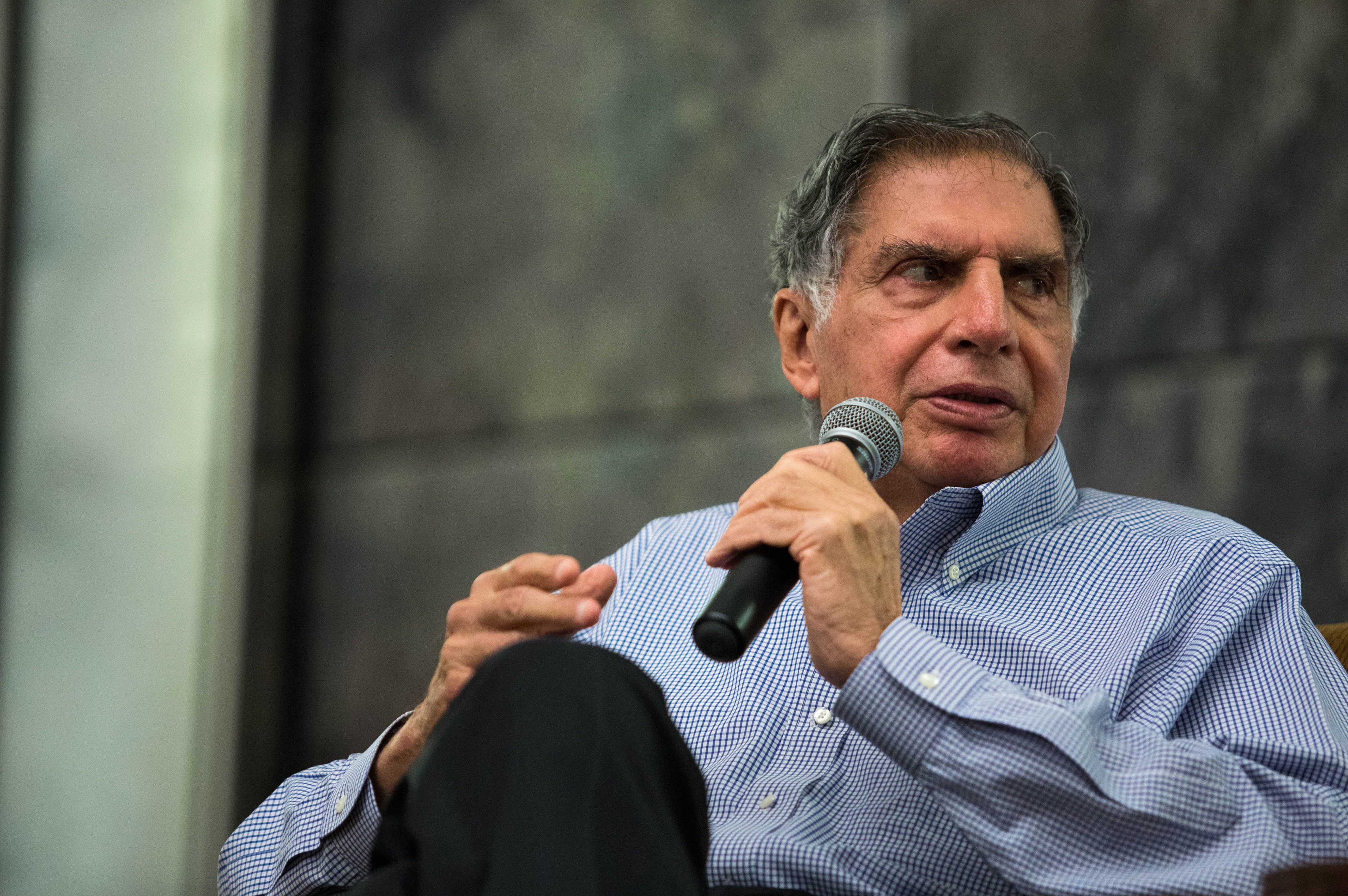
Ratan Tata, who will resume interacting with entrepreneurs and investing in startups starting February 23, batted for an open market in India but said regulators should watch out for unfair competition in the market.
“There is traditionally this feeling, protect me but let it be a level-playing field. This is the dictum of yesterday,” the Tata Sons' interim chairman said during an event organised by venture capital firm Kalaari Capital in Bengaluru on Tuesday.
The regulators need to focus on the areas where there is unfair competition which is done to kill newer startups, and ensure that there is enough latitude and level-playing field so that everyone has their chance. I can only say that one should look for a more open environment and shouldn't be concerned about blocking; sometimes it is worthwhile and other times it is just a stifling competition.Ratan Tata, Interim Chairman, Tata Sons
In December last year, the two poster boys of India's startup industry, Bhavish Aggarwal, co-founder of ride hailing service Ola and Sachin Bansal, co-founder of India's largest e-commerce company Flipkart, had hit out against so-called "capital dumping" by foreign rivals in India and had urged the government to create a ‘level- playing field' for homegrown startups.
Also Read: Not All Indian Startup Entrepreneurs Want Protection From Foreign Rivals
Making A Comeback
Tata, who has been a keen observer of the Indian startup ecosystem, calls it a new ‘page' in his life.
“When I retired in 2012, I hit upon investing and interacting with startups. I left the big business, large competitive challenges behind and became excited with what I saw and what I experienced in the startup community. I starting giving much more of my time, attention to this because it stimulated me,” he recalled.
Tata backed about 36 startups in 2016, including Teabox, Nestaway, Lenskart, among others, according to VCCEdge, the financial research platform of The VCCircle Network. However, things changed after a long-drawn boardroom battle broke out in October between him and ousted chairman of Tata Sons, Cyrus Mistry.
He will resume working with startups from February 23 after handing over the reins of Tata Sons to N Chandrasekaran, Tata said. Chandrasekaran, managing director and chief executive of Tata Consultancy Services (TCS), will take over as the Tata Sons chairman on February 21.
The last five months have put me back forcibly to the older mould. And, I really long to be back in the startup community with the vigour, innovation, challenges and as of February 23, I am back.Ratan Tata, Interim Chairman, Tata Sons
Fears Of U.S. Visa Overhaul
Speaking about the H-1B reform Bill, recently introduced in the U.S. House of Representatives, Tata said Indian entrepreneurs and businesses can reinvent themselves to meet challenges thrown up by the Trump administration.
I think the challenges for the last several months for me personally and also for startup community have been challenging. Mr Trump has given new challenges and I am quite sure we can reinvent ourselves to meet those challenges, and look back at having made a difference.Ratan Tata, Interim Chairman, Tata Sons
Among other things, the new legislation calls for more than doubling the minimum salary of H-1B visa holders to $130,000, making it difficult for firms to replace American employees with foreign workers, including from India.

-
High US Salaries, No Green Card Certainty: The Financial Calculation Facing Indian H-1B Families

The suspension of PERM processing at eight technology employers does not cancel existing H-1B visas. What it does is force a question many Indian families have been avoiding: is the US salary worth tying your career and family plans to one employer?
-
Swiggy vs Eternal: Food Delivery's Two Rivals Are No Longer In The Same Race
Eternal is building a private AI assistant, dark.ai. Swiggy is still working out how to make Instamart pay, with an operating loss of Rs 895 crore in the July-September quarter while Blinkit stayed profitable.
-
Where You Live Shapes How You Get To Work | The Reason Why
Two-wheelers are the most popular way to get to work in India, accounting for nearly 43% of workplace commutes.
-
Unhedged Position: Can India See An Indonesia-Style Time Correction?
The Nifty is trading below levels it first clocked in 2024. Is there, then, as I have suggested in the headline, potential that the current time correction drags on painfully for the next three-five, even ten years?
-
Navigating Friction And Energy Realities: An Analysis Of Marco Rubio's October Visit To India
Occurring at a critical juncture marked by stalled trade negotiations and escalating geopolitical pressures over global energy supplies, the visit offers a profound window into modern US-India relations.
-
India Exports Capital. Why Not Export Trusteeship?
The big question, then, is whether India can build an institution that global borrowers, investors, banks, and lawyers can trust, even without an Indian connection.
-
France's Economy & Politics Are In Crisis | The Reason Why
Let's look at how the French economy and politics evolved under Nicolas Sarkozy, Franois Hollande and Emmanuel Macron.
-
You May Inherit The Business. You Must Earn Its Credibility.
Succession tests the founder's ability to share authority as much as it tests the next generation's readiness to assume it.
-
Signing Deals Is One Thing; Making Them Work Is Another | The Week In Whys
Sometimes, things don't turn out as planned. Indian companies have lost some bids to rivals, some projects won't produce until 2030.
-
FOMC Wall, PERM Suspension, Hospital Stocks | Talking Points This Week
A PERM suspension would directly affect green-card sponsorship rather than H-1B visas, so the near-term earnings impact could remain relatively limited. The key question is whether this marks a new phase in US scrutiny of Indian IT.









