Ratan Tata Seeks Shareholder Support To Remove Cyrus Mistry From Group Firms
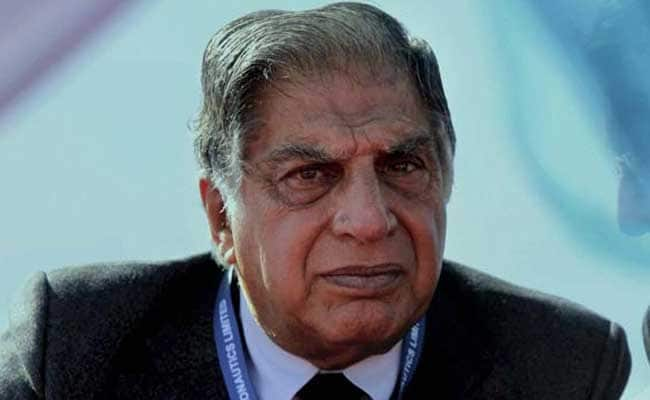
New Delhi: Tata Sons' interim chairman Ratan Tata reached out to shareholders of Tata group companies on Wednesday, seeking their support to remove Cyrus Mistry from the board of these companies.
Mr Mistry's continued presence was a "serious disruptive influence", he said.
In a bitter boardroom coup in October Mr Mistry was ousted as chairman of Tata Sons, holding firm of the $100 billion Tata empire, but he is still on the board of some group companies. Patriarch Ratan Tata is back at the helm temporarily, and a public power struggle has since ensued between the two sides.
The letter comes days ahead of key meetings at six group companies, including Tata Motors and Tata Consultancy Services, when shareholders are expected to vote on removing Mr Mistry from their board.
In a two-page letter, Ratan Tata said Mr Mistry was removed as chairman because the board of Tata Sons had lost confidence in him and his ability to lead the group, and that his presence in group companies can make them "dysfunctional".
Here's Mr Tata's letter to shareholders:
Ratan Tata also said that several attempts at mediation went unheeded and that Mr Mistry had also been offered an opportunity to step down voluntarily, which he rejected and was then removed.
Cyrus Mistry's office, in a statement, said the letter is "a combination of statements ranging from misrepresentation and convenient mischaracterisation". It also refuted claims of remediation attempts, saying Mistry was asked to step down only minutes before the board meeting in which he was ousted.
Ratan Tata also said that Tata Sons' capital allocation decisions are based on maximising long-term shareholder returns, even if some investments have taken time to be profitable, referring to Tata Steel's European unit.
"There has always been, and will continue to be, a strong alignment of interests between us and the minority shareholders," Ratan Tata said in the letter, adding that Tata would exit a business only when it was unviable.
Tata Sons, in a statement last month, criticised Mr Mistry for his inability to turn around loss-making units during his four-year term as chairman, instead continuing to blame them as "legacy hot spots" and writing off huge amounts.
In response, Mr Mistry has blamed Ratan Tata for some of the company's biggest debacles and alleged failures in corporate governance at the group.
On Monday, Mr Mistry also sent a notice to shareholders of the companies seeking support against his removal, and stressed the need for governance reforms at Tata Sons, the Tata trusts, its biggest shareholder, and Tata group companies.
Ratan Tata in his letter said the group companies follow the best corporate governance standards and that Tata Sons supports them in a transparent manner through licensed use of the Tata brand, direct and indirect financial support and giving strategic advice on acquisitions, divestments and investments.
"The managements of these companies have enjoyed the operational freedom to develop and execute the right strategy as guided by their respective boards," Mr Tata said.
(Except for the headline, this story has not been edited by NDTV staff and is published from a syndicated feed.)

-
High US Salaries, No Green Card Certainty: The Financial Calculation Facing Indian H-1B Families

The suspension of PERM processing at eight technology employers does not cancel existing H-1B visas. What it does is force a question many Indian families have been avoiding: is the US salary worth tying your career and family plans to one employer?
-
Unhedged Position: Can India See An Indonesia-Style Time Correction?
The Nifty is trading below levels it first clocked in 2024. Is there, then, as I have suggested in the headline, potential that the current time correction drags on painfully for the next three-five, even ten years?
-
Navigating Friction And Energy Realities: An Analysis Of Marco Rubio's October Visit To India
Occurring at a critical juncture marked by stalled trade negotiations and escalating geopolitical pressures over global energy supplies, the visit offers a profound window into modern US-India relations.
-
India Exports Capital. Why Not Export Trusteeship?
The big question, then, is whether India can build an institution that global borrowers, investors, banks, and lawyers can trust, even without an Indian connection.
-
France's Economy & Politics Are In Crisis | The Reason Why
Let's look at how the French economy and politics evolved under Nicolas Sarkozy, Franois Hollande and Emmanuel Macron.
-
You May Inherit The Business. You Must Earn Its Credibility.
Succession tests the founder's ability to share authority as much as it tests the next generation's readiness to assume it.
-
Signing Deals Is One Thing; Making Them Work Is Another | The Week In Whys
Sometimes, things don't turn out as planned. Indian companies have lost some bids to rivals, some projects won't produce until 2030.
-
FOMC Wall, PERM Suspension, Hospital Stocks | Talking Points This Week
A PERM suspension would directly affect green-card sponsorship rather than H-1B visas, so the near-term earnings impact could remain relatively limited. The key question is whether this marks a new phase in US scrutiny of Indian IT.
-
Everything, Everywhere, All At Once: Dalal Street's Week To Forget | Joining The Dots
Visa curbs, a Starlink spat and cancer drug caps: what connects this week's shocks for Indian markets
-
India Is Going Abroad For Critical Minerals. But It May Take Years To Pay Off | The Reason Why
Although India's steps are in the right direction, they remain modest compared with India's growing dependence.









