Railways Moving Beyond Coal For Freight Revenue, Says Board Member Mohammad Jamshed
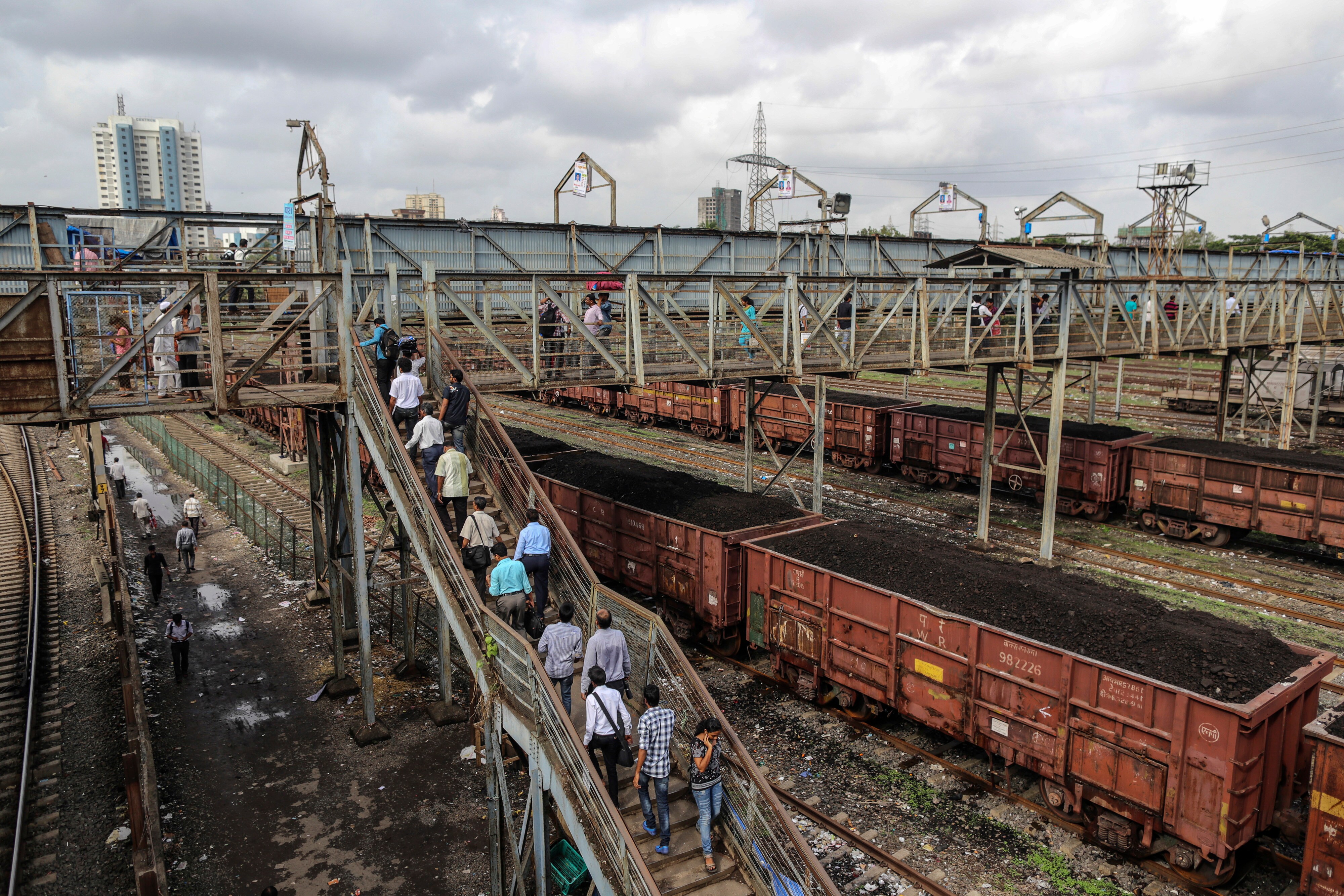
Indian Railways, which earns two-thirds of its revenue from freight, wants to go beyond its mainstay coal to other commodities such as iron ore and steel, Railway Board Member (Traffic) Mohammad Jamshed told BloombergQuint in an interview.
Jamshed said the Railways will be “naive if we are totally dependent on coal loading, which is currently at 50 percent” and it's unlikely to bring in additional incremental traffic to the extent the national carrier would want. “We have held round-table negotiations with other customers for moving beyond coal.”
As freight revenues fell in the year ended March, the Railways introduced many reforms and lowered rates to stem the decline, he said.
Here are edited excerpts of the interview:
Freight revenue for 2016-17 fell 3.91 percent. What has led to this decline?
The last financial year was a challenging one. The global headwinds were beyond our control. From April-October, we realised that the demand from core sectors such as cement, (imported) fertiliser, food grains and coal, which contribute half the freight traffic, had reduced.
We had expected it much in advance, and brought about a large number of reforms immediately after the Budget. These included lowering freight rates to get back the traffic lost to road or other modes of transportation.
The second reason for the fall in freight revenue was a fall in leads (or average distance the goods travelled).
The average lead has come down from 594 km in 2015-16 to 559 km in 2016-17. What is the reason for this? Is coal not moving?
We had already taken a note of leads coming down. Therefore, we came up with a policy to reduce the freight charges beyond 1,500 km, so that power plants located at these distances benefit.
(Leads fell) primarily (because) the plant load factors had gone down, especially in Mahagenco and the power plants in Haryana and Punjab... But short-lead coal moving up to 500 km was good...From October-March, we have seen robust growth in various sectors. Ports have come up in Mundra and Kandla in Gujarat, and substantial traffic moved towards these ports, which are closer than JNPT (Jawahar Lal Nehru Port). JNPT was a longer lead port, so we lost some leads there.
There was another movement that used to take place between surplus food grain producing states like Haryana and Punjab... but FCI (Food Corporation of India) had already reduced the demand from Punjab and Haryana to long-lead destinations.
How does the Railways plan to achieve its freight target of 1,200 MT for FY18?
We are fully geared to carry anything up to 1,200 MT. Last year, we carried 1,108 MT, which was also the highest-ever loading, compared with 1,104 MT in the previous year. We undertook initiatives such as abolishing the port congestion charges and the dual freight policy on iron ore for export and domestic consumption, and reducing the busy season surcharges...In March, we saw all-time record loading of 106 MT. If we are able to sustain this demand, we will be able to achieve our targets.
Is the railways shifting focus towards other commodities instead of coal?
We would be naive if we are totally dependent on coal loading, which is currently at 50 percent (of its freight loading target). The coal ministry had given us a projection of 1,500 MT of load traffic but the current level is 750 MT. It is not likely to give us additional incremental traffic to the extent that we would want.
We have held round-table negotiations with other customers for moving beyond coal. The kind of concessions that I discussed earlier were about other commodities...
We have made concessions (on freight rates) for 43 commodities varying between 5 percent and 30 percent, which we expect would come to us... We are concentrating on other commodities apart from coal which should go up.
What is the progress on dedicated freight corridors?
The dedicated freight corridor is one of the most important infrastructure projects. The eastern corridor is between Ludhiana and Dankuni, and on the western side, it is between JNPT to Dadri. These are likely to be operational by early 2020, if not December 2019.
Once commissioned, these will be longer trains, about 1.5 km long and double stack.
The unit cost of operations would drastically come down which will be passed onto the customer, and we will be able to transport cargoes to hinterlands and ports. On the eastern side, there will be longer trains for moving coal and the capacity generated will also provide a lot of space on the existing tracks for running more efficient trains.
Longer stretches of up to 500 km or so will start coming into operations from this year-end onwards.
In terms of passenger traffic, how do you plan to deal with competition from roadways and the aviation sector?
We saw a slight reduction in passenger traffic since 2012-13. On the suburban side, non-suburban side and on the reserved sector, we wanted to see growth. We undertook a large number of initiatives, and not only have been able to stop the decline but have also reversed it by achieving 1 percent growth. We were able to generate additional Rs 2,500-crore revenue without any fare hike.
Our basic competition is with roadways... People who travel to smaller places where there is no railway line, they will have to use buses, and therefore, the infrastructure growth taking place on national highways and rural roadways, state highways is essential for overall development of the economy.
At the same time, we keep our tariffs attractive and try to provide timely services. During April and May, the number of passengers has grown by 2.5 percent, generating revenues of roughly Rs 500 crore, compared to the year-ago period.
The Railway Development Authority has got Cabinet approval. By when will it be functional?
Yes, the organisational set-up for the Railway Development Authority is in position now.

-
Navigating Energy Crossroads: S Jaishankar's Call For Diversified Supply Chains At G20 Ministerial Meeting

As geopolitical fault lines continue to test maritime trade routes and commodity flows, Jaishankar's message remains pertinent: true economic resilience requires open markets, protected transit lines, and a genuine commitment to multilateral cooperation rather than coercion.
-
Indians Are Travelling, But Not Every Journey Is A Holiday | The Week In Whys
Pilgrims, patients and working women are the real travellers, and the system hasn't quite caught up with them.
-
Getting To Work Costs Women More | The Reason Why
It is not just about women paying more than men. It is about women paying much more in cities than in villages.
-
AI Bias In Investing Cannot Be Eliminated, But It Can Be Governed
Framing is a particularly important example as identical financial information presented in terms of gains rather than losses can lead an LLM to reach a different assessment.
-
Joining The Dots | Dark Skies, Steady Diya: Why Hope Holds This Diwali
With war, a weak rupee and foreign outflows weighing on sentiment, policymakers at the NDTV World Summit and market veterans at NDTV Profit Ignite: Diwali Edition offered the same advice: stay invested and filter out the noise.
-
The Curious Case of Equitas Small Finance Bank And A CEO Who Quit For Stock
PN Vasudevan believes persistent investor concerns over a perceived conflict of interest had become a governance overhang on Equitas Small Finance Bank's stock, even as the lender improved profitability and asset quality.
-
Talking Points This Week: AI Cash Burn, A Tiger Comeback And An India That Still Finds Its Own Path
India is not immune to higher oil or tighter global liquidity, yet its earnings base is broader, its domestic policy levers are still available.
-
Foreign Investors Own Half Of HDFC Bank and ICICI Bank. An LTCG Cut Could Matter Most Here
Foreign portfolio investors have US$115 billion parked in HDFC Bank, ICICI Bank. If the government cuts long-term capital gains tax, Jefferies says returning foreign money could land here first.
-
'Never Seen This Level Of Negativity': Sandeep Tandon Says The Next Rally May Be Closer Than You Think
Veteran investor Sandeep Tandon says foreign selling is easing, large-caps are due a comeback and mid-caps are crowded, while he turns positive on gold, power and pharma this Diwali.










