Rail Fare Hike 'Inevitable', to Have Some Impact on Inflation: Experts
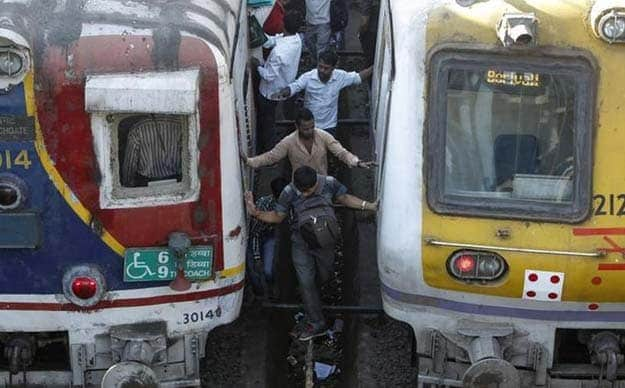
Terming the rail passenger fare and freight hike "inevitable", experts on Friday said it will have some impact on price rise as it will increase transportation cost.
"I think government had to bite the bullet and need to take hard decisions. It was inevitable. It will raise the cost of transportation. But I think it will ensure viability of railway finance," Crisil chief economist D K Joshi said.
(Read: How much more you will pay)
He also said the fare hike will also push the inflation a little.
The cash-strapped Railways increased across-the-board passenger fares by 14.2 per cent and freight by 6.5 per cent to garner Rs 8,000 crore a year. The new rates would come to effect from June 25. (Read full story)
Wholesale price index-based inflation in India rose to a five-month high of 6.01 per cent in May, mainly on account of higher food prices.
Commenting on the decision, former chairman of the Commission for Agricultural Costs and Prices (CACP) Ashok Gulati said, "Government is bold enough to bite the bullet and this signals that government is trying to control subsidies and pricing services."
"I hope this will improve the services and prices will come down in real term going forward."
Industry body Assocham president Rana Kapoor said the decision to increase fare was inevitable but was bold.
"The central government's decision to increase the railway fares by 14.2 per cent is an inevitable but bold decision. Corrective measures are necessary to address the severe financial crunch facing the Indian Railways, a result of a decade of decadence," Mr Kapoor said.
"As promised, the Prime Minister is taking all due measures towards his vision of a 'Shresht Bharat', amidst some calibrated tough measures. This is a precursor to a prudent Railways Budget."
The fare hike was inevitable as there was a cumulative deficit in Railways for many years, said Abhaya Agarwal, partner-infrastructure practice at EY.
"Freight hike is very modest. If Railways wants to ensure safety, modernisation and other passenger amenities, it needs to have surplus funds or else it is very unsafe," Mr Agarwal said.
However, it will add up the pressure on passenger a little, he said.
"It is a welcome step. Going forward the unit cost of freight needs to be reduced than to raise fares."
Expressing displeasure over the railway fare hike, realty firm Parsvnath Developers chairman Pradeep Jain said, "This is blow to the industry as an increase of 6.5 per cent in freight by Railways would have a magnifying effect of price of steel, cement etc. which are already touching sky."
Steel and cement are two main raw materials for the real estate industry and are transported mainly through Railways only, he said.
"At a time when the sector is already experiencing tough times, any such incidence is going to hit us hard. We are in no position to increase property prices as the industry is already having millions of unsold units."
"We appeal to the government to review its decision so that the infrastructure and real estate sector may walk some more miles," Mr Jain said.

-
High US Salaries, No Green Card Certainty: The Financial Calculation Facing Indian H-1B Families

The suspension of PERM processing at eight technology employers does not cancel existing H-1B visas. What it does is force a question many Indian families have been avoiding: is the US salary worth tying your career and family plans to one employer?
-
Unhedged Position: Can India See An Indonesia-Style Time Correction?
The Nifty is trading below levels it first clocked in 2024. Is there, then, as I have suggested in the headline, potential that the current time correction drags on painfully for the next three-five, even ten years?
-
Navigating Friction And Energy Realities: An Analysis Of Marco Rubio's October Visit To India
Occurring at a critical juncture marked by stalled trade negotiations and escalating geopolitical pressures over global energy supplies, the visit offers a profound window into modern US-India relations.
-
India Exports Capital. Why Not Export Trusteeship?
The big question, then, is whether India can build an institution that global borrowers, investors, banks, and lawyers can trust, even without an Indian connection.
-
France's Economy & Politics Are In Crisis | The Reason Why
Let's look at how the French economy and politics evolved under Nicolas Sarkozy, Franois Hollande and Emmanuel Macron.
-
You May Inherit The Business. You Must Earn Its Credibility.
Succession tests the founder's ability to share authority as much as it tests the next generation's readiness to assume it.
-
Signing Deals Is One Thing; Making Them Work Is Another | The Week In Whys
Sometimes, things don't turn out as planned. Indian companies have lost some bids to rivals, some projects won't produce until 2030.
-
FOMC Wall, PERM Suspension, Hospital Stocks | Talking Points This Week
A PERM suspension would directly affect green-card sponsorship rather than H-1B visas, so the near-term earnings impact could remain relatively limited. The key question is whether this marks a new phase in US scrutiny of Indian IT.
-
Everything, Everywhere, All At Once: Dalal Street's Week To Forget | Joining The Dots
Visa curbs, a Starlink spat and cancer drug caps: what connects this week's shocks for Indian markets
-
India Is Going Abroad For Critical Minerals. But It May Take Years To Pay Off | The Reason Why
Although India's steps are in the right direction, they remain modest compared with India's growing dependence.









