Rahul Yadav Targets Naukri Founder After Zomato, Ola Cabs CEOs
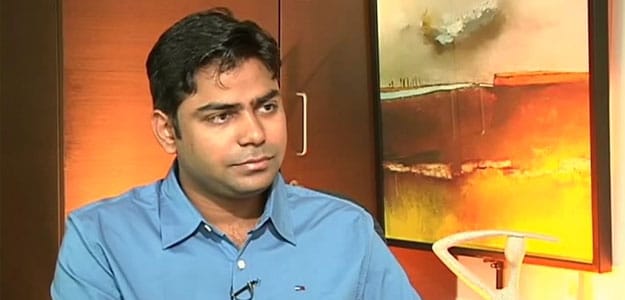
Housing.com CEO Rahul Yadav created ripples in the e-commerce industry earlier this month by announcing that he will allot his personal equity worth Rs 150 crore to Rs 200 crore in the online real estate start-up to 2,251 employees of the company. 26-year-old Mr Yadav, an IIT dropout, has since challenged other start-up founders to give up their wealth, something that has not gone down well with many in the industry.
On Wednesday, NDTV's Manisha Natarajan caught up with Mr Yadav to discuss his business strategy and to understand why he has been at the centre of so many controversies in the last few months.
Here's an edited transcript of the interview:
NDTV: Why do you think Housing.com's photographs feature is doing better than others?
Mr Yadav: There's a quote by Bill Gates: Businesses have the responsibility to solve the world's problems. Sanjeev (Bikhchandani) solved the Naukri.com problem to a certain level, but I don't think the rest of the businesses they have opened are really solving the problem. They have just opened up (these businesses) to grab more market share and make more money. They were there in the market from 8-10 years. They never took any initiative to solve industry or consumer problems. Not a single one.
NDTV: If you focus a lot on solving problems, when do you think about making money? Is there a vision that someday I have to make money because investors' money is precious?
Mr Yadav: We're not even 3-year-old. Generally, companies invest 6-10 years before they see money. It's too early (to think of revenues). SoftBank's Masayoshi told Jack Ma when he invested in Alibaba: 'Don't make money for 8 years.' He said the same thing to us: Don't make money for 10 years.' We said we just want to wait for 2-3 years but not 10 years. Not making money is actually monetarily efficient. If you're building a company slowly for 8 years, you'll be investing much more capital compared to when you're building it very fast. Matching doesn't happen with five apartments listed on your website and five users coming to your website. The moment you have 5 lakh apartments and 5 lakh users coming to your website, matching happens. With scale you get efficiency in marketplace in classified model.
NDTV: Ink doesn't dry on Rahul Yadav. What do you say about that?
Mr Yadav: Media loves the word controversy.
NDTV: What do you have to say about your relationship with the company's board?
Mr Yadav: There are no issues with the board, there were no issues and there will not be any issues. I share a comfortable relationship with the board.
NDTV: You announced that you will allot your personal equity to employees. Was the move to connect with the employees?
Mr Yadav: No. I just gave it to the finance and HR team. They're doing their process. I'm done.
NDTV: More CEOs are going to join Housing.com. What do you have to say about that or your relationship with the board?
Mr Yadav: See no issues in working with the new CEOs who will be joining the company. We never had any disagreements within our company. We're always on the same page. If there's any disagreement, it means there's some data that is missing.
NDTV: When do you think you will go for another round of fund-raising?
Mr Yadav: In the last round we raised $90 million. Half of the capital is still there with the company. We're not thinking about the next round of fund-raising. The money we have is enough to not think about fund raising for now. Sometimes money is enough. Maybe we will reevaluate our position in 2-3 months.
NDTV: Do you think the current money that's coming into start-ups is too inflated?
Mr Yadav: In long run I am really bullish on India. Companies which can survive for 15 years are going to be multi-hundred billion companies. After 15 years, companies can even be touching trillion dollar valuation from this market. Real question is: Are these companies going to stick for 15 years. Current valuations are nothing compared to what you can build in the long run.

-
Why Amazon And Flipkart Are Struggling To Beat Meesho In India's Smaller Cities

With 274 million users and lowest-cost logistics, Meesho is defending its value commerce crown against giants like Amazon and Flipkart.
-
High US Salaries, No Green Card Certainty: The Financial Calculation Facing Indian H-1B Families
The suspension of PERM processing at eight technology employers does not cancel existing H-1B visas. What it does is force a question many Indian families have been avoiding: is the US salary worth tying your career and family plans to one employer?
-
Swiggy vs Eternal: Food Delivery's Two Rivals Are No Longer In The Same Race
Eternal is building a private AI assistant, dark.ai. Swiggy is still working out how to make Instamart pay, with an operating loss of Rs 895 crore in the July-September quarter while Blinkit stayed profitable.
-
Where You Live Shapes How You Get To Work | The Reason Why
Two-wheelers are the most popular way to get to work in India, accounting for nearly 43% of workplace commutes.
-
Unhedged Position: Can India See An Indonesia-Style Time Correction?
The Nifty is trading below levels it first clocked in 2024. Is there, then, as I have suggested in the headline, potential that the current time correction drags on painfully for the next three-five, even ten years?
-
Navigating Friction And Energy Realities: An Analysis Of Marco Rubio's October Visit To India
Occurring at a critical juncture marked by stalled trade negotiations and escalating geopolitical pressures over global energy supplies, the visit offers a profound window into modern US-India relations.
-
India Exports Capital. Why Not Export Trusteeship?
The big question, then, is whether India can build an institution that global borrowers, investors, banks, and lawyers can trust, even without an Indian connection.
-
France's Economy & Politics Are In Crisis | The Reason Why
Let's look at how the French economy and politics evolved under Nicolas Sarkozy, Franois Hollande and Emmanuel Macron.
-
You May Inherit The Business. You Must Earn Its Credibility.
Succession tests the founder's ability to share authority as much as it tests the next generation's readiness to assume it.
-
Signing Deals Is One Thing; Making Them Work Is Another | The Week In Whys
Sometimes, things don't turn out as planned. Indian companies have lost some bids to rivals, some projects won't produce until 2030.










