Raghuram Rajan says Prepared For Volatility After Record Surge in Markets
Indian markets are so confident the BJP led by Narendra Modi will win the country's elections that brokers fear anything short of a decisive victory could spark the worst sell-off in years.
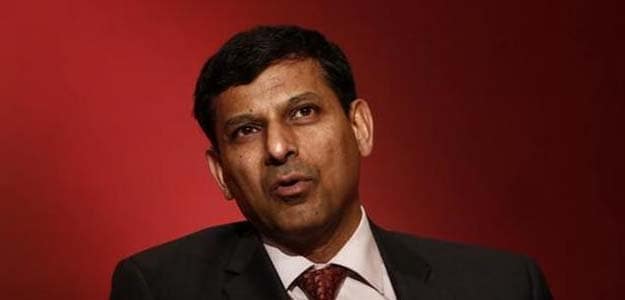
"The regulators have examined the financial system over last few weeks. We have conducted a variety of tests. We are in many ways prepared for any kind of volatility that might emerge over the next few days," said RBI Governor Raghuram Rajan.
Dr Rajan spoke to reporters after meeting Finance Minister P Chidambaram, who asked regulators to
remain alert and take necessary actions to curb excessive volatility.
The Sensex surged to a record high of 24,068.94 today after exit polls showed the BJP and its allies are headed for a majority in the world's biggest election.
Results are due on Friday, with experts cautioning against over-confidence in a BJP victory given notorious forecasting errors at the last two general elections.
Most investors were caught off guard in the past two general elections - in 2004 and 2009 - as opinion polls got it badly wrong.
Now some precautionary moves are being made. Customers say at least four brokerages have raised margin requirements due to concern there could be intense volatility after election results are unveiled on May 16.
The stock market regulator has asked exchanges to test their trading systems, according to an agency official, especially new mechanisms put in place last year to deal with market volatility. The Securities and Exchange Board of India (SEBI) did not reply to a written request for comment.
A surprise could knock both shares and the rupee. The gains stem from the assumption the BJP and its National Democratic Alliance (NDA) will win a majority, or near it, making Modi India's prime minister.
From September 13 - the day the BJP nominated Modi as its prime ministerial candidate - through Friday, the National Stock Exchange's benchmark index surged 21.5 per cent, compared with only a 4 per cent gain for the MSCI Asia-Pacific index excluding Japan. The Nifty has jumped from 5,850 on September 13 to a record high of 7,172 today.
Should BJP do poorly in the vote and Modi not become prime minister, some analysts predict shares could plunge 8 to 10 per cent in one day, and up to 20 per cent in the aftermath.
That would roughly match what happened in 2004, when investors were shocked that the BJP didn't win the election. The NSE index fell 12.2 per cent in one day, and 19 per cent over two.
Ritu Jain, managing director of investment bank Eos Capital Advisors in Mumbai, said the recent rally in Indian shares "has been largely in anticipation of NDA coming to power with a majority or near to majority."
"In the event of NDA not coming to power, markets can correct by about 15 per cent or a little more."
The BJP has long been seen by markets as being more investor-friendly than the Congress party, spurring hopes that Mr Modi will revive an economy growing at its slowest pace in a decade. The hopes have sent sectors such as infrastructure and banks sharply higher.
Foreign investors have also bought in heavily, and now own a record 22 per cent of companies listed on the NSE, according to Morgan Stanley data, after buying a net $20.1 billion (nearly Rs. 1.2 lakh crore) last year and about $4.3 billion (nearly Rs. 25,800 crore) so far in 2014.
However, that high a level is raising concerns of possible destabilising foreign outflows that dent both the currency and shares.
A scenario of stock market volatility and huge volumes would mark the first major test for trading-system improvements made by Indian exchanges after a slew of "fat finger" incidents hurt confidence.
In a bid to prevent cases like a 2012 misplaced order that caused the NSE to plunge more than 15 per cent, stock market regulator SEBI in September revised rules for circuit breakers. These allow for a more measured and more flexible response to sudden market movements.
An official at MCX-SX, India's smallest stock exchange, said all three stock exchanges in India have been asked by SEBI to check their trading systems, and had met regularly with regulators over the previous two months.
"(Trading) systems have been checked and geared up accordingly," the official told Reuters, declining to be identified because he was not authorised to speak to media about it.
The MCX-SX did not reply to a written request for comment.
(With agency inputs)

-
High US Salaries, No Green Card Certainty: The Financial Calculation Facing Indian H-1B Families

The suspension of PERM processing at eight technology employers does not cancel existing H-1B visas. What it does is force a question many Indian families have been avoiding: is the US salary worth tying your career and family plans to one employer?
-
Swiggy vs Eternal: Food Delivery's Two Rivals Are No Longer In The Same Race
Eternal is building a private AI assistant, dark.ai. Swiggy is still working out how to make Instamart pay, with an operating loss of Rs 895 crore in the July-September quarter while Blinkit stayed profitable.
-
Where You Live Shapes How You Get To Work | The Reason Why
Two-wheelers are the most popular way to get to work in India, accounting for nearly 43% of workplace commutes.
-
Unhedged Position: Can India See An Indonesia-Style Time Correction?
The Nifty is trading below levels it first clocked in 2024. Is there, then, as I have suggested in the headline, potential that the current time correction drags on painfully for the next three-five, even ten years?
-
Navigating Friction And Energy Realities: An Analysis Of Marco Rubio's October Visit To India
Occurring at a critical juncture marked by stalled trade negotiations and escalating geopolitical pressures over global energy supplies, the visit offers a profound window into modern US-India relations.
-
India Exports Capital. Why Not Export Trusteeship?
The big question, then, is whether India can build an institution that global borrowers, investors, banks, and lawyers can trust, even without an Indian connection.
-
France's Economy & Politics Are In Crisis | The Reason Why
Let's look at how the French economy and politics evolved under Nicolas Sarkozy, Franois Hollande and Emmanuel Macron.
-
You May Inherit The Business. You Must Earn Its Credibility.
Succession tests the founder's ability to share authority as much as it tests the next generation's readiness to assume it.
-
Signing Deals Is One Thing; Making Them Work Is Another | The Week In Whys
Sometimes, things don't turn out as planned. Indian companies have lost some bids to rivals, some projects won't produce until 2030.
-
FOMC Wall, PERM Suspension, Hospital Stocks | Talking Points This Week
A PERM suspension would directly affect green-card sponsorship rather than H-1B visas, so the near-term earnings impact could remain relatively limited. The key question is whether this marks a new phase in US scrutiny of Indian IT.









