Raghuram Rajan Says No Plans To Write Tell-All Book
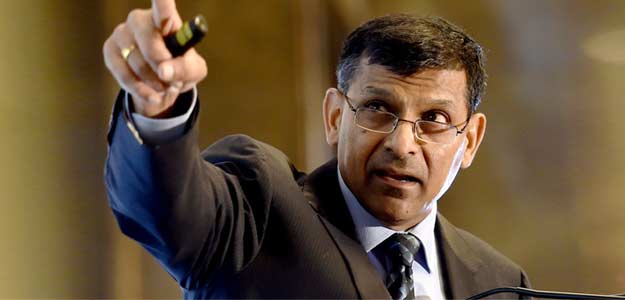
Mumbai: Outgoing Reserve Bank of India Governor Raghuram Rajan has no "immediate plans" to write a tell-all book on his experience as head of the central bank, unlike his predecessor D Subbarao whose quite revealing memoir has just come out.
Mr Rajan, who has often been accused by critics of keeping interest rates too high and seen as being critical of the government and its policies, making his tenure full of several controversies, said he rather plans to write on "academic issues" after leaving the RBI.
"I have no immediate plans to write a book on this subject," he said when asked whether he would write a book similar to Mr Subbarao's a few years down the lane.
"I will write on academic issues," Mr Rajan told a select group of journalists here.
He refused to take any questions on his decision not to seek a second term or on political criticism.
Mr Subbarao, who served as RBI governor for five turbulent years between 2008 and 2013, in his just-released book 'Who Moved My Interest Rate', has written about several occasions when he felt pressure from the then finance ministers P Chidambaram and Pranab Mukherjee to cut interest rates.
He also said "there is a price to pay, of course, for not falling in line", referring to the government's refusal to accept his recommendations in appointment of deputy governors.
While a tussle has been noticed between the RBI governor and the government for years, it is said to have escalated in recent years. Mr Rajan has often been seen as being critical of the government, including on non-economic matters.
Mr Rajan surprised everyone last month by announcing that he would not seek a second term at RBI at the end of his current three-year tenure on September 4 and would return to academia.
Ten of the 22 governors so far - including Mr Rajan's three immediate predecessors - served at least five-year terms. Two of them - in 1937 and 1957 - resigned early due to differences with the government.
Mr Rajan, a former chief economist at IMF and on-leave Professor of finance at the Chicago University's Booth School of Business, was appointed governor of the central bank by the previous Congress-led UPA government in September 2013.
When he took charge, the rupee was at a record low and the inflation rate was among Asia's highest. While he is credited for having stabilised the foreign exchange market, he is also criticised for holding interest rates high for a long time.
He began lowering the rate only last year after global oil prices crashed. He has since brought down the benchmark rate to a five-year low of 6.5 per cent.
He is now in the midst of a $120 billion clean up of stressed assets in the banking system.

-
Opinion | India at 38: From Innovation Overperformer to Innovation Powerhouse

India now has 453 VC-backed deep science startups, 18 of them late-stage, after 117 percent growth since 2020. Laurus Labs, at USD 9.3 billion, is the most valuable deep science company in any middle-income economy outside China.
-
Navigating Energy Crossroads: S Jaishankar's Call For Diversified Supply Chains At G20 Ministerial Meeting
As geopolitical fault lines continue to test maritime trade routes and commodity flows, Jaishankar's message remains pertinent: true economic resilience requires open markets, protected transit lines, and a genuine commitment to multilateral cooperation rather than coercion.
-
Indians Are Travelling, But Not Every Journey Is A Holiday | The Week In Whys
Pilgrims, patients and working women are the real travellers, and the system hasn't quite caught up with them.
-
Getting To Work Costs Women More | The Reason Why
It is not just about women paying more than men. It is about women paying much more in cities than in villages.
-
AI Bias In Investing Cannot Be Eliminated, But It Can Be Governed
Framing is a particularly important example as identical financial information presented in terms of gains rather than losses can lead an LLM to reach a different assessment.
-
Joining The Dots | Dark Skies, Steady Diya: Why Hope Holds This Diwali
With war, a weak rupee and foreign outflows weighing on sentiment, policymakers at the NDTV World Summit and market veterans at NDTV Profit Ignite: Diwali Edition offered the same advice: stay invested and filter out the noise.
-
The Curious Case of Equitas Small Finance Bank And A CEO Who Quit For Stock
PN Vasudevan believes persistent investor concerns over a perceived conflict of interest had become a governance overhang on Equitas Small Finance Bank's stock, even as the lender improved profitability and asset quality.
-
Talking Points This Week: AI Cash Burn, A Tiger Comeback And An India That Still Finds Its Own Path
India is not immune to higher oil or tighter global liquidity, yet its earnings base is broader, its domestic policy levers are still available.
-
Foreign Investors Own Half Of HDFC Bank and ICICI Bank. An LTCG Cut Could Matter Most Here
Foreign portfolio investors have US$115 billion parked in HDFC Bank, ICICI Bank. If the government cuts long-term capital gains tax, Jefferies says returning foreign money could land here first.










