As State-Run Banks Bleed On Bad Loan Provisions, Is Turnaround Possible?
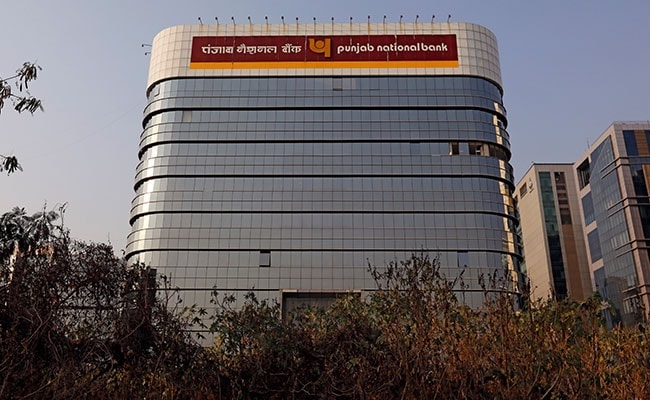
As the country's 21 public sector banks (PSBs) announced their results for the fourth quarter of financial year 2017-18, only two of the state-run banks -- Indian Bank and Vijaya Bank -- have posted profits. The combined losses of other 19 PSBs for the quarter stand at a staggering amount of Rs 63,117 crore, out of which the top five account for Rs 35,627 crore led by the second-largest PSB, Punjab National Bank (PNB), which posted a loss of Rs 13,417 crore. The lowest loss was posted by Bank of Maharashtra at Rs 113 crore.
Reserve Bank of India's (RBI) revision of loan restructuring schemes in February, has led to banks increasing provisions for bad loans -- the major reason for banks posting high losses. State Bank of India's (SBI) provision for bad loans stood at Rs 24,080 crore and PNB's at Rs 20,353 crore for the quarter under review.
"Higher non-performing assets (NPA) provisions mean your profit will go down and you'll continue making losses which will also impact your net-worth," says Madan Sabnavis, chief economist, CARE Ratings.
When the financial woes turn from bad to worse, one alternative doesn't seem to suffice. A bouquet of fiscal and monetary answers, which include massive capital infusion, the landmark bankruptcy code, RBI's PCA and even mergers, can rescue, or atleast attempt to rescue the PSBs, which comprise almost 70 per cent of Indian banking system.
Are mergers, privatisation the solution?
As bad loans near Rs 10 lakh crore, there have been repeated talks of mergers and privatisation of PSBs. "As banks are weak now, relatively stronger banks will be merged with weaker banks but the balance sheet might not be good for the economy,” says Kuntal Sur, partner and leader, FS risk and regulation, PwC India. "If we look at privatisation of PSBs, because of their financial health, we won't get any value and no one would be willing to pick up these banks," says Mr Sabnavis.
How helpful is the government's bank recapitalisation plan?
When banks were struggling with exorbitant NPAs, the central government's announcement, in October last year, of injecting fresh capital to the tune of Rs 2.11 lakh crore has given a lease of life to the ailing banking sector in general and to the PSBs in particular. However, it doesn't seem to be the quick fix to the NPA woes, nor will it play the placebo effect.
As, Karthik Srinivasan, senior vice-president and group head, financial sector ratings, ICRA, explains, "The recapitalisation per se has not improved the capital position of PSBs but has prevented a deterioration in their capital position despite the large losses reported by them during FY2018."
He attributes the inefficacy of NPAs to the way the capital will be raised for the PSU banks.
"As one-third of Rs 2.11 trillion (2.11 lakh crore) was to be raised by PSBs through equity, after their weak results, their ability to raise capital and investor interest for their shares may be muted. Hence, the overall effectiveness of recapitalisation plan has reduced considerably."
"In case banks are not able to raise the capital from markets, government will have to increase the capital infusion budgeted for FY2019.”
Not only government, but the banking regulator, RBI, has also come to the rescue of state-run banks. However, amid much apprehension and skepticism, the RBI's lone weapon in its armoury is the prompt corrective action (PCA) that restrains banks from further lending, which further weakens the abilities of banks to come out of financial mess.
RBI placing of 11 state-owned banks under its PCA framework -- which restricts banks from lending, distributing dividends, and expansion of branches -- will cast a shadow on loan disbursal, experts opine. Large banks such as IDBI Bank, Central Bank of India and Bank of India are under RBI's PCA framework and according to various reports, PNB could be the next on the list.
However, large corporate houses with strong balance sheets should not borrow from banks, which is a global practice, and go for the bonds market where the governance is much stronger, says Mr Sur. Others can look towards private equity firms, peer-to-peer lending and fin-tech firms, he further added.
The bankruptcy code launched in 2016 with a lot of fanfare is also one of the landmark decisions that will work to the advantage of public sector banks.
Can the Insolvency and Bankruptcy Code help banks recover?
Experts hope that the Insolvency and Bankruptcy Code (IBC), which came into effect in 2016 to fix the bad loans issue of the banking sector, will make the state-run lenders profitable. With the acquisition of debt-laden Bhushan Steel by Tata Steel under the IBC -- banks will get Rs 35,200 crore and a 12 per cent stake in the company -- experts say, 10-15 such large cases getting solved will lead to banks writing off provisions and result in healthier balance sheets.
Recapitalisation and resolution of stressed assets shall lead to cleaning up of bad assets for the banks during next two years, i.e. till FY2020 and PSBs may return to the path of profitability thereafter, says Mr Srinivasan.

-
Unhedged Position: Can India See An Indonesia-Style Time Correction?

The Nifty is trading below levels it first clocked in 2024. Is there, then, as I have suggested in the headline, potential that the current time correction drags on painfully for the next three-five, even ten years?
-
Navigating Friction And Energy Realities: An Analysis Of Marco Rubio's October Visit To India
Occurring at a critical juncture marked by stalled trade negotiations and escalating geopolitical pressures over global energy supplies, the visit offers a profound window into modern US-India relations.
-
India Exports Capital. Why Not Export Trusteeship?
The big question, then, is whether India can build an institution that global borrowers, investors, banks, and lawyers can trust, even without an Indian connection.
-
France's Economy & Politics Are In Crisis | The Reason Why
Let's look at how the French economy and politics evolved under Nicolas Sarkozy, Franois Hollande and Emmanuel Macron.
-
You May Inherit The Business. You Must Earn Its Credibility.
Succession tests the founder's ability to share authority as much as it tests the next generation's readiness to assume it.
-
Signing Deals Is One Thing; Making Them Work Is Another | The Week In Whys
Sometimes, things don't turn out as planned. Indian companies have lost some bids to rivals, some projects won't produce until 2030.
-
FOMC Wall, PERM Suspension, Hospital Stocks | Talking Points This Week
A PERM suspension would directly affect green-card sponsorship rather than H-1B visas, so the near-term earnings impact could remain relatively limited. The key question is whether this marks a new phase in US scrutiny of Indian IT.
-
Everything, Everywhere, All At Once: Dalal Street's Week To Forget | Joining The Dots
Visa curbs, a Starlink spat and cancer drug caps: what connects this week's shocks for Indian markets
-
India Is Going Abroad For Critical Minerals. But It May Take Years To Pay Off | The Reason Why
Although India's steps are in the right direction, they remain modest compared with India's growing dependence.
-
When Everyone Has AI, What Gives You An Edge?
India's young workforce is entering an uncertain world of work where powerful AI tools are becoming widely accessible. The advantage will belong to those who combine deep expertise with digital fluency, and the distinctly human capabilities that technology cannot manufacture.









