Would Grasim-AB Nuvo Have Merged if Birla Wasn’t Common Shareholder, Asks Anil Singhvi
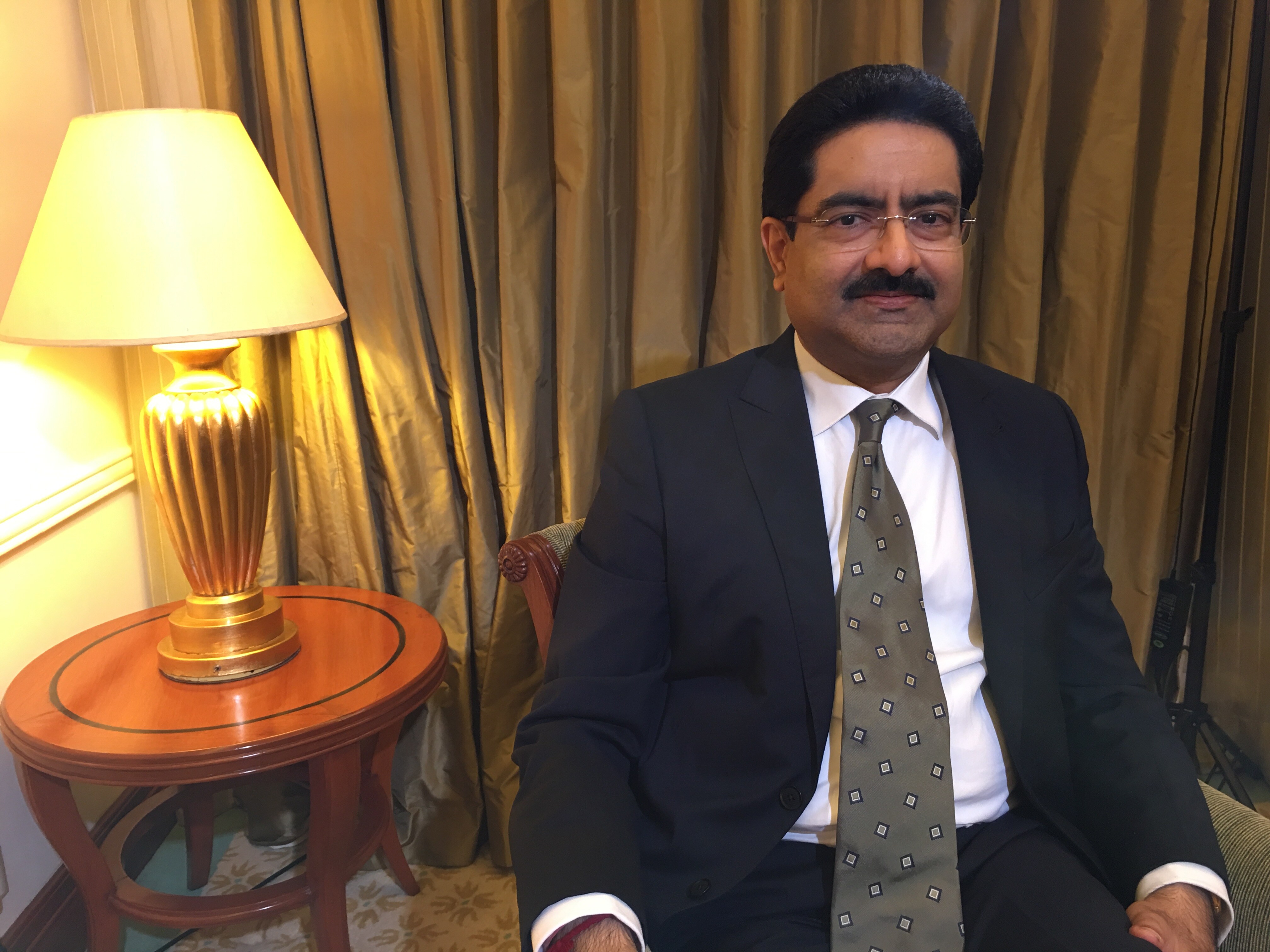
Last week, the Aditya Birla Group announced a restructuring in which group companies Grasim and Nuvo would merge into a new Grasim. Thereafter Nuvo's financial services business would be demerged and listed with Grasim owning 57 percent of it, promoters owning 17 percent and public shareholders 26 percent. The markets have dissed the merger and both Grasim and Nuvo shares have fallen sharply since then. Speaking to BloombergQuint's Menaka Doshi, Anil Singhvi, the founder of proxy advisory firm IIAS, said the restructuring does not help public shareholders of either company.
Edited excerpts from the conversation.
Why are you critical of the Grasim-Nuvo merger?
Let's examine Grasim first. Grasim already has a textile and a cement business. Because of having this holding company structure, it already suffers 35 percent discount to the underlying value of the textile business or cement business put together on that.
Now on top of this, if we want to have financial services, telecom, urea, insulators, all of that, obviously from being a two business holdco, it is becoming a conglomerate. In India we have seen conglomerates have discounts ranging between 35-70 percent. So god forbid if people think Grasim is really not a good idea, Grasim's discount to the underlying value from 35 percent may move up to 50 percent or excess of 50 percent.
The reason why we didn't spin it (financial services business) off as an independent entity, is because we have ambitious plans to grow the business, and this structure gives us the fire power in terms of just the ability to fund that ambition, since this will be a subsidiary of Grasim, with Grasim having about 57 percent stake in the company.Kumar Mangalam Birla, Chairman, Aditya Birla Group
But it's not only the financial services business, it's also the telecom business, which is also a large guzzler of capital.Anil Singhvi, Founder, IIAS
Won't the financial services business benefit from a strong parent in Grasim-Nuvo?
I don't necessarily agree on that. Financial services as you know is a money guzzler business where you have to constantly provide capital; the more capital you provide, the better you do. But that does not necessarily mean that Grasim is a cash cow because the cash generation on Grasim balance sheet per se is only the textile business. Otherwise it's only the dividend, which comes from UltraTech.But it's not only the financial services business, it's also the telecom business, which is also a large guzzler of capital. So, it's not just financial services. They have really touted this whole exercise as being done because Grasim shoulders will get some financial services shares as well. But look at it, the tag along is also the telecomm business. According to me Idea (Cellular) is one of the poorest businesses today to take on the might of (Reliance) Jio. So, everyone knows about it very well on this that Idea will have a major problem because they lack spectrum and they will have to burn lot of cash fighting with Reliance Jio. So, today for anyone to say that Grasim balance sheet is a strong balance sheet, yes today it is a strong balance sheet, but by bringing in these two businesses, which are really going to take too much of cash is not serving anyone's purpose. The second point is AB Nuvo. People who are buying AB Nuvo shares because they want to have financial services shares. Now what have you done by this restructuring? 57 percent will be held by Grasim and only 43 percent is being distributed. I don't think shareholder ever bought AB Nuvo shares only to get a 47 percent right. Why should they get into holding a Grasim share? Today if suppose the shareholding was not common of Kumar Mangalam Birla and these two companies, and Grasim and Nuvo would have been separate companies not having this one conflicted shareholder, do you think they would have ever merged? Do you ever think board of Grasim and AB Nuvo would have found any reason to merge these two companies? Then you can merge even Hindalco tomorrow by the same definition. Why not merge Hindalco? Actually to be honest to you, I have a feeling that this whole exercise is being done today to increase from 30 percent to 39 percent, the holding of the promotor in Grasim. And going forward this will become a Pilani investment. What is Pilani investment? It has all companies, underlying companies, all listed companies and it is a holdco. I think he wants to kill any interest of any shareholder in Grasim, and over a period of time, creep-in shares because Grasim will be trading always at a discount of 50- 60- 70 percent to the underlying assets which it has, which are listed companies and over period of time Grasim will become a Pilani investment. In fact, they did Pilani exactly the same way Grasim is going today. And mind you, when Century (Textiles) comes in because of the personal and family restructuring, they will merge Century also, because it also has textile and cement and they'll say there is a good reason for us to merge Century Textile also into Grasim and increase our holding. Then the last one is Hindalco. Take my word if this merger goes through, next will be Century Textile. Thereafter it will be Hindalco. Grasim will be a holding company for the promotors with no interest by outside shareholders, that's what happened in Pilani.
Both companies today are in similar businesses. So you haveviscose staple fiber in Grasim, you have viscose filament yarn in Nuvo, theyboth come together, you have caustic soda in both companies, they both cometogether. There is a certain amount of cross holding that has always beenthere, for example, both companies have a shareholding in ABSFL, Idea andHindalco, those come together. So there are positive impacts of those as wellthat will come together.Kumar Mangalam Birla, Chairman, Aditya Birla Group
Suppose...Grasim and Nuvo would have been separate companies, not having this one conflicted shareholder, do you think they would have ever merged?Anil Singhvi, Founder, IIAS
Won't Grasim shareholders benefit from exposure to a fast growing financial services business?
Well there are many such growth areas in India. E-commerce is one, there could be something else also. But when I'm buying Grasim shares, largely I'm buying for cement and textile. I'm really not buying Grasim shares for financial services. It doesn't work.
Secondly, the fund managers in India or abroad, they all take sectoral views. How will they have a view at the same time and point – a view on cement, a view on textiles, a view on financial services, a view on telecom, a view on insulators, a view on urea? Come on, give me a break. I don't think there can be one fund manager, who can take view on seven of the very very different businesses.
Won't new Grasim be a stronger, more diversified holding company?
Then I would rather buy a balanced mutual fund and take a ride on that, rather than buying Grasim. Why should I take the risk? There are enough balance funds available which are having a much more sectoral exposure than the Grasim has.
All of these businesses are market leaders in their ownspaces and that is very unusual for a conglomerate with so many businesses tohave every business which is a dominant player in its own industry and I'd justlike to say that this transaction is EPS accretive for Grasim right from dayone.Kumar Mangalam Birla, Chairman, Aditya Birla Group
I would rather buy a balanced mutual fund and take a ride on that, rather than buying Grasim.Anil Singhvi, Founder, IIAS
Grasim vs Nuvo - which company's shareholders stand to gain from this restructuring?
Only one set of shareholders and no prices for guessing, it is Mr Kumar Mangalam Birla and his companies. And let me give you one more example, they talk about the fair value, that we've done this and we have independent valuers. I respect them, they're really very bright people. Would Mr Birla be then interested in selling off his 20 percent holding, 10 percent is held by Pilani and Hindalco, so I won't include that, at the fair valuation. I'm sure there would be many private equity buyers willing to buy his 20 percent holding at the same fair valuation.
Also Read:
Birla Moves to Simplify Group Structure, Values Financial Services Arm at Rs 25,000 Crore
Billionaire Birla May Sell Stake in Finance Unit Before Listing

-
High US Salaries, No Green Card Certainty: The Financial Calculation Facing Indian H-1B Families

The suspension of PERM processing at eight technology employers does not cancel existing H-1B visas. What it does is force a question many Indian families have been avoiding: is the US salary worth tying your career and family plans to one employer?
-
Swiggy vs Eternal: Food Delivery's Two Rivals Are No Longer In The Same Race
Eternal is building a private AI assistant, dark.ai. Swiggy is still working out how to make Instamart pay, with an operating loss of Rs 895 crore in the July-September quarter while Blinkit stayed profitable.
-
Where You Live Shapes How You Get To Work | The Reason Why
Two-wheelers are the most popular way to get to work in India, accounting for nearly 43% of workplace commutes.
-
Unhedged Position: Can India See An Indonesia-Style Time Correction?
The Nifty is trading below levels it first clocked in 2024. Is there, then, as I have suggested in the headline, potential that the current time correction drags on painfully for the next three-five, even ten years?
-
Navigating Friction And Energy Realities: An Analysis Of Marco Rubio's October Visit To India
Occurring at a critical juncture marked by stalled trade negotiations and escalating geopolitical pressures over global energy supplies, the visit offers a profound window into modern US-India relations.
-
India Exports Capital. Why Not Export Trusteeship?
The big question, then, is whether India can build an institution that global borrowers, investors, banks, and lawyers can trust, even without an Indian connection.
-
France's Economy & Politics Are In Crisis | The Reason Why
Let's look at how the French economy and politics evolved under Nicolas Sarkozy, Franois Hollande and Emmanuel Macron.
-
You May Inherit The Business. You Must Earn Its Credibility.
Succession tests the founder's ability to share authority as much as it tests the next generation's readiness to assume it.
-
Signing Deals Is One Thing; Making Them Work Is Another | The Week In Whys
Sometimes, things don't turn out as planned. Indian companies have lost some bids to rivals, some projects won't produce until 2030.
-
FOMC Wall, PERM Suspension, Hospital Stocks | Talking Points This Week
A PERM suspension would directly affect green-card sponsorship rather than H-1B visas, so the near-term earnings impact could remain relatively limited. The key question is whether this marks a new phase in US scrutiny of Indian IT.









