Property Registrations In Maharashtra Drop Nearly 40% Since November 9
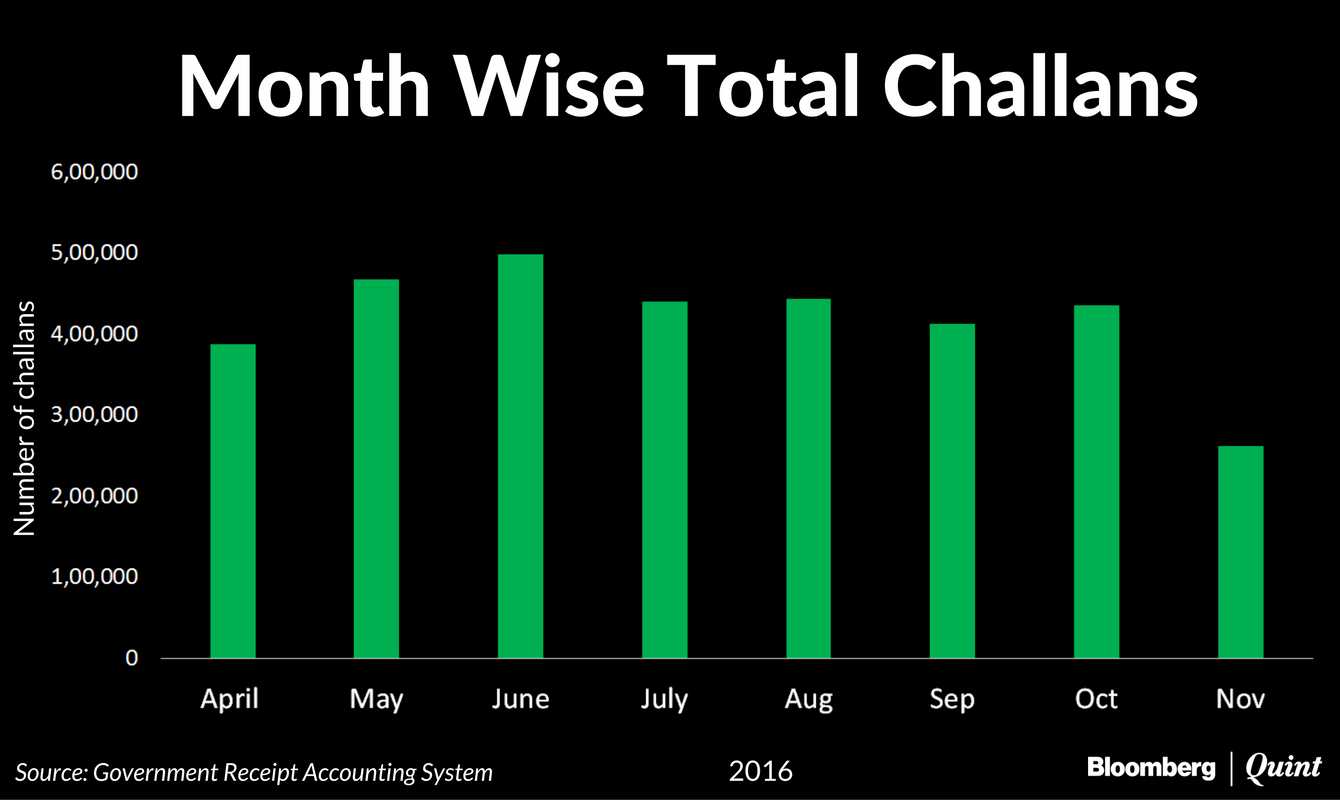
The Maharashtra government's revenue collection has been hit hard by the cash crunch. Receipts have declined 53.3 percent on a month-on-month basis so far in November. Stamp duty and registration transactions have also dipped 39.9 percent, according to data last compiled by the state government on November 23.
While the scarcity of liquid cash has had an impact on the entire economy, real estate is expected to be one of the worst-hit sectors because of the government's demonetisation move as cash forms a major component in most transactions in the sector.
Property transactions contributed 44 percent of the total revenue collected by the Maharashtra government so far this financial year. N Ramaswamy, the inspector general of registrations and controller of stamps in Maharashtra told BloombergQuint that the lion's share of stamp duty and registration transactions are property-related, constituting 55-58 percent of the total amount.
.png)
Property registrations in the state have fallen 39 percent in terms of the number of documents registered since November 9 and revenue accrued through these registrations has declined by 30 percent, he added.
Real estate consultancy firm Jones Lang LaSalle (JLL) expects the luxury and high-end segments to take a big hit, resulting in a 30-35 percent decline in prices in this category, said the firm's India head Anuj Puri in an email response.
The luxury and high-end segments of residential real estate will see a major impact from this exercise, since it is an area which has seen a lot of payments done in cash.Ashwinder Raj Singh, CEO - Residential Services, JLL India
The biggest impact, though, will be felt in the secondary or resale market, where cash has been a veritable ‘must', the JLL report added.
The real estate sector has traditionally seen a very high involvement of black money and cash transactions. However, almost all such incidences have been in the secondary sales market, where cash components have traditionally been a veritable ‘must'. In other words, the resale properties segment will take a big hit.Ashwinder Raj Singh, CEO - Residential Services, JLL India
Putting Up A Brave Face
While the data clearly shows a sharp decline in registrations, not all developers share the pessimism. Rustomjee, one of the prominent developers in Mumbai told BloombergQuint that it hasn't seen a dip in their bookings and registrations yet and is confident that the cash crunch will not impact sales in the primary market.
There may be some impact in the secondary market but as far as the primary segment is concerned, I don't see much impact in the luxury segment.Sajal Gupta, Chief Financial Officer, Rustomjee
Abhishek Lodha, managing director of the Lodha Group believes demonetisation may in fact be positive for the real estate sector. As banks reduce interest rates prompted by the surge in cash deposits in the wake of demonetisation, the sector will see increased demand, allowing property prices to remain stable in the short-term.
There have been various views and opinions around price correction due to demonetisation. However, one must take into account that this move will subsequently improve liquidity and lower of interest rates by 1-1.5 percent over the next 12 months. With this, equated monthly installment (EMIs) will also reduce by almost 12 percent prompting consumers to buy before demand and prices for housing move up.Abhishek Lodha, Managing Director, Lodha Group
Lodha does concede though, that consumers may wait for banks to lower their lending rates before booking a new property.

-
High US Salaries, No Green Card Certainty: The Financial Calculation Facing Indian H-1B Families

The suspension of PERM processing at eight technology employers does not cancel existing H-1B visas. What it does is force a question many Indian families have been avoiding: is the US salary worth tying your career and family plans to one employer?
-
Unhedged Position: Can India See An Indonesia-Style Time Correction?
The Nifty is trading below levels it first clocked in 2024. Is there, then, as I have suggested in the headline, potential that the current time correction drags on painfully for the next three-five, even ten years?
-
Navigating Friction And Energy Realities: An Analysis Of Marco Rubio's October Visit To India
Occurring at a critical juncture marked by stalled trade negotiations and escalating geopolitical pressures over global energy supplies, the visit offers a profound window into modern US-India relations.
-
India Exports Capital. Why Not Export Trusteeship?
The big question, then, is whether India can build an institution that global borrowers, investors, banks, and lawyers can trust, even without an Indian connection.
-
France's Economy & Politics Are In Crisis | The Reason Why
Let's look at how the French economy and politics evolved under Nicolas Sarkozy, Franois Hollande and Emmanuel Macron.
-
You May Inherit The Business. You Must Earn Its Credibility.
Succession tests the founder's ability to share authority as much as it tests the next generation's readiness to assume it.
-
Signing Deals Is One Thing; Making Them Work Is Another | The Week In Whys
Sometimes, things don't turn out as planned. Indian companies have lost some bids to rivals, some projects won't produce until 2030.
-
FOMC Wall, PERM Suspension, Hospital Stocks | Talking Points This Week
A PERM suspension would directly affect green-card sponsorship rather than H-1B visas, so the near-term earnings impact could remain relatively limited. The key question is whether this marks a new phase in US scrutiny of Indian IT.
-
Everything, Everywhere, All At Once: Dalal Street's Week To Forget | Joining The Dots
Visa curbs, a Starlink spat and cancer drug caps: what connects this week's shocks for Indian markets
-
India Is Going Abroad For Critical Minerals. But It May Take Years To Pay Off | The Reason Why
Although India's steps are in the right direction, they remain modest compared with India's growing dependence.









