All You Need To Know About Nine Small Savings Schemes Available At Post Offices
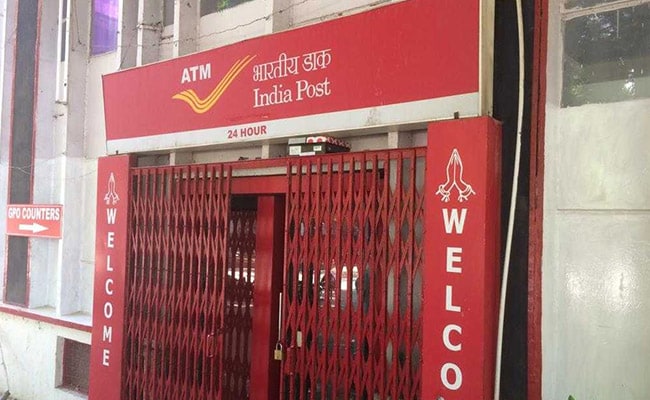
Government-run small savings schemes provide annual returns to the tune of 4-7.6 per cent. Interest rates on the nine small saving schemes - Post Office Time Deposit, Post Office Recurring Deposit, Post Office Monthly Income, Sukanya Samriddhi, National Savings Certificate and Public Provident Fund (PPF) - are currently reviewed every quarter. For the July-September period, the interest rates applicable to small savings schemes were kept unchanged at existing levels. India Post - which comes under the ambit of Ministry of Communications - has a network of more than 1.5 lakh post office branches across the country, according to its website - indiapost.gov.in.
Here are key features of each of the nine small savings schemes, available at the designated branches of post offices and commercial banks:
Post Office Savings Account
A savings account in a post office is opened against minimum cash payment of Rs 500. The account holder is required to keep a minimum balance of the same amount. Failing to maintain the required balance leads to a maintenance fee of Rs 100 on the last working day of each financial year.
National Savings Recurring Deposit Account
This scheme is similar to a fixed deposit account, except the investment is made every month. Investors can transfer the account from one designated branch to another. The installment is paid up to the 15th day of each month if the account is opened up to 15th of a calendar month, and up to the last working day of the month if it is opened between the 16th day and the last working day of a month.
National Savings Time Deposit Account
The time deposit or term deposit account comes in four maturity options: one year, two years, three years and five years. The account can be opened by cash or cheque, and can be extended beyond the term by submitting an application in the branch.
National Savings Monthly Income Account
In this scheme, an investor puts a lumpsum amount in the account by cash or cheque, and earns a monthly interest income for the maturity period of five years. A maximum investment of Rs. 4.5 lakh is allowed in this scheme.
Senior Citizens Savings Scheme Account
This scheme is meant for senior citizens and comes with a maturity period of five years. The account can be opened against a cash payment up to Rs 1 lakh and cheque payment above Rs 1 lakh.
Public Provident Fund Account
This savings scheme comes with a maturity period of 15 years, which can be extended for five years at a time. The account can be set up with a deposit of Rs 500, and a minimum of Rs 500 every financial year up to Rs 1,50,000.
National Savings Certificates Account
These certificates can be purchased at a minimum investment of Rs 1,000, and in multiples of Rs 100 without an upper limit. For example, a sum of Rs 1,000 invested in the NSC small savings scheme grows to Rs 1,389.49 over a period of five years.
Kisan Vikas Patra Account
The KVP certificates can be purchased against a minimum investment of Rs 1,000, and in multiples of Rs 100 without an upper limit. The amount invested in the Kisan Vikas Patra scheme doubles within 124 months (10 years and four months). The KVP certificates can be transferred from one person to another, and from one post office branch to another.
Sukanya Samriddhi Account
A guardian can open this account in favour of girl children up to 10 years of age. The account can be set up against a minimum investment of Rs 250, up to Rs 1,50,000 in a financial year.
Small Savings Scheme Interest Rates
| Post Office Scheme | Interest Rate |
|---|---|
| Post Office Savings Deposit | 4.00% |
| One-Year Time Deposit* | 5.5% |
| Two-Year Time Deposit* | 5.5% |
| Three-Year Time Deposit* | 5.5% |
| Five-Year Time Deposit* | 6.7% |
| Five-Year Recurring Deposit | 5.8% |
| Five-Year Senior Citizen Savings Scheme | 7.4% |
| Five-Year Monthly Income Scheme | 6.6% |
| Five-Year National Savings Certificate | 6.8% |
| Public Provident Fund Scheme | 7.1% |
| Kisan Vikas Patra | 6.9% |
| Sukanya Samriddhi Account Scheme | 7.6% |
| (Source: India Post) | |
* The time deposit savings scheme is available in four maturity period options: one year, two years, three years and five years.

-
High US Salaries, No Green Card Certainty: The Financial Calculation Facing Indian H-1B Families

The suspension of PERM processing at eight technology employers does not cancel existing H-1B visas. What it does is force a question many Indian families have been avoiding: is the US salary worth tying your career and family plans to one employer?
-
Unhedged Position: Can India See An Indonesia-Style Time Correction?
The Nifty is trading below levels it first clocked in 2024. Is there, then, as I have suggested in the headline, potential that the current time correction drags on painfully for the next three-five, even ten years?
-
Navigating Friction And Energy Realities: An Analysis Of Marco Rubio's October Visit To India
Occurring at a critical juncture marked by stalled trade negotiations and escalating geopolitical pressures over global energy supplies, the visit offers a profound window into modern US-India relations.
-
India Exports Capital. Why Not Export Trusteeship?
The big question, then, is whether India can build an institution that global borrowers, investors, banks, and lawyers can trust, even without an Indian connection.
-
France's Economy & Politics Are In Crisis | The Reason Why
Let's look at how the French economy and politics evolved under Nicolas Sarkozy, Franois Hollande and Emmanuel Macron.
-
You May Inherit The Business. You Must Earn Its Credibility.
Succession tests the founder's ability to share authority as much as it tests the next generation's readiness to assume it.
-
Signing Deals Is One Thing; Making Them Work Is Another | The Week In Whys
Sometimes, things don't turn out as planned. Indian companies have lost some bids to rivals, some projects won't produce until 2030.
-
FOMC Wall, PERM Suspension, Hospital Stocks | Talking Points This Week
A PERM suspension would directly affect green-card sponsorship rather than H-1B visas, so the near-term earnings impact could remain relatively limited. The key question is whether this marks a new phase in US scrutiny of Indian IT.
-
Everything, Everywhere, All At Once: Dalal Street's Week To Forget | Joining The Dots
Visa curbs, a Starlink spat and cancer drug caps: what connects this week's shocks for Indian markets
-
India Is Going Abroad For Critical Minerals. But It May Take Years To Pay Off | The Reason Why
Although India's steps are in the right direction, they remain modest compared with India's growing dependence.









