Do You Know Post Offices Help You Avail Money Sent From Abroad? Details Here
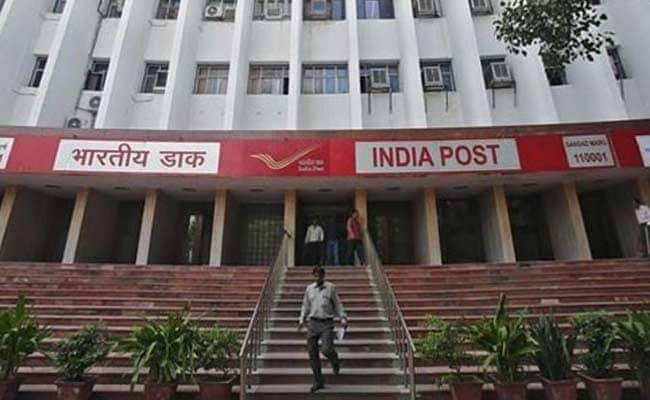
Did you know you can request international money transfer through India Post, which runs the network of post office across the country? Besides postal services, post offices under India Post also offer certain banking and remittance services. One of these facilities, called Money Transfer Service Scheme, enables individuals to make money transfer back home from abroad. Under the MTSS or Money Transfer Service Scheme, inward personal remittances - or money transfer from abroad to India - are allowed but not outward remittance, according to India Post's website - indiapost.gov.in. That means money can only be sent from abroad to India and not the other way around. Money transfers such as remittances towards family maintenance and remittances favouring foreign tourists visiting India are permissible, according to India Post.
Here are five things to know about Money Transfer Service Scheme available at post offices (India Post):
1. Currency: The sender, or remitter, pays the money in the local currency of the foreign country where he or she is located. The receiver, or payee, receives the amount in rupees (INR).
2. Transaction limit: India Post allows a maximum amount of $2,500 (US dollars) at a time through the Money Transfer Service Scheme. The scheme allows a maximum of 30 transfers made to a single beneficiary in a calendar year.
3. Cash limit: The receiver is paid an amount up to Rs 50,000 in cash. "Any amount exceeding this limit shall be paid by means of account payee cheque or credited directly to the Savings Account standing in the Post Office in the name of the beneficiary. However, in case of foreign tourists, higher amounts can be payable in cash," according to India Post.
4. Eligible documents: For proof of identity and residence, the payee can produce documents such as election card, driving license, PAN card, ration card and Aadhaar card. The post office requires a copy each of eligible documents.
5. The Department of Posts, which also offers several small savings schemes and runs a network of more than 1.55 lakh post offices across the country, offers the Money Transfer Service Scheme in partnership with US-based Western Union Financial Services. The service is targeted to particularly fulfill the needs of NRI-dependent families in India, visiting international tourists and foreign students studying in India, according to India Post.
How to send money through India Post's Money Transfer Service Scheme
In order to use the Money Transfer Service Scheme, the remitter - the person who sends the money - is required to visit a Western Union office. He or she is then required to fill up a form, to request the desired money transfer, and make payment of the principal amount along with charges, according to India Post.
A remittance service provider enables an expatriate to send money back home, generally through a wire transfer, by charging a fee.
The sender, or remitter, is issued a reference number, also known as money transfer control number, on the receipt.
This identification number is to be produced by the payee - the person who receives the money in India - at a post office. The remitter may share this information with the receiver of money over a phone call, for example.
The payee is then required to visit the post office and fill up a form to receive the money. Along with the money transfer control number, the payee is required to produce a valid ID for verification purposes. This entire process is completed within ten minutes, according to India Post.

-
Unhedged Position: Can India See An Indonesia-Style Time Correction?

The Nifty is trading below levels it first clocked in 2024. Is there, then, as I have suggested in the headline, potential that the current time correction drags on painfully for the next three-five, even ten years?
-
Navigating Friction And Energy Realities: An Analysis Of Marco Rubio's October Visit To India
Occurring at a critical juncture marked by stalled trade negotiations and escalating geopolitical pressures over global energy supplies, the visit offers a profound window into modern US-India relations.
-
India Exports Capital. Why Not Export Trusteeship?
The big question, then, is whether India can build an institution that global borrowers, investors, banks, and lawyers can trust, even without an Indian connection.
-
France's Economy & Politics Are In Crisis | The Reason Why
Let's look at how the French economy and politics evolved under Nicolas Sarkozy, Franois Hollande and Emmanuel Macron.
-
You May Inherit The Business. You Must Earn Its Credibility.
Succession tests the founder's ability to share authority as much as it tests the next generation's readiness to assume it.
-
Signing Deals Is One Thing; Making Them Work Is Another | The Week In Whys
Sometimes, things don't turn out as planned. Indian companies have lost some bids to rivals, some projects won't produce until 2030.
-
FOMC Wall, PERM Suspension, Hospital Stocks | Talking Points This Week
A PERM suspension would directly affect green-card sponsorship rather than H-1B visas, so the near-term earnings impact could remain relatively limited. The key question is whether this marks a new phase in US scrutiny of Indian IT.
-
Everything, Everywhere, All At Once: Dalal Street's Week To Forget | Joining The Dots
Visa curbs, a Starlink spat and cancer drug caps: what connects this week's shocks for Indian markets
-
India Is Going Abroad For Critical Minerals. But It May Take Years To Pay Off | The Reason Why
Although India's steps are in the right direction, they remain modest compared with India's growing dependence.
-
When Everyone Has AI, What Gives You An Edge?
India's young workforce is entering an uncertain world of work where powerful AI tools are becoming widely accessible. The advantage will belong to those who combine deep expertise with digital fluency, and the distinctly human capabilities that technology cannot manufacture.









