Port Bans Choke Qatar's Commodity Trade As Gas Supply Worries Grow
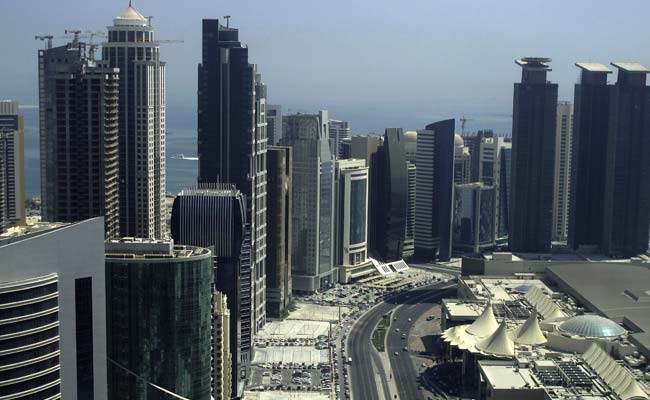
Singapore/London: A campaign by leading Arab powers to isolate Qatar is disrupting trade in commodities from crude oil to metals and food, and deepening fears of a possible shock to the global gas market, where the tiny Gulf state is a major player.
Just a day after Saudi Arabia and its Arab allies severed transport links with Qatar over a diplomatic row, bans on Doha's fleet using regional ports and anchorages threatened to halt some of its exports and disrupt those of liquefied natural gas (LNG).
Traders worried that Riyadh's allies would refuse to accept LNG shipments from the Gulf state, and that Egypt might even bar tankers carrying Qatari cargoes from using the Suez Canal as they head to Europe and beyond - although Cairo is bound by an international agreement to let them use the waterway.
Saudi Arabia, Egypt, the United Arab Emirates (UAE) and Bahrain severed relations with Qatar and closed their airspace to commercial flights on Monday, in the worst split between powerful Arab states in decades.
U.S. President Donald Trump joined in the dispute on Tuesday, saying leaders he met on a Middle East trip had warned him that Doha was funding "radical ideology" after he had demanded they take action to stop financing militant groups. Qatar vehemently denies the accusations made against it.
Qatar is now unable to load crude oil onto supertankers together with other Gulf-based grades, and price agency S&P Global Platts said it would not automatically include the country in its Middle East price benchmark.
The agency noted that tankers usually combine Qatari shipments with crude from Kuwait, Saudi Arabia, the UAE and Oman before heading from the Gulf. "Restrictions on vessels calling into Qatar and associated uncertainty could impact the inherent value of crude loading from Qatar," it said.
More worryingly, food imports are affected as Saudi Arabia closed its land border with Qatar, stranding thousands of trucks carrying supplies. Sources said the UAE and Saudi Arabia have already cut exports of white sugar to Qatar. Consumption is traditionally higher during the Muslim holy month of Ramadan, which is currently being observed.
Qatar, which largely depends on food imports for its population of 2.5 million, has assured residents it has taken measures to assure that normal life continues.
However, shoppers packed stores on Monday to stock up. On Tuesday, fresh poultry and some types of milk were in short supply at two supermarkets visited by a Reuters reporter. However, plenty of fruit and vegetables remained on the shelves.
EXCLUSION ZONES
With exclusion zones sweeping into effect, vessels from Qatar are no longer able to dock in the UAE or Saudi Arabia as planned. According to shipping data on Thomson Reuters Eikon, around half a dozen oil, chemical and LNG tankers have had to leave UAE waters or have halted in the open ocean.
Bans on Qatar-linked oil and LNG vessels refuelling at the UAE's port of Fujairah have added to chaos, pushing shippers to find new refuelling points at extra cost, industry sources said.
Lying near the Strait of Hormuz, through which ships pass on their way to customers in Asia, the United States or Europe, Fujairah is one of the world's most important ports for the global energy market.
Qatar, the world's biggest LNG seller, is moving to send a first batch of LNG tankers as far afield as Singapore and Gibraltar to refuel with Fujairah now off limits. Some trade sources said this could increase costs and delay deliveries to its clients globally.
The UAE's ban also effectively halts deliveries of LNG produced in Qatar to the Gulf state, trade sources said. Royal Dutch Shell has a deal with the Dubai Supply Authority to deliver up to three LNG cargoes per month, typically sourced from Qatar.
"This shouldn't affect the spot market though. Shell will simply need to go into its global portfolio and find LNG from elsewhere to send to Dubai. It's a minor inconvenience," one LNG trader said.
LNG traders are on high alert for signs of disruption through the Suez Canal. They are tracking the Al Ruwais LNG tanker, which is nearing the waterway and plans to become the first Qatari cargo to pass through since the row erupted.
Cairo has made no official statement. However, a Suez Canal Authority official said that under an international agreement, Cairo allows all ships to pass through except for those from countries at war with Egypt. The Suez Canal does not have the power to prevent Qatari ships from passing, the official added, speaking on condition of anonymity.
Any tanker barred from using the canal would have to sail around Africa, adding a month to shipping times. Such disruption could boost demand for Russian gas, just as Europe is trying to reduce its reliance on such supplies due to disputes with Moscow over its role in the Ukraine crisis.
Another test will be a batch of LNG shipments of Qatari origin being brought by commodity trader Trafigura to Egypt. These are due to arrive at the country's Ain Sokhna port over the coming days and weeks, trade sources said.
Any sign that state-run importer Egyptian Natural Gas Holding would bar LNG of Qatari origin would probably push up spot prices sharply as middlemen seek alterative supplies.
Last year Qatar produced 60 percent of all LNG imported by Egypt, all of which was brought in by third-party traders such as Trafigura, Glencore and Vitol.
"The biggest impact will be if Egypt tries to restrict vessels coming through the canal or if they ban Qatari LNG from local ports," a trading source said.
The rift has also hit aluminium exports from a Qatari plant part-owned by Norway's Norsk Hydro as it has lost access to the large Jebel Ali port in the UAE, through which it typically runs exports operations.
Circumventing barriers to customers in Asia, Europe and the United States will take some time, the company said, showing how the diplomatic face-off is inflicting havoc on global supply chains.
(Except for the headline, this story has not been edited by NDTV staff and is published from a syndicated feed.)

-
Opinion | India at 38: From Innovation Overperformer to Innovation Powerhouse

India now has 453 VC-backed deep science startups, 18 of them late-stage, after 117 percent growth since 2020. Laurus Labs, at USD 9.3 billion, is the most valuable deep science company in any middle-income economy outside China.
-
Navigating Energy Crossroads: S Jaishankar's Call For Diversified Supply Chains At G20 Ministerial Meeting
As geopolitical fault lines continue to test maritime trade routes and commodity flows, Jaishankar's message remains pertinent: true economic resilience requires open markets, protected transit lines, and a genuine commitment to multilateral cooperation rather than coercion.
-
Indians Are Travelling, But Not Every Journey Is A Holiday | The Week In Whys
Pilgrims, patients and working women are the real travellers, and the system hasn't quite caught up with them.
-
Getting To Work Costs Women More | The Reason Why
It is not just about women paying more than men. It is about women paying much more in cities than in villages.
-
AI Bias In Investing Cannot Be Eliminated, But It Can Be Governed
Framing is a particularly important example as identical financial information presented in terms of gains rather than losses can lead an LLM to reach a different assessment.
-
Joining The Dots | Dark Skies, Steady Diya: Why Hope Holds This Diwali
With war, a weak rupee and foreign outflows weighing on sentiment, policymakers at the NDTV World Summit and market veterans at NDTV Profit Ignite: Diwali Edition offered the same advice: stay invested and filter out the noise.
-
The Curious Case of Equitas Small Finance Bank And A CEO Who Quit For Stock
PN Vasudevan believes persistent investor concerns over a perceived conflict of interest had become a governance overhang on Equitas Small Finance Bank's stock, even as the lender improved profitability and asset quality.
-
Talking Points This Week: AI Cash Burn, A Tiger Comeback And An India That Still Finds Its Own Path
India is not immune to higher oil or tighter global liquidity, yet its earnings base is broader, its domestic policy levers are still available.
-
Foreign Investors Own Half Of HDFC Bank and ICICI Bank. An LTCG Cut Could Matter Most Here
Foreign portfolio investors have US$115 billion parked in HDFC Bank, ICICI Bank. If the government cuts long-term capital gains tax, Jefferies says returning foreign money could land here first.










