PM Modi's Steps To Save Economy From Hurting From Notes Ban
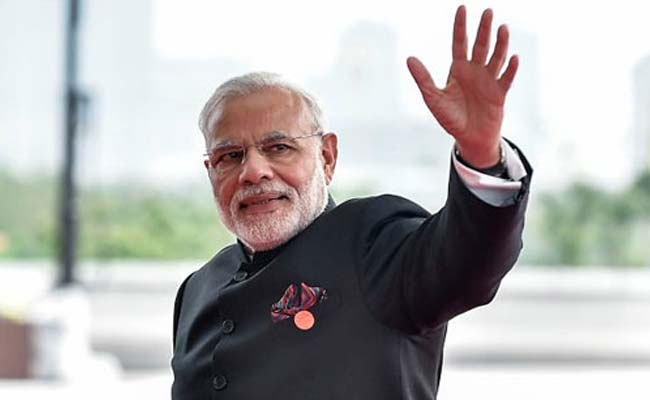
With indicators revealing a difficult end to Prime Minister Narendra Modi's unprecedented cash clampdown, he's turning to time-tested methods to cushion India's economy.
Lawmakers last week cleared about 600 billion rupees ($9 billion) in additional spending for the year through March, which includes a 10 percent increase in a rural jobs program Modi once mocked. Recent growth has been slower than estimated and data due Tuesday are expected to show that inflation slumped below the central bank's target as Modi's move dents demand.
Public spending is needed because the cash ban will hit private investment, said J. Dennis Rajakumar, director of the Mumbai-based think tank EPW Research Foundation. "The employment guarantee program to some extent will help ease the rural crisis that the country is heading toward," he said.
Sustaining commerce in India's cash-based hinterland is crucial for Modi before key state elections next year. Food prices are set to drop as his Nov. 8 move to scrap 86 percent of currency in circulation triggered distress sales of crops.
Consumer prices probably rose 3.9 percent in November, according to the median of 32 estimates in a Bloomberg survey of economists before data due at 5:30 p.m. in New Delhi. That would be the slowest pace in 15 months and below the 4 percent mid-point of the Reserve Bank of India's inflation target.
Governor Urjit Patel kept interest rates unchanged at a six-year-low on Dec. 7 and lowered the full-year growth forecast. The Asian Development Bank on Tuesday cut its forecast for India's 2016 gross domestic product expansion to 7 percent from 7.4 percent citing weak investment, a slowdown in agriculture and the cash shortages.
Sales of two-wheeler vehicles fell 5.9 percent in November, the first decline since December 2015, according to the Society of Indian Automobile Manufacturers' figures released last week.
Hurting the Hinterland
Central among Modi's concerns will be the 800 million Indians who live in villages, slowly rebuilding their earnings after back-to-back droughts destroyed crops and trade. His currency clampdown, which was aimed at hurting those with unaccounted cash, may impact these folks instead as they lack adequate access to banks or internet services.
Read why India's cash clampdown disproportionately hurts its villages
Rural India's support is important if Modi is to win elections in agrarian states including Uttar Pradesh and Punjab next year. He's already pledged to double farmer incomes by 2022 and has raised spending on the rural jobs program twice this year from the 385 billion rupees budgeted.
The latest boost includes 40 billion rupees on the world's largest public works program: the Mahatma Gandhi National Rural Employment Guarantee Act. Another 30 billion rupees will be spent on farm related activities.
"The government should immediately undertake more rural development programs like building toilets, houses and roads," said Bhagwat Prasad, director of the Akhil Bharatiya Samaj Sewa Sansthan, a support group for the poor in the Bundelkhand region, part of which lies in Uttar Pradesh. "No doubt MGNREGA could be the best option in providing relief to the rural people whose livelihoods have been made insecure by demonetization."
'Stay Cautious'
Modi needs to do more to cushion the economy as the rural jobs program creates fewer jobs than needed, said Jay Shankar, a New Delhi-based economist who's studied India's rural economy. While public spending is needed to boost demand, any new program would take about 1.5 years for implementation, he said.
The Nifty Fast Moving Consumer Goods index has fallen 7.2 percent since Modi's Nov. 8 announcement, steeper than the 4.4 percent decline in the broader gauge.
Recovery in rural demand will be delayed until October-March 2018 and companies selling goods such as soaps and cookies could report profit declines through January-March 2017, analysts at Religare Securities Ltd., including Varun Lohchab, wrote in a report on Monday.
"Market is underestimating the sharp slowdown in earnings growth," they said. "Stay cautious."
© 2016 Bloomberg L.P
(Except for the headline, this story has not been edited by NDTV staff and is published from a syndicated feed.)

-
High US Salaries, No Green Card Certainty: The Financial Calculation Facing Indian H-1B Families

The suspension of PERM processing at eight technology employers does not cancel existing H-1B visas. What it does is force a question many Indian families have been avoiding: is the US salary worth tying your career and family plans to one employer?
-
Unhedged Position: Can India See An Indonesia-Style Time Correction?
The Nifty is trading below levels it first clocked in 2024. Is there, then, as I have suggested in the headline, potential that the current time correction drags on painfully for the next three-five, even ten years?
-
Navigating Friction And Energy Realities: An Analysis Of Marco Rubio's October Visit To India
Occurring at a critical juncture marked by stalled trade negotiations and escalating geopolitical pressures over global energy supplies, the visit offers a profound window into modern US-India relations.
-
India Exports Capital. Why Not Export Trusteeship?
The big question, then, is whether India can build an institution that global borrowers, investors, banks, and lawyers can trust, even without an Indian connection.
-
France's Economy & Politics Are In Crisis | The Reason Why
Let's look at how the French economy and politics evolved under Nicolas Sarkozy, Franois Hollande and Emmanuel Macron.
-
You May Inherit The Business. You Must Earn Its Credibility.
Succession tests the founder's ability to share authority as much as it tests the next generation's readiness to assume it.
-
Signing Deals Is One Thing; Making Them Work Is Another | The Week In Whys
Sometimes, things don't turn out as planned. Indian companies have lost some bids to rivals, some projects won't produce until 2030.
-
FOMC Wall, PERM Suspension, Hospital Stocks | Talking Points This Week
A PERM suspension would directly affect green-card sponsorship rather than H-1B visas, so the near-term earnings impact could remain relatively limited. The key question is whether this marks a new phase in US scrutiny of Indian IT.
-
Everything, Everywhere, All At Once: Dalal Street's Week To Forget | Joining The Dots
Visa curbs, a Starlink spat and cancer drug caps: what connects this week's shocks for Indian markets
-
India Is Going Abroad For Critical Minerals. But It May Take Years To Pay Off | The Reason Why
Although India's steps are in the right direction, they remain modest compared with India's growing dependence.









