PM Modi's Cash Clampdown May Force RBI To Cut Rates
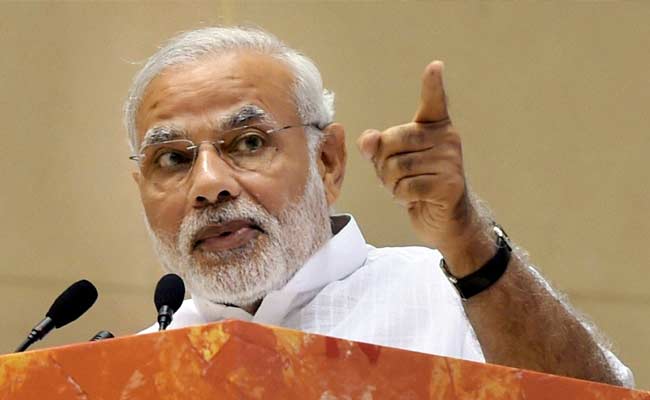
Mumbai: An intense cash shortage in India could force the central bank to cut interest rates to a six-year low on Wednesday as Prime Minister Narendra Modi's currency clampdown threatens to hit nearly every aspect of the economy, from consumers to supply chains.
A majority of the nearly 60 analysts polled by Reuters predict the Reserve Bank of India (RBI) will cut the repo rate by 25 basis points (bps) to 6.00 percent, the lowest since November 2010, while six predicted a deeper 50 bps cut.
Pressure on the RBI and Governor Urjit Patel to act has grown since PM Modi stunned the country on Nov. 8 with a drastic plan to abolish 500 and 1,000 rupee notes, removing 86 percent of the currency in circulation in a bid to crack down on "shadow economy."
Data so far shows the measure has hit the cash-reliant economy more than expected: auto sales plunged and services sector activity dived into contraction last month for the first time in 1-1/2 years.
The prospect that India's robust growth will be derailed could offset any worries about a volatile global environment, which saw the rupee sink to a record low last month as part of a sell-off in emerging market assets.
Analysts say the RBI has room to act given consumer inflation eased in October to 4.20 percent, the slowest pace in 14 months and below the RBI's target of 5 percent for March 2017.
"We expect the RBI monetary policy committee (MPC) to cut rates by 25 basis points," said Radhika Rao, an economist with DBS Bank, in a note.
"While lingering external uncertainties raise the odds of a no-move, the RBI MPC is likely to take a growth supportive stance to offset downside risks to growth from the demonetisation effort."
A rate cut is not without risks. It would mark a second consecutive 25 bps easing by the six-member MPC, and some foreign investors warn it could raise concerns about whether the central bank is losing its focus on inflation.
A cut would also come at a time when emerging markets are under pressure after the election of Donald Trump as U.S. president last month sparked a surge of capital flows back into the United States, a trend that could accelerate as the Federal Reserve gears up to raise interest rates next week.
In India, foreign investors sold a net $4.7 billion in debt and equities in November even, though the country is seen as in better shape than other emerging markets.
But a rate cut would signal the RBI's priority is in supporting the economy, which grew an annual 7.3 percent between July and September, the fastest rate for a large economy in the world but still below the levels needed to sustain full employment.
Investors will also want more details from Mr Patel about how the RBI is managing the process of demonetisation after coming under criticism from market participants for frequently announcing adjustments to its policies.
Most analysts say the RBI will likely partly roll back a directive for banks to place their entire deposits under the central bank's cash reserve ratio in a bid to absorb the extra liquidity generated by the government's banknotes move.
The need to keep it in place has eased after the government announced last week it would raise the issuance of special bonds to soak up the liquidity.

-
High US Salaries, No Green Card Certainty: The Financial Calculation Facing Indian H-1B Families

The suspension of PERM processing at eight technology employers does not cancel existing H-1B visas. What it does is force a question many Indian families have been avoiding: is the US salary worth tying your career and family plans to one employer?
-
Swiggy vs Eternal: Food Delivery's Two Rivals Are No Longer In The Same Race
Eternal is building a private AI assistant, dark.ai. Swiggy is still working out how to make Instamart pay, with an operating loss of Rs 895 crore in the July-September quarter while Blinkit stayed profitable.
-
Where You Live Shapes How You Get To Work | The Reason Why
Two-wheelers are the most popular way to get to work in India, accounting for nearly 43% of workplace commutes.
-
Unhedged Position: Can India See An Indonesia-Style Time Correction?
The Nifty is trading below levels it first clocked in 2024. Is there, then, as I have suggested in the headline, potential that the current time correction drags on painfully for the next three-five, even ten years?
-
Navigating Friction And Energy Realities: An Analysis Of Marco Rubio's October Visit To India
Occurring at a critical juncture marked by stalled trade negotiations and escalating geopolitical pressures over global energy supplies, the visit offers a profound window into modern US-India relations.
-
India Exports Capital. Why Not Export Trusteeship?
The big question, then, is whether India can build an institution that global borrowers, investors, banks, and lawyers can trust, even without an Indian connection.
-
France's Economy & Politics Are In Crisis | The Reason Why
Let's look at how the French economy and politics evolved under Nicolas Sarkozy, Franois Hollande and Emmanuel Macron.
-
You May Inherit The Business. You Must Earn Its Credibility.
Succession tests the founder's ability to share authority as much as it tests the next generation's readiness to assume it.
-
Signing Deals Is One Thing; Making Them Work Is Another | The Week In Whys
Sometimes, things don't turn out as planned. Indian companies have lost some bids to rivals, some projects won't produce until 2030.
-
FOMC Wall, PERM Suspension, Hospital Stocks | Talking Points This Week
A PERM suspension would directly affect green-card sponsorship rather than H-1B visas, so the near-term earnings impact could remain relatively limited. The key question is whether this marks a new phase in US scrutiny of Indian IT.









