PM Modi's $500-Billion Target For Electronic Manufacturing Carries Serious Intent: ICEA Chief
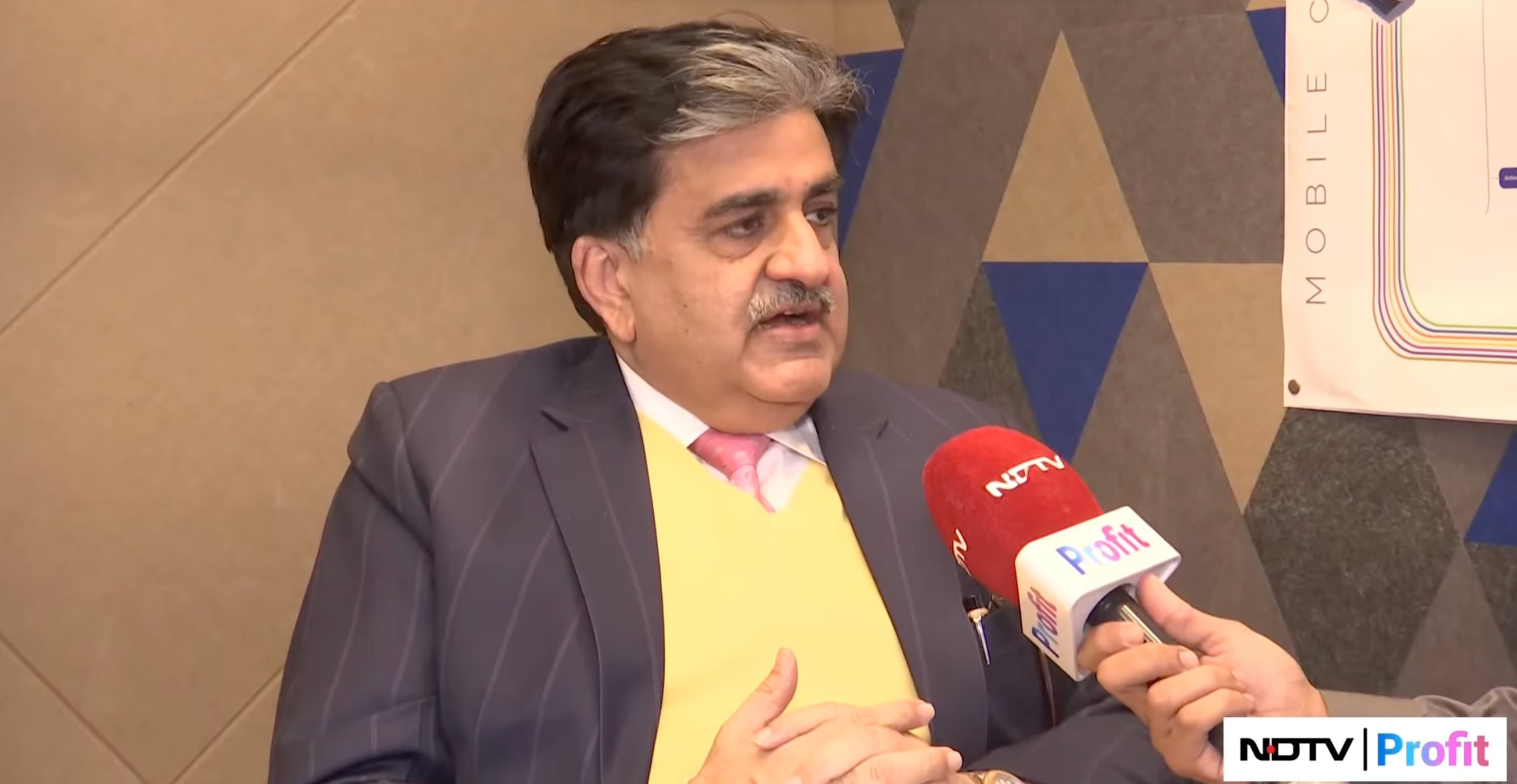
The Narendra Modi-led government's ambitious target of $500 billion, or roughly Rs 42.5 lakh crore by 2030 for the electronics manufacturing sector is not just aspirational but carries "serious intent," according to Pankaj Mohindroo, the chairman of the India Cellular and Electronics Association.
The prime minister's target is a monumental goal, requiring a 25% compound annual growth rate in the coming years, according to Mohindroo.
The export segment, in particular, will play a key role in achieving this goal, with exports needing to grow at a remarkable 45% CAGR—from $30 million, which is equivalent to roughly Rs 255 crore at the current conversion rate, to $200 million or approximately Rs 1,700 crore.
“When the PM sets a target, it's not angling anymore,” Mohindroo said. “The target reminds me of the famous song ‘You take my breath away',” he said, reflecting both the enormity and the urgency of the task.
The industry is already working "furiously" to meet this ambitious goal, with a strategic plan set to be unveiled within the next two months, the ICEA chief added.
The Smartphone Story
One of the standout successes in India's electronics sector has been the growth of smartphone exports. A few years ago, the country was largely import-dependent, with 80% of domestic smartphone consumption met through imports.
This year, smartphone exports are set to rise from Rs 1.29 lakh crore to Rs 1.75 lakh crore—a substantial growth trajectory. According to Mohindroo, the export sector is poised to be the next major growth driver, particularly given that India has now established scale in smartphone manufacturing. "Exports were negligible a few years back, but now the smartphone export story is robust," he said.
While smartphones have done well, there's a growing consensus that further stimulus is needed to sustain momentum in the overall scheme of electronics. Mohindroo believes that a Rs 40,000-crore package for electronics manufacturing is essential to propel the sector to the next level.
“We've achieved scale in smartphones, and that scale gives us the impetus to invest in critical areas like printed circuit boards, cameras, and displays,” he said. The current size of India's electronics manufacturing sector stands at $115 billion, but the $500-billion target will demand a much larger and more diversified supply chain, particularly in areas like sub-assembly components, which are crucial for sustaining export growth.
For that, Mohindroo said, India's traditional "import substitution" mindset must evolve. "It's no longer enough to rely solely on domestic consumption. We need to make a globally competitive industry," he said. This requires ramping up both domestic production and export capabilities for key components.
One of the more pressing concerns in the Indian electronics landscape has been the decline of domestic smartphone brands. Indian companies once led the charge in consumer electronics and IT products but have largely disappeared from the smartphone market. Mohindroo, however, remains optimistic about the future.
"This trend will not continue," he said, adding that the government and industry stakeholders are determined to bring Indian smartphone brands back into the fold.
Over the next year, Mohindroo said major developments in terms of domestic smartphone brands and supply chains, with a focus on technology transfer and investment to strengthen Indian companies in the sector can be anticipated.
Budget Expectations
Ahead of the upcoming Budget, in terms of policy, Mohindroo called for adjustments in tariff structures to foster competitiveness. “Some tariffs are just irritants and neither protect the industry nor create investments,” he said.
A key request from the industry is the removal of the 2.5% tariff on sub-assembly parts such as PCBA parts, connectors, and camera modules—critical components for electronics manufacturing.
Mohindroo is also critical of tariffs on non-smartphone sectors, stating that these sectors are not performing well and that imposing tariffs will only create obstacles rather than fostering growth. "India needs to be competitive, which requires low tariffs," he said, adding that the country's future as a global electronics hub hinges on creating the right policy environment.
Watch Here:

-
High US Salaries, No Green Card Certainty: The Financial Calculation Facing Indian H-1B Families

The suspension of PERM processing at eight technology employers does not cancel existing H-1B visas. What it does is force a question many Indian families have been avoiding: is the US salary worth tying your career and family plans to one employer?
-
Swiggy vs Eternal: Food Delivery's Two Rivals Are No Longer In The Same Race
Eternal is building a private AI assistant, dark.ai. Swiggy is still working out how to make Instamart pay, with an operating loss of Rs 895 crore in the July-September quarter while Blinkit stayed profitable.
-
Where You Live Shapes How You Get To Work | The Reason Why
Two-wheelers are the most popular way to get to work in India, accounting for nearly 43% of workplace commutes.
-
Unhedged Position: Can India See An Indonesia-Style Time Correction?
The Nifty is trading below levels it first clocked in 2024. Is there, then, as I have suggested in the headline, potential that the current time correction drags on painfully for the next three-five, even ten years?
-
Navigating Friction And Energy Realities: An Analysis Of Marco Rubio's October Visit To India
Occurring at a critical juncture marked by stalled trade negotiations and escalating geopolitical pressures over global energy supplies, the visit offers a profound window into modern US-India relations.
-
India Exports Capital. Why Not Export Trusteeship?
The big question, then, is whether India can build an institution that global borrowers, investors, banks, and lawyers can trust, even without an Indian connection.
-
France's Economy & Politics Are In Crisis | The Reason Why
Let's look at how the French economy and politics evolved under Nicolas Sarkozy, Franois Hollande and Emmanuel Macron.
-
You May Inherit The Business. You Must Earn Its Credibility.
Succession tests the founder's ability to share authority as much as it tests the next generation's readiness to assume it.
-
Signing Deals Is One Thing; Making Them Work Is Another | The Week In Whys
Sometimes, things don't turn out as planned. Indian companies have lost some bids to rivals, some projects won't produce until 2030.
-
FOMC Wall, PERM Suspension, Hospital Stocks | Talking Points This Week
A PERM suspension would directly affect green-card sponsorship rather than H-1B visas, so the near-term earnings impact could remain relatively limited. The key question is whether this marks a new phase in US scrutiny of Indian IT.









