PM Modi Reviews Progress Of GST Rollout: 10 Things To Know
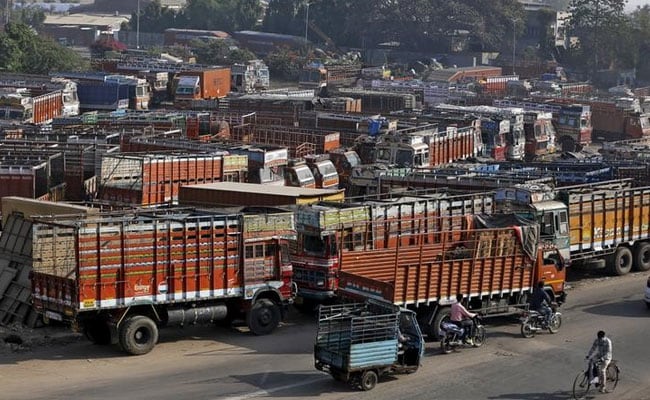
Prime Minister Narendra Modi on Monday reviewed the status of the planned rollout of the new indirect tax regime - Goods and Services Tax (GST) - from July 1. Terming GST implementation as "a turning point" in the economy, PM Modi said the creation of the one-nation, one-market and one-tax system would greatly benefit the common man. PM Modi took stock of various elements involved in GST rollout and also directed the officials that maximum attention be paid to cyber-security in IT systems linked to the GST, according to an official statement.
Here are 10 things to know:
PM Modi was informed that GST systems such as IT infra, training of officials, integration with banks and enrolment of existing taxpayers would be in readiness well in time for the July 1 rollout, an official statement said. It also said the information security systems were discussed in detail.
The Prime Minister asserted that the implementation of GST from July 1st will be the culmination of the concerted efforts of all stakeholders, including political parties, trade and industry bodies.
The government announced a Twitter handle - @askGst_GOI - and an all-India toll-free phone - 1800-1200-232 - for queries.
In its June 3 meeting, the GST Council decided to tax packaged and branded food items at 5 per cent, tendu leaves - used to wrap bidi - at 18 per cent and bidi at the highest rate of 28 per cent. Unlike cigarettes, there will be no cess on bidi.
The Goods and Services Tax or GST Council, chaired by Finance Minister Arun Jaitley and comprising state counterparts, had last month decided rates for over 1,200 goods and 500 services, placing them in four tax slabs of 5, 12, 18 and 28 per cent.
An analysis of the rates has shown that daily use items like soap and toothpaste will cost less while fresh fruits, vegetables, pulses, bread and fresh milk will continue to be exempt from any tax, according to news agency Press Trust of India.
Food grains may become cheaper as they have been put in the zero-rated commodities list. Currently, some states levy a purchase tax of 2-5 per cent on food grains, which will be abolished under GST. Among the goods, mass consumption items like fresh fruits, vegetables, pulses, bread and milk have been exempt from any taxes, besides health and education services.
Apparel up to Rs. 1,000, footwear up to Rs. 500 and biscuits are set to get cheaper with the July 1 rollout of GST. Tax experts say that the rate of 3 per cent on gold decided under GST won't be significantly different from the current tax regime on the yellow metal and this would be welcomed by the jewellers.
The Goods and Services Tax will be an exciting development from data point of view and help provide a more complete description of the economic activity, Chief Statistician TCA Anant has said.
Economy-class air travel will be slightly cheaper and so will be hiring a taxi as tax on such travel has been brought down to 5 per cent in the Goods and Service Tax (GST) regime from the current service tax of 6 per cent.

-
Navigating Energy Crossroads: S Jaishankar's Call For Diversified Supply Chains At G20 Ministerial Meeting

As geopolitical fault lines continue to test maritime trade routes and commodity flows, Jaishankar's message remains pertinent: true economic resilience requires open markets, protected transit lines, and a genuine commitment to multilateral cooperation rather than coercion.
-
Indians Are Travelling, But Not Every Journey Is A Holiday | The Week In Whys
Pilgrims, patients and working women are the real travellers, and the system hasn't quite caught up with them.
-
Getting To Work Costs Women More | The Reason Why
It is not just about women paying more than men. It is about women paying much more in cities than in villages.
-
AI Bias In Investing Cannot Be Eliminated, But It Can Be Governed
Framing is a particularly important example as identical financial information presented in terms of gains rather than losses can lead an LLM to reach a different assessment.
-
Joining The Dots | Dark Skies, Steady Diya: Why Hope Holds This Diwali
With war, a weak rupee and foreign outflows weighing on sentiment, policymakers at the NDTV World Summit and market veterans at NDTV Profit Ignite: Diwali Edition offered the same advice: stay invested and filter out the noise.
-
The Curious Case of Equitas Small Finance Bank And A CEO Who Quit For Stock
PN Vasudevan believes persistent investor concerns over a perceived conflict of interest had become a governance overhang on Equitas Small Finance Bank's stock, even as the lender improved profitability and asset quality.
-
Talking Points This Week: AI Cash Burn, A Tiger Comeback And An India That Still Finds Its Own Path
India is not immune to higher oil or tighter global liquidity, yet its earnings base is broader, its domestic policy levers are still available.
-
Foreign Investors Own Half Of HDFC Bank and ICICI Bank. An LTCG Cut Could Matter Most Here
Foreign portfolio investors have US$115 billion parked in HDFC Bank, ICICI Bank. If the government cuts long-term capital gains tax, Jefferies says returning foreign money could land here first.
-
'Never Seen This Level Of Negativity': Sandeep Tandon Says The Next Rally May Be Closer Than You Think
Veteran investor Sandeep Tandon says foreign selling is easing, large-caps are due a comeback and mid-caps are crowded, while he turns positive on gold, power and pharma this Diwali.
-
Indians Stay With Family, Not In Hotels | The Reason Why
India still lacks enough clean, reliable and affordable hotels for budget-conscious travellers.










