PM Modi Launches 'BHIM' App, Says Your Thumb Your Bank Now
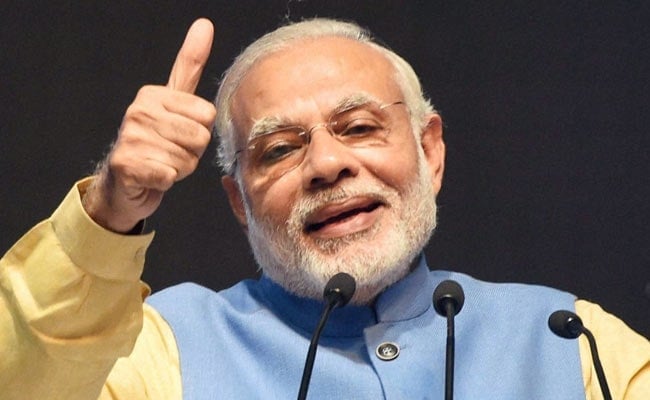
New Delhi: Prime Minister Narendra Modi on Friday launched an Aadhaar-based mobile payment application at 'DigiDhan Mela' here to promote and make digital transactions easier.
The app is called BHIM (Bharat Interface for Money) -- a re-branded version of UPI (Unified Payment Interface) and USSD (Unstructured Supplementary Service Data).
Speaking on the occasion, Modi said BHIM app was very simple to use and a thumb impression was enough to operate it.
PM Modi said the government was working to launch a new security feature, by using which transactions could be carried out without a phone and Internet etc.
"Be it a smartphone or feature phone of Rs 1,000-1,200, BHIM app can be used. There is no need to have Internet connectivity. One only needs a thumb. There was a time when an illiterate was called 'angutha chchap'. Now, time has changed. Your thumb is your bank now. It has become your identity now."
He dedicated the new app to Dr B.R. Ambedkar and said: "The mantra of Dr Ambedkar was to work for the uplift of the poor. And the biggest power of technology is that it can empower the poor."
"Look at the newspapers or video clips from three years ago -- the news was all about what we lost in scams. However, today, it is about what has come back or what is the gain," PM Modi said.
The Prime Minister recalled the days when India was called 'sone ki chidiya' (bird of gold) and said the nation still had the potential to become the same again.
He said boosting digital connectivity will "do wonders for our nation", adding that the day was not far off when the cash-based transaction will turn completely digital.
Making a pitch for digital transactions, Modi said 'Lucky Grahak Yojana' and 'DigiDhan Vyapar Yojana' were a Christmas gift to the nation.
Over 100 days, several prizes of Rs 1,000 will be given to people through lucky draws. The mega draw will be held on April 14, the birth anniversary of Dr Ambedkar, he added.
(This story has not been edited by NDTV staff and is auto-generated from a syndicated feed.)

-
Ten Things I Learnt This Samvat

Patience can be a trap. Cheap stocks can stay cheap. Leverage can wipe you out. What did Samvat 2082 teach us? Niraj Shah writes on 10 lessons from the year gone by.
-
Talking Points This Week: Tech Nerves, FII Buying, And A Faraway Banking Shock
The global markets are not shining this Diwali. The exception in the large markets is, India.
-
Midterm Rally Lasted A Day. The Hard Reality Of A Divided US May Last Two Years | Opinion
Between a contested AI boom, a debt ceiling that arrives in 2027 and a president with every incentive to act alone, the next two years may prove more volatile than the first day's rally suggests.
-
Blue Wave Will Derail the AI Trade but Won't Dismantle the AI Era | Unhedged Position
The Democrats' sweep of the US Congress will see politics collide with economic forces both over the long and short term.
-
It's Time To Take The GST Council's Bet On Trust Global
Payment records can prove India's services exports, and clear, proportionate rules can bring foreign digital sellers into the tax net.
-
Opinion | India at 38: From Innovation Overperformer to Innovation Powerhouse
India now has 453 VC-backed deep science startups, 18 of them late-stage, after 117 percent growth since 2020. Laurus Labs, at USD 9.3 billion, is the most valuable deep science company in any middle-income economy outside China.
-
Navigating Energy Crossroads: S Jaishankar's Call For Diversified Supply Chains At G20 Ministerial Meeting
As geopolitical fault lines continue to test maritime trade routes and commodity flows, Jaishankar's message remains pertinent: true economic resilience requires open markets, protected transit lines, and a genuine commitment to multilateral cooperation rather than coercion.
-
Indians Are Travelling, But Not Every Journey Is A Holiday | The Week In Whys
Pilgrims, patients and working women are the real travellers, and the system hasn't quite caught up with them.
-
Getting To Work Costs Women More | The Reason Why
It is not just about women paying more than men. It is about women paying much more in cities than in villages.









