PM Modi Inaugurates Phase-I Of Rs 7,900-Crore Fourth Container Terminal At JNPT
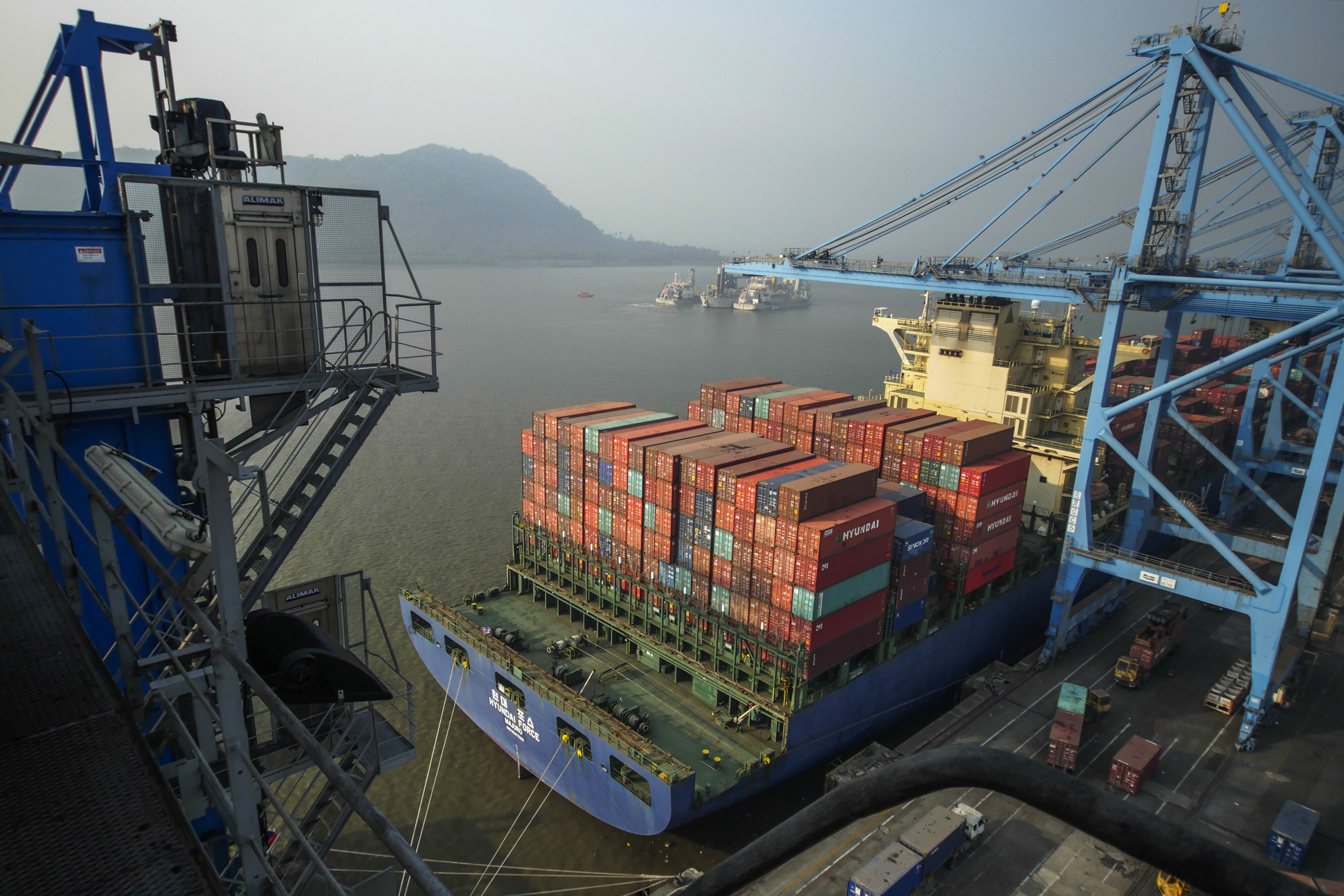
Prime Minister Narendra Modi on Sunday inaugurated the first phase of the Rs 7,900-crore fourth container terminal at Jawaharlal Nehru Port Trust that is expected to double its handling capacity.
Phase-I, which would add 2.4 million tonne equivalent units a year capacity, was completed at a cost of Rs 4,719 crore in 36 months. The second phase that will take the additional capacity to 10 million Twenty-Foot Equivalent Units (TEUs) would be completed by 2022.
Inaugurating the first phase of the fourth terminal of the JNPT, to be operated by the Singapore Ports, Modi said his government is focusing on port-led development.
If we have to carve out a place for ourselves in a globalised world, we need to enhance our waterways.Narendra Modi, Prime Minister
The terminal, jointly developed by JNPT and Port of Singapore Authority, would be able to dock mother vessels, handle the biggest container ships and cranes that can reach 22 rows wide or more, said Neeraj Bansal, chairman at JNPT. The total cost of the project is estimated at Rs 7,915 crore, making it the highest foreign direct investment in the ports sector, a JNPT statement said.
“We need more value addition in exports. Only building ports will not help,” said Gopal Krishna, secretary, shipping, government of India. “We have many ports in the country. Container ports are required.”
The terminal, once complete, will be the largest cargo handling port in the country with a provision for storing 1,600 refrigerated containers to also handle agriculture and horticulture produce. To enhance the connectivity from JNPT to various parts of the country, the trust is working on a dedicated 12-lane freight corridor, which stretches up to Goa to ease traffic congestion, informed Krishna. It would be ready by 2020.
This terminal will give employment to 1.25 lakh konkan people, Road, Transport and Shipping Minister Nitin Gadkari said.
Also Read: Getting Rs 1.25 Lakh Crore Monetising 105 NHAI Projects, Says Gadkari
Along with expansion at JNPT, the Ministry of Shipping is also working on developing four dry ports in Maharashtra—Satara, Sangli, Jalna, and Wardha. “This would further boost the logistics capabilities as well as exports,” said Krishna. The process of land acquisition is underway.
JNPT handles 36 percent of country's containerised exports. Of which, 22 percent come from Maharashtra and the rest from other parts of the country.
PSA Group Chief Executive Officer Tan Chong Meng said the port is targeting to handle 500,000 TEUs in 2018 and then add further. He said JNPT, which awarded the fourth terminal to the PSA in May 2014 after long delays, has struggled with capacity till now due to which ports like Mundra in the private sector have been able to attract more traffic.
"Because of this capacity constraint, cargo movements have been sought to move to other places. Perhaps, not their first choice to do so. They would prefer to go through Mumbai as this city has a very big hinterland," Meng said.
Now that the capacity has been added, government will also be able to seek investments for the economy, he added and underlined the need to have the pricing power for operators. "The first phase took a lot of energy, we learnt a lot," he said, without elaborating. The project has been executed with the support of Singaporean banks, Meng said, adding that features like a longer berth and modern cranes which can handle larger ships, distinguish it from other terminals of JNPT located off the financial capital's eastern coastline.
With inputs from PTI.

-
Love, Sex Aur Dhokha: The Audacious Plot To Spy On Jensen Huang

A Taipei dinner, a Singapore chip buyer and a suspected Chinese asset: inside the alleged spy operation that got close to NVIDIA's Jensen Huang.
-
Ten Things I Learnt This Samvat
Patience can be a trap. Cheap stocks can stay cheap. Leverage can wipe you out. What did Samvat 2082 teach us? Niraj Shah writes on 10 lessons from the year gone by.
-
Talking Points This Week: Tech Nerves, FII Buying, And A Faraway Banking Shock
The global markets are not shining this Diwali. The exception in the large markets is, India.
-
Midterm Rally Lasted A Day. The Hard Reality Of A Divided US May Last Two Years | Opinion
Between a contested AI boom, a debt ceiling that arrives in 2027 and a president with every incentive to act alone, the next two years may prove more volatile than the first day's rally suggests.
-
Blue Wave Will Derail the AI Trade but Won't Dismantle the AI Era | Unhedged Position
The Democrats' sweep of the US Congress will see politics collide with economic forces both over the long and short term.
-
It's Time To Take The GST Council's Bet On Trust Global
Payment records can prove India's services exports, and clear, proportionate rules can bring foreign digital sellers into the tax net.
-
Opinion | India at 38: From Innovation Overperformer to Innovation Powerhouse
India now has 453 VC-backed deep science startups, 18 of them late-stage, after 117 percent growth since 2020. Laurus Labs, at USD 9.3 billion, is the most valuable deep science company in any middle-income economy outside China.
-
Navigating Energy Crossroads: S Jaishankar's Call For Diversified Supply Chains At G20 Ministerial Meeting
As geopolitical fault lines continue to test maritime trade routes and commodity flows, Jaishankar's message remains pertinent: true economic resilience requires open markets, protected transit lines, and a genuine commitment to multilateral cooperation rather than coercion.
-
Indians Are Travelling, But Not Every Journey Is A Holiday | The Week In Whys
Pilgrims, patients and working women are the real travellers, and the system hasn't quite caught up with them.









