PM Modi Defends Notes Ban, Announces Incentives
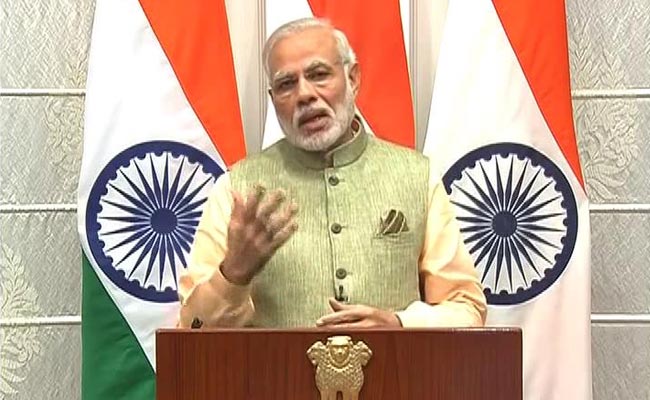
New Delhi: Prime Minister Narendra Modi announced a slew of incentives to the poor, farmers, women and small businesses on Saturday in a special New Year's address, and defended his shock decision to abolish high denomination bank notes.
The withdrawal of Rs 500 and Rs 1,000 bills on November 8 caused widespread disruption and anger in a country where cash is dominant, and the televised speech was seen as an opportunity to offer financial relief to people suffering most.
PM Modi had pledged that conditions would improve by the end of the year, but Indians have had to queue outside banks for hours to deposit old money or withdraw limited amounts of new notes.
Analysts have forecast that economic growth will be hit this quarter as a result.
But PM Modi believes long term gains will outweigh the short term pain; his radical decision was aimed at banishing the shadow economy, boosting taxes, beating corruption and moving towards a cashless society.
"In this fight against corruption and black money, it is clear that you would like to walk shoulder to shoulder with us (the government)," PM Modi said, speaking in Hindi. "For us in government, this is a blessing."
The Prime Minister, who swept to power in 2014 on the back of promises to root out graft, said the authorities would continue to stamp it out.
"Serious offences by bank and government officials have come to light. No one will be spared," he said.
The speech came weeks before the government is expected to announce its annual Budget, probably some time in February.
Among measures announced on Saturday, PM Modi offered a 4 per cent discount on interest rates for home loans for up to Rs 900,000 taken out in 2017 by middle class Indians.
He also said the government would increase credit guarantees for small businesses and provided additional incentives for digital transactions.
Some of the incentives appeared to be geared towards the huge rural population, a key constituency in Uttar Pradesh, including reducing interest on certain loans for agriculture.
PM Modi did not say how the government would pay for the new measures, although his administration has sought to keep budget deficits under control.

-
Navigating Energy Crossroads: S Jaishankar's Call For Diversified Supply Chains At G20 Ministerial Meeting

As geopolitical fault lines continue to test maritime trade routes and commodity flows, Jaishankar's message remains pertinent: true economic resilience requires open markets, protected transit lines, and a genuine commitment to multilateral cooperation rather than coercion.
-
Indians Are Travelling, But Not Every Journey Is A Holiday | The Week In Whys
Pilgrims, patients and working women are the real travellers, and the system hasn't quite caught up with them.
-
Getting To Work Costs Women More | The Reason Why
It is not just about women paying more than men. It is about women paying much more in cities than in villages.
-
AI Bias In Investing Cannot Be Eliminated, But It Can Be Governed
Framing is a particularly important example as identical financial information presented in terms of gains rather than losses can lead an LLM to reach a different assessment.
-
Joining The Dots | Dark Skies, Steady Diya: Why Hope Holds This Diwali
With war, a weak rupee and foreign outflows weighing on sentiment, policymakers at the NDTV World Summit and market veterans at NDTV Profit Ignite: Diwali Edition offered the same advice: stay invested and filter out the noise.
-
The Curious Case of Equitas Small Finance Bank And A CEO Who Quit For Stock
PN Vasudevan believes persistent investor concerns over a perceived conflict of interest had become a governance overhang on Equitas Small Finance Bank's stock, even as the lender improved profitability and asset quality.
-
Talking Points This Week: AI Cash Burn, A Tiger Comeback And An India That Still Finds Its Own Path
India is not immune to higher oil or tighter global liquidity, yet its earnings base is broader, its domestic policy levers are still available.
-
Foreign Investors Own Half Of HDFC Bank and ICICI Bank. An LTCG Cut Could Matter Most Here
Foreign portfolio investors have US$115 billion parked in HDFC Bank, ICICI Bank. If the government cuts long-term capital gains tax, Jefferies says returning foreign money could land here first.
-
'Never Seen This Level Of Negativity': Sandeep Tandon Says The Next Rally May Be Closer Than You Think
Veteran investor Sandeep Tandon says foreign selling is easing, large-caps are due a comeback and mid-caps are crowded, while he turns positive on gold, power and pharma this Diwali.
-
Indians Stay With Family, Not In Hotels | The Reason Why
India still lacks enough clean, reliable and affordable hotels for budget-conscious travellers.










