Arun Jaitley Hints At No Reduction In Oil Excise Duty
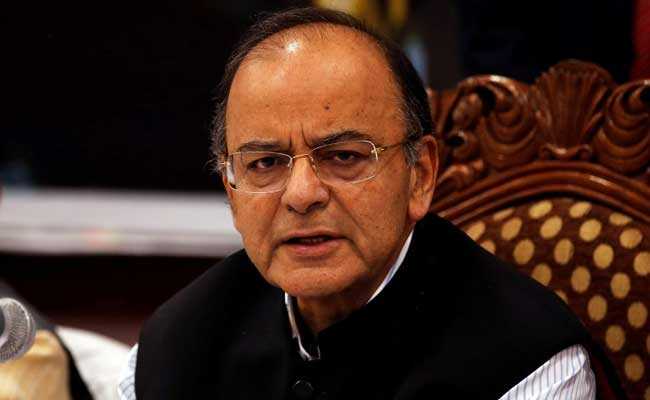
New Delhi: Union Minister Arun Jaitley today urged citizens to pay their due share of taxes "honestly" to reduce dependence on oil as a revenue source, and virtually ruled out any cut in excise duty on petrol and diesel saying it could prove to be counter-productive. While salaried class pay their due share of taxes, Jaitley said "most other sections" have to improve their tax payment record, which is keeping India "far from being a tax-compliant society". "My earnest appeal, therefore, to political leaders and opinion makers ...would be that evasion in the non-oil tax category must be stopped and, if people pay their taxes honestly, the high dependence on oil products for taxation eventually comes down.
Also Read: Petrol, Diesel Prices Today In Your City: Five Things To Know
In the medium and long run, upsetting the fiscal maths can prove counter-productive," Jaitley said.
In a facebook post titled 'The Economy and the Markets Reward Structural Reforms and Fiscal Prudence', Jaitley said in last four years, central government's tax-GDP ratio has improved from 10 per cent to 11.5 per cent. Almost half of this, 0.72 per cent of GDP, accounts for an increase in non-oil tax-GDP ratio.
The level of non-oil taxes to GDP at 9.8 per cent in 2017-18 is the highest since 2007-08 - a year in which our revenue position was boosted by buoyant international environment, he said. "This government has established a very strong reputation for fiscal prudence and macro-economically responsible behaviour. We know what happened during the Taper Tantrum of 2013. Fiscal indiscipline can lead to borrowing more and obviously increase the cost of debt.
"Reliefs to consumers can only be given by a fiscally responsible and a financially sound central government, and the states which are earning extra due to abnormal increase in oil prices," Jaitley said.
In an apparent dig at senior Congress leader P Chidambaram's remark that tax on oil should be cut by Rs 25 per litre, Jaitley retorted "this is a 'trap' suggestion".
Without naming Chidambaram, Jaitley noted that the "distinguished predecessor" had "never endeavoured to do so himself."
"It is intended to push India into an unmanageable debt - something which the UPA government left as its legacy. We must remember that the economy and the markets reward structural reforms, fiscal prudence, and macro-economic stability. "They punish fiscal indiscipline and irresponsibility. The transformation from UPA's "policy paralysis" to the NDA's "fastest growing economy" conclusively demonstrates this. The government is aspiring to improve the tax-GDP ratio," Jaitley said.
Chidambaram had last week claimed that it was possible for the centre to cut tax by up to Rs 25 per litre on petrol prices but the Modi-government will not do so.
As per government estimates, every rupee cut in excise duty on petrol and diesel will result in a revenue loss of about Rs 13,000 crore.
The price of Indian basket of crude surged from $66 a barrel in April to around $74 currently.
Jaitley said despite higher compliances in new system, as far as the non-oil taxes are concerned, India is still far from being a tax complaint society.
"Salaried employees is one category of tax compliant assessees. Most other sections still have to improve their track record. The effort for next few years has to be to replicate the last four years and improve India's tax to GDP ratio by another 1.5 per cent. "The increase must come from the non-oil segment since there is scope for improvement," he said.
These additions, Jaitley said, have to come by more and more people performing their patriotic duty of paying the non-oil taxes to the State. "The tragedy of the honest tax payer is that he not only pays his own share of taxes but also has to compensate for the evader," he said. Jaitley said the central government collects taxes in the form of income tax, its own share of GST and the customs duty.
42 per cent of the central government taxes are shared with the states. State governments collect their 50 per cent from GST besides their local taxes. These are independent of taxes on petroleum products. The states charge ad valorem taxes on oil. If oil prices go up, states earn more, he said.

-
Blue Wave Will Derail the AI Trade but Won't Dismantle the AI Era | Unhedged Position

The Democrats' sweep of the US Congress will see politics collide with economic forces both over the long and short term.
-
It's Time To Take The GST Council's Bet On Trust Global
Payment records can prove India's services exports, and clear, proportionate rules can bring foreign digital sellers into the tax net.
-
Opinion | India at 38: From Innovation Overperformer to Innovation Powerhouse
India now has 453 VC-backed deep science startups, 18 of them late-stage, after 117 percent growth since 2020. Laurus Labs, at USD 9.3 billion, is the most valuable deep science company in any middle-income economy outside China.
-
Navigating Energy Crossroads: S Jaishankar's Call For Diversified Supply Chains At G20 Ministerial Meeting
As geopolitical fault lines continue to test maritime trade routes and commodity flows, Jaishankar's message remains pertinent: true economic resilience requires open markets, protected transit lines, and a genuine commitment to multilateral cooperation rather than coercion.
-
Indians Are Travelling, But Not Every Journey Is A Holiday | The Week In Whys
Pilgrims, patients and working women are the real travellers, and the system hasn't quite caught up with them.
-
Getting To Work Costs Women More | The Reason Why
It is not just about women paying more than men. It is about women paying much more in cities than in villages.
-
AI Bias In Investing Cannot Be Eliminated, But It Can Be Governed
Framing is a particularly important example as identical financial information presented in terms of gains rather than losses can lead an LLM to reach a different assessment.
-
Joining The Dots | Dark Skies, Steady Diya: Why Hope Holds This Diwali
With war, a weak rupee and foreign outflows weighing on sentiment, policymakers at the NDTV World Summit and market veterans at NDTV Profit Ignite: Diwali Edition offered the same advice: stay invested and filter out the noise.
-
The Curious Case of Equitas Small Finance Bank And A CEO Who Quit For Stock
PN Vasudevan believes persistent investor concerns over a perceived conflict of interest had become a governance overhang on Equitas Small Finance Bank's stock, even as the lender improved profitability and asset quality.









