Petrol, Diesel Prices Remain Steady Across Metros. See Rates
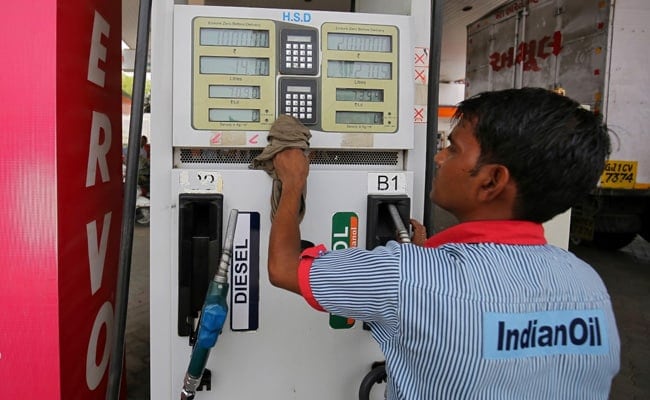
Petrol, Diesel Prices Today: Fuel prices remained unchanged for 91 days in a row across metro cities on Friday, February 4, 2022. This is the longest period when the prices have remained unchanged, ever since the daily revision of prices began in June 2017.
Before this, there was an 82-day break in rate revision between March 17, 2020 and June 6, 2020, when the national lockdown was in place. The current status quo in petrol and diesel prices has also continued as assembly elections in several high profile states like Uttar Pradesh and Punjab are round the corner.
In December 2021, the Delhi government had reduced the value-added tax on petrol from 30 per cent to 19.40 per cent. With this, petrol prices in the national capital were slashed by Rs 8.56 per litre.
A litre of petrol costs Rs 95.41 in Delhi, while diesel rates stand at Rs 86.67 per litre. In Mumbai, petrol is retailed at Rs 109.98 per litre, while diesel is being sold at Rs 94.14 per litre. Among the metro cities, fuel rates are still the highest in Mumbai. Fuel prices vary across the states due to value-added tax or VAT. (Also Read: How To Check Latest Petrol And Diesel Rates In Your City).
Here are the petrol and diesel price across the metro cities:
| City | Petrol | Diesel |
|---|---|---|
| Delhi | 95.41 | 86.67 |
| Mumbai | 109.98 | 94.14 |
| Chennai | 101.40 | 91.43 |
| Kolkata | 104.67 | 89.79 |
| Source: Indian Oil | ||
Further, diesel in most parts of the country may cost Rs 2 per litre more from October 1 after the Centre levied additional excise duty on fuel sold without blending it with ethanol or biodiesel in Union Budget 2021-22.
Also, Oil Minister Hardeep Singh Puri said India has achieved 9 per cent ethanol blending in petrol and is confident of meeting the 20 per cent target by 2025. Currently, 10 per cent ethanol, extracted from sugarcane or surplus foodgrain, is required to be blended or mixed in petrol (meaning 10 per cent of ethanol mixed with 90 per cent of petrol) with a view to cutting oil import dependence and provide farmers with an additional source of income.
State-run oil refiners such as Indian Oil, Bharat Petroleum, and Hindustan Petroleum revise the fuel rates on a daily basis, by taking into account the crude oil prices in the international markets, and the rupee-dollar exchange rates. Any changes in petrol and diesel prices are implemented with effect from 6 am every day.
Globally, oil prices climbed, extending sharp gains in the previous session sparked by persistent supply concerns. Brent crude was up 16 cents, or 0.2 per cent, to $91.27 a barrel, after rising $1.16 on Thursday. U.S. West Texas Intermediate crude rose 28 cents, or 0.3 per cent, to $90.55 a barrel, having gained $2.01 cents the previous day to settle above $90 for the first time since October 6, 2014.

-
Talking Points This Week: Tech Nerves, FII Buying, And A Faraway Banking Shock

The global markets are not shining this Diwali. The exception in the large markets is, India.
-
Midterm Rally Lasted A Day. The Hard Reality Of A Divided US May Last Two Years | Opinion
Between a contested AI boom, a debt ceiling that arrives in 2027 and a president with every incentive to act alone, the next two years may prove more volatile than the first day's rally suggests.
-
Blue Wave Will Derail the AI Trade but Won't Dismantle the AI Era | Unhedged Position
The Democrats' sweep of the US Congress will see politics collide with economic forces both over the long and short term.
-
It's Time To Take The GST Council's Bet On Trust Global
Payment records can prove India's services exports, and clear, proportionate rules can bring foreign digital sellers into the tax net.
-
Opinion | India at 38: From Innovation Overperformer to Innovation Powerhouse
India now has 453 VC-backed deep science startups, 18 of them late-stage, after 117 percent growth since 2020. Laurus Labs, at USD 9.3 billion, is the most valuable deep science company in any middle-income economy outside China.
-
Navigating Energy Crossroads: S Jaishankar's Call For Diversified Supply Chains At G20 Ministerial Meeting
As geopolitical fault lines continue to test maritime trade routes and commodity flows, Jaishankar's message remains pertinent: true economic resilience requires open markets, protected transit lines, and a genuine commitment to multilateral cooperation rather than coercion.
-
Indians Are Travelling, But Not Every Journey Is A Holiday | The Week In Whys
Pilgrims, patients and working women are the real travellers, and the system hasn't quite caught up with them.
-
Getting To Work Costs Women More | The Reason Why
It is not just about women paying more than men. It is about women paying much more in cities than in villages.
-
AI Bias In Investing Cannot Be Eliminated, But It Can Be Governed
Framing is a particularly important example as identical financial information presented in terms of gains rather than losses can lead an LLM to reach a different assessment.









