PDP-BJP: From A ‘Coalition Of Hope’ To ‘Coalition Of Fear’
Rank opportunism. Supremely incompatible. Power hungry. Doomed to fail.
These are some of the quicksilver words being used to explain the demise of the Jammu and Kashmir Peoples Democratic Party - Bharatiya Janta Party coalition. That is, some commentators assert that this bold political experiment collapsed because it was an unworkable coalition. But this is an extremely simplistic, even erroneous, conclusion. It betrays an utter lack of understanding about politics.
All Politics Is A Coalition Of Competing Interests
The word ‘coalition' is derived from the French coalascere, “the attempt to gain more influence and power than the individual organization has on its own”. Therefore, all politics is a coalition of competing interests, whether within a political party (to borrow from the world of business, it's ‘on the balance sheet'), or among distinctly different outfits (i.e., a ‘joint venture'). How often do we hear that Mr. X represents OBC interests, while Ms. Y is the Muslim face, just as Shri Z speaks for the northern districts?
Yes, every political action is choreographed to suit a coalition of often irreconcilable interests.
The Indian National Congress was the mother of all political coalitions during the independence struggle, with colliding social, religious, and regional groups coalescing under the Mahatma's umbrella to win freedom. America's Republican Party was formed in the mid-19th century by merging disparate caucuses, from Whigs, Democrats, Free-Soilers, Abolitionists, Know-Nothings, members of the temperance movement, and other unattached people.
As opposed to these ‘cloistered, intra-party coalitions', are the ‘overt, cross-party alliances' that witness the coming together of diverse ideologies under a common, usually temporary, program of action. The Merkel-Social Democrats and the Conservative-Liberal alliances in Germany and the United Kingdom, respectively, are prime examples from contemporary world politics. All of them can be called “incompatible, opportunistic, and power hungry”, because that's what coalitions mostly are; so, it's foolish to damn such a critical political process for being exactly what it is meant to be!
Horizontal Versus Vertical Coalitions
While the academic literature on political coalitions does not sanction such a formulation, I would prefer to divide them into two categories:
- A horizontal, expansionist ‘Coalition of Hope', in which parties reach out to hitherto ignored, even inimical, interest groups to enlarge their footprint. This inevitably requires compromising and blurring the sharp edges of one's political ideology – exactly what Candidate Modi did in 2014, when he eschewed hardline Hindutva to win over chunks of estranged voters, from Muslims, Dalits, aspirational youth, non-Yadav OBCs, non-Hindi speaking regions, among the more prominent ones.
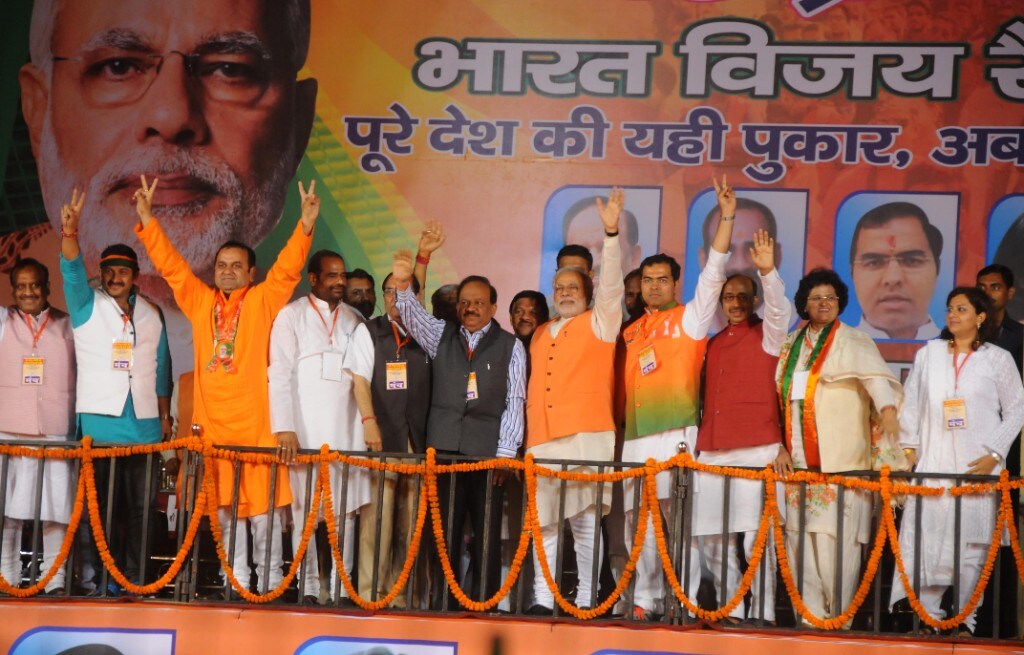
- Or, alternately, a vertical, echo-chamber like ‘Coalition of Fear', where political parties amp up their polarising rhetoric to dig deeper roots for the faithful, herding them together behind higher walls of exclusion; in this coalition, either you are with us, or you are the enemy. The middle ground is gone.
The Mufti-Modi Pact: ‘Audacity Of Hope'
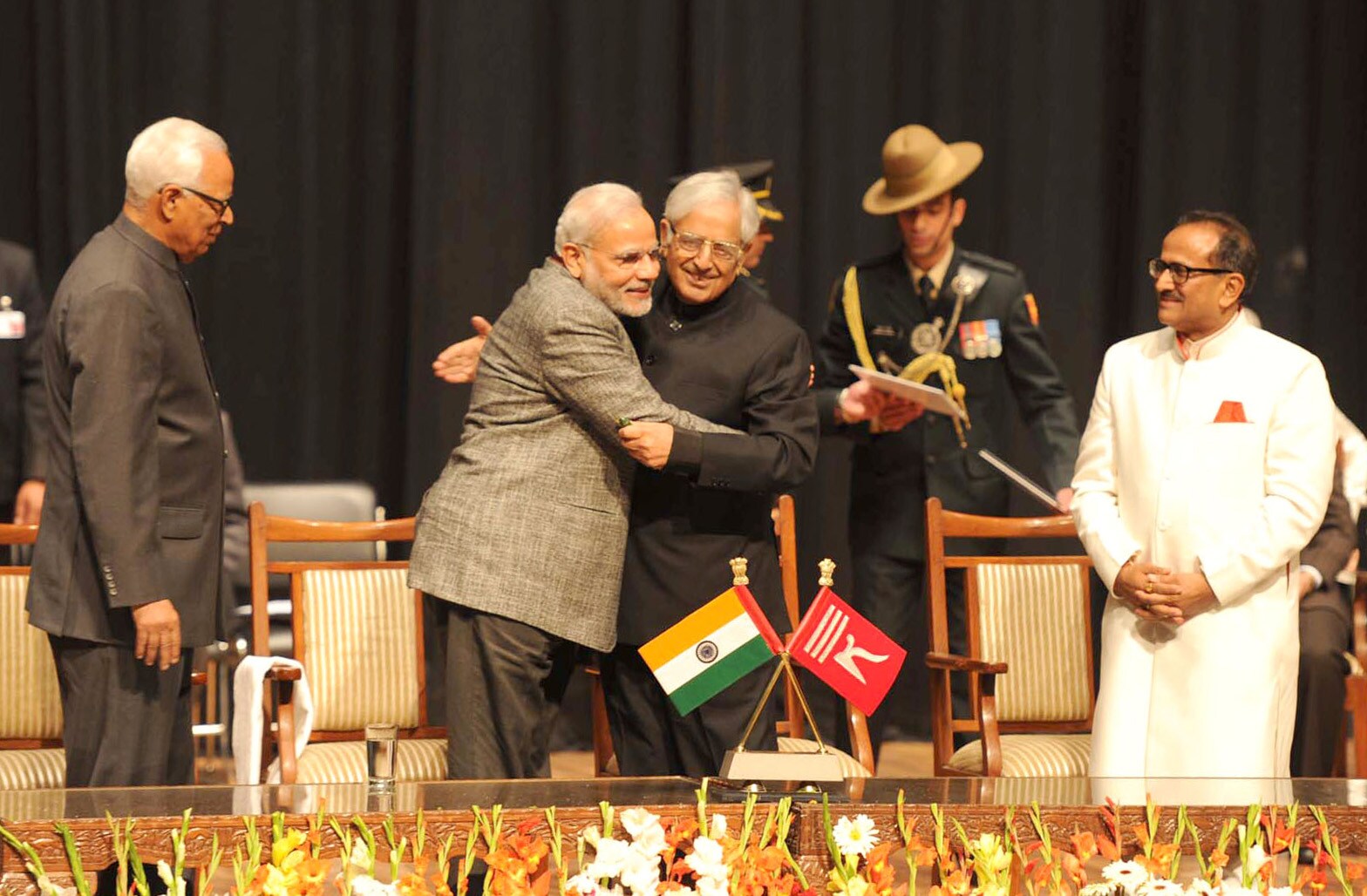
Unquestionably, the Mufti-Modi Pact to create the PDP-BJP coalition government on March 1, 2015, was a Coalition of Immense Hope. While a Mufti-Congress (with ‘issue-based' National Conference support) alliance may have been the more 'normal' outcome, the sheer ‘irreconcilability' of the PDP, a Valley-based, soft-separatist outfit, betrothed to the BJP, a macho/militaristic, Hindus-first, Jammu-based party, upped the potential of the coalition.
The perils, in fact, ratcheted up the promise of the astonishing Mufti/Modi bear-hug. The duo had scripted India's “Audacity of Hope”!
">
Wonderfully, the coalition was anchored to a dream document of governance (abstracted from the BJP-PDP Common Minimum Programme – 2015; italics are mine for emphasis):
- Following the principles of “insaniyat, Kashmiriyat and Jamhooriyat” (humanism, pride in Kashmir's regional identity, and democracy), the state government will help initiate a sustained and meaningful dialogue with all internal stakeholders which include political groups irrespective of their ideological views and predilections.
- De-notifying disturbed areas and taking a final view on the continuation of the Armed Forces Special Powers Act (AFSPA) in these areas.
- Article 370: maintained.
- Dialogue with Hurriyat Conference: facilitate.
- One-time settlement of refugees from Pakistan-occupied Kashmir.
- Share in NHPC Ltd.'s profits emanating from J&K's waters.
If Prime Minister Narendra Modi and Chief Minister Mufti Mohammad Sayeed had delivered even an iota of their commitments, we could have positively transformed the situation on the ground. Unfortunately, the ‘dream document' proved to be little more than a collection of jumlas (popular, but clever/specious, claims). Nothing happened.
In fact, Modi reneged on his most vital promise, saying there would be no dialogue with the Hurriyat or anybody who has a whiff of ‘separatism' around him/her.
There was no sign of the promised special aid package to repair the devastation caused by the floods. And, of course, AFSPA was not rolled back in any way. Even the easily delivered jumla, around NHPC's profit share, was ignored. It was clear as hell that the ‘dream document' was a ‘document of rhetoric'. Unsurprisingly, the ordinary Kashmiri got rapidly disillusioned.
Death, Doubt And Pregnant Political Moment
Then, within ten months, Chief Minister Mufti died. It was a pregnant political moment. I use ‘moment', and not the cliched ‘setback' or ‘tragedy' because our focus is not on personal issues. This adversity could have been turned into an opportunity. But Prime Minister Modi, in an unusually explicit snub, did not attend Mufti's funeral.
A poor turnout added to the suspicion that the PDP-BJP coalition was losing popular support.
Mehbooba, the late Mufti's daughter, and heir, went into a rather public sulk, refusing to give in to repeated exhortations from the BJP to lead a successor coalition government. Embedded in her overt reluctance was her fear about the precarious commitment of BJP to the agreed agenda. She should have insisted on, and Modi should have graciously granted, a couple of the promises, perhaps opening a dialogue with the separatists, and making good on the NHPC contribution. Neither was done.
Curiously, exactly three months later, on April 4, 2016, Mehbooba Mufti capitulated and agreed to become the Chief Minister, without anything to show for her ‘petulance'. The opportunity to re-invent the Coalition of Immense Hope vanished; instead, it was replaced by lingering doubts about a new ‘Coalition of Questionable Intent':
- Modi vicariously breached his “will not touch Article 370” pledge by telling the Supreme Court that his government was ready to discuss the scrapping of Article 35A, which bestowed exclusive property, settlement, and a few other rights on the Kashmiris. A dagger was plunged into the spine of the partnership. The lifeblood of any coalition, trust, was violated.
- Then Kathua happened. An eight-year-old Bakherwal Muslim girl was allegedly raped by Hindu men inside a temple. The BJP jumped at this opportunity to polarise its vote base in Jammu, saying the young men were being framed. Mehbooba tweeted in frustration:
Appalled by the marches & protests in defense of the recently apprehended rapist in Kathua. Also horrified by their use of our national flag in these demonstrations, this is nothing short of desecration. The accused has been arrested & the law will follow its course.
February 16, 2018
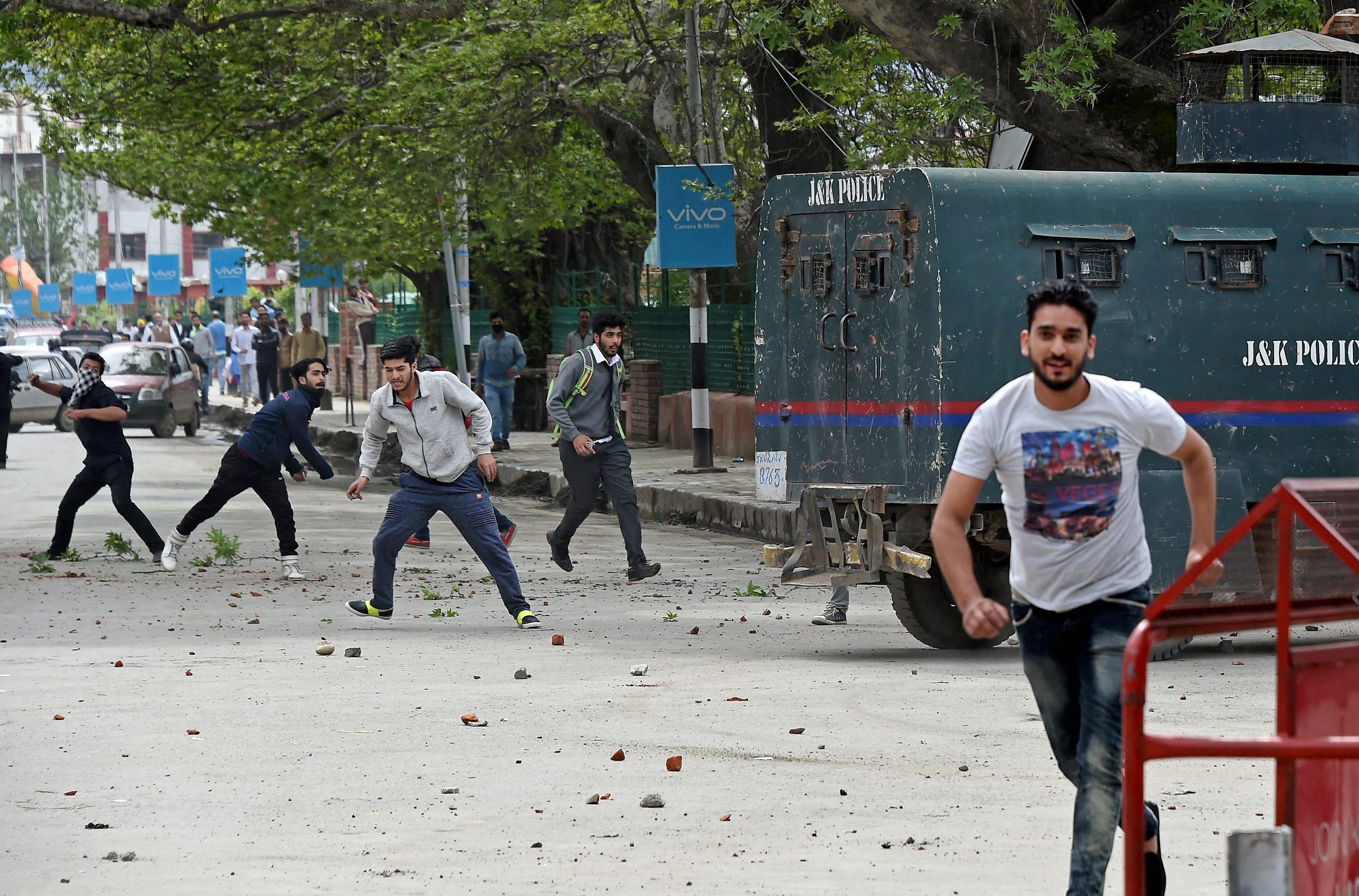
- A dozen other flashpoints erupted: BJP's triumphalism over Burhan Wani's death in an encounter, the Army using an ordinary Kashmiri as a human shield, treating juvenile stone-pelting protestors as 'terrorists' and blinding them with lethal pellets, the death of three civilians in Shopian, the cruel boast by the Army that “had this been Syria, we could have brought out our tanks” … it was an unremitting litany of reprisals and violent words/actions.
The Coalition Of Fear
The ‘Coalition of Questionable Intent' had now become the ‘Coalition of Fear', as PDP and BJP retreated into their respective echo-chambers. Then Shujaat Bukhari was assassinated. The end was near. And it came with unnerving swiftness, designed to deliver maximum insult. Without as much as a private word or warning to Mehbooba, the BJP announced publicly that it was quitting the alliance. Mehbooba was caught off guard.
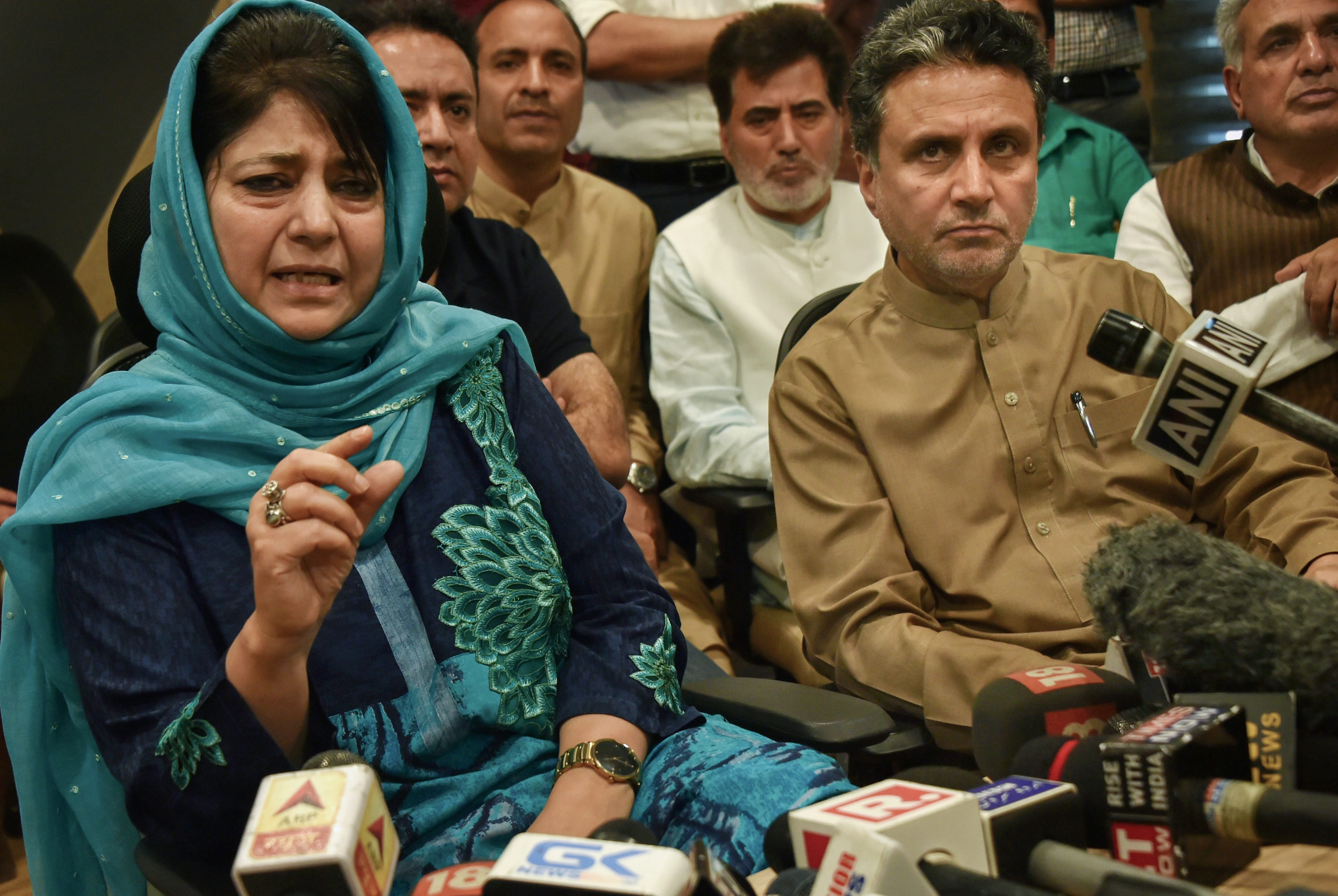
Her public consternation was on palpable display, as she called out her erstwhile partner, half defiantly and half pleadingly, for treating “Kashmir as enemy territory”.The ‘Coalition of Immense Hope' crafted by Mufti/Modi lay torn into the spectacular ruins of the ‘Coalition of Extreme Fear'.
The BJP got its rallying slogan for 2019, that India's unity is in peril, and we are its sole muscular guardians. Everybody else is a traitor.
The PDP, I am sure, will try to reclaim its soft-separatist constituency in the Valley.
But all of this, at what cost to India, thy beloved?
Raghav Bahl is the co-founder and chairman of Quintillion Media, including BloombergQuint. He is the author of two books, viz ‘Superpower?: The Amazing Race Between China's Hare and India's Tortoise', and ‘Super Economies: America, India, China & The Future Of The World'.

-
Navigating Energy Crossroads: S Jaishankar's Call For Diversified Supply Chains At G20 Ministerial Meeting

As geopolitical fault lines continue to test maritime trade routes and commodity flows, Jaishankar's message remains pertinent: true economic resilience requires open markets, protected transit lines, and a genuine commitment to multilateral cooperation rather than coercion.
-
Indians Are Travelling, But Not Every Journey Is A Holiday | The Week In Whys
Pilgrims, patients and working women are the real travellers, and the system hasn't quite caught up with them.
-
Getting To Work Costs Women More | The Reason Why
It is not just about women paying more than men. It is about women paying much more in cities than in villages.
-
AI Bias In Investing Cannot Be Eliminated, But It Can Be Governed
Framing is a particularly important example as identical financial information presented in terms of gains rather than losses can lead an LLM to reach a different assessment.
-
Joining The Dots | Dark Skies, Steady Diya: Why Hope Holds This Diwali
With war, a weak rupee and foreign outflows weighing on sentiment, policymakers at the NDTV World Summit and market veterans at NDTV Profit Ignite: Diwali Edition offered the same advice: stay invested and filter out the noise.
-
The Curious Case of Equitas Small Finance Bank And A CEO Who Quit For Stock
PN Vasudevan believes persistent investor concerns over a perceived conflict of interest had become a governance overhang on Equitas Small Finance Bank's stock, even as the lender improved profitability and asset quality.
-
Talking Points This Week: AI Cash Burn, A Tiger Comeback And An India That Still Finds Its Own Path
India is not immune to higher oil or tighter global liquidity, yet its earnings base is broader, its domestic policy levers are still available.
-
Foreign Investors Own Half Of HDFC Bank and ICICI Bank. An LTCG Cut Could Matter Most Here
Foreign portfolio investors have US$115 billion parked in HDFC Bank, ICICI Bank. If the government cuts long-term capital gains tax, Jefferies says returning foreign money could land here first.
-
'Never Seen This Level Of Negativity': Sandeep Tandon Says The Next Rally May Be Closer Than You Think
Veteran investor Sandeep Tandon says foreign selling is easing, large-caps are due a comeback and mid-caps are crowded, while he turns positive on gold, power and pharma this Diwali.
-
Indians Stay With Family, Not In Hotels | The Reason Why
India still lacks enough clean, reliable and affordable hotels for budget-conscious travellers.










