Paytm Shares' 75% Plunge Is World's Worst In Decade Among Large IPOs
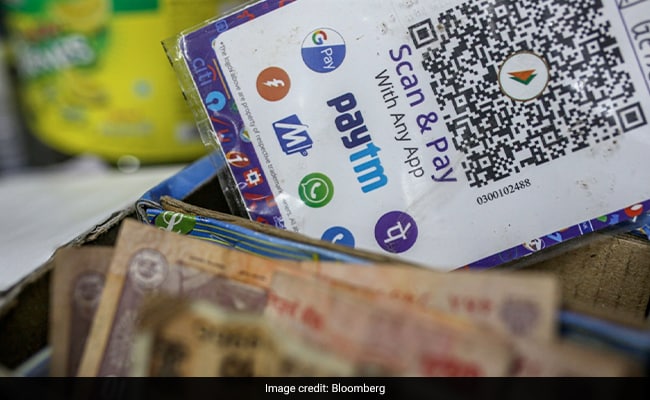
One 97 Communications Ltd., the operator of India's largest digital-payments provider known as Paytm, has capped the worst first-year share plunge among large IPOs over the past decade -- and the pain is worsening.
The company, whose founder compared its challenges to those faced by Tesla Inc. shortly after the listing, has seen its stock erase 75 per cent of its market value one year after its $2.4 billion offering, the largest on record at the time in India.
The dive is the steepest first-year slide globally among IPOs that raised at least the same amount since Spain's Bankia SA's 82 per cent drop in 2012, data compiled by Bloomberg show.

Paytm's grim first anniversary underscores an erosion of confidence in its ability to become profitable after debuting at a time when India's IPO market was enamored with tech startups. It's one among a slew of startups that listed with valuations seen by many as exaggerated.
The stock's losses have deepened this week amid concerns over the emergence of a potential competitor owned by India's biggest conglomerate.
Last week, Japan's SoftBank Group Corp. sold shares it held in Paytm as a lock-up period set in the IPO expired, fueling a three-day slide.
November's 30 per cent slide has taken its decline from the IPO price of Rs 2,150 to 79 per cent.
Tech Rout
Tech stocks globally have been sold off as investors shun loss-making firms amid a deteriorating macroeconomic environment, JM Financial Ltd. analysts led by Sachin Dixit wrote in a note this week.
“This feedback has been well received by company managements and we are seeing all Indian internet companies not just prioritizing profitability but also communicating the path forward explicitly,” they wrote.
Paytm shares were sold at the top of a marketed range after an offering that attracted strong demand from individuals and funds, although they never traded above the listing price.
The sale attracted traditional global stock pickers such as BlackRock Inc. and the Canada Pension Plan Investment Board.
“In every rally, the market as a whole gets too excited about something,” said Shridatta Bhandwaldar, head of equities at Canara Robeco Asset Management.
“In 2006-2008, we got too excited about construction companies and capital goods companies. In 2013-2014, we got too excited about midcaps. In 2017-2019 we got extremely excited about non-banking financial companies and in 2020-2022 people were just too excited about technology.”
“Some of these companies have good business models,” he said, adding that “still, you feel there is not enough margin of safety because these are evolving businesses.”
(Except for the headline, this story has not been edited by NDTV staff and is published from a syndicated feed.)

-
It's Time To Take The GST Council's Bet On Trust Global

Payment records can prove India's services exports, and clear, proportionate rules can bring foreign digital sellers into the tax net.
-
Opinion | India at 38: From Innovation Overperformer to Innovation Powerhouse
India now has 453 VC-backed deep science startups, 18 of them late-stage, after 117 percent growth since 2020. Laurus Labs, at USD 9.3 billion, is the most valuable deep science company in any middle-income economy outside China.
-
Navigating Energy Crossroads: S Jaishankar's Call For Diversified Supply Chains At G20 Ministerial Meeting
As geopolitical fault lines continue to test maritime trade routes and commodity flows, Jaishankar's message remains pertinent: true economic resilience requires open markets, protected transit lines, and a genuine commitment to multilateral cooperation rather than coercion.
-
Indians Are Travelling, But Not Every Journey Is A Holiday | The Week In Whys
Pilgrims, patients and working women are the real travellers, and the system hasn't quite caught up with them.
-
Getting To Work Costs Women More | The Reason Why
It is not just about women paying more than men. It is about women paying much more in cities than in villages.
-
AI Bias In Investing Cannot Be Eliminated, But It Can Be Governed
Framing is a particularly important example as identical financial information presented in terms of gains rather than losses can lead an LLM to reach a different assessment.
-
Joining The Dots | Dark Skies, Steady Diya: Why Hope Holds This Diwali
With war, a weak rupee and foreign outflows weighing on sentiment, policymakers at the NDTV World Summit and market veterans at NDTV Profit Ignite: Diwali Edition offered the same advice: stay invested and filter out the noise.
-
The Curious Case of Equitas Small Finance Bank And A CEO Who Quit For Stock
PN Vasudevan believes persistent investor concerns over a perceived conflict of interest had become a governance overhang on Equitas Small Finance Bank's stock, even as the lender improved profitability and asset quality.
-
Talking Points This Week: AI Cash Burn, A Tiger Comeback And An India That Still Finds Its Own Path
India is not immune to higher oil or tighter global liquidity, yet its earnings base is broader, its domestic policy levers are still available.










