Paytm Money Says Platform Shift Requires Demat Accounts For Mutual Fund Investors
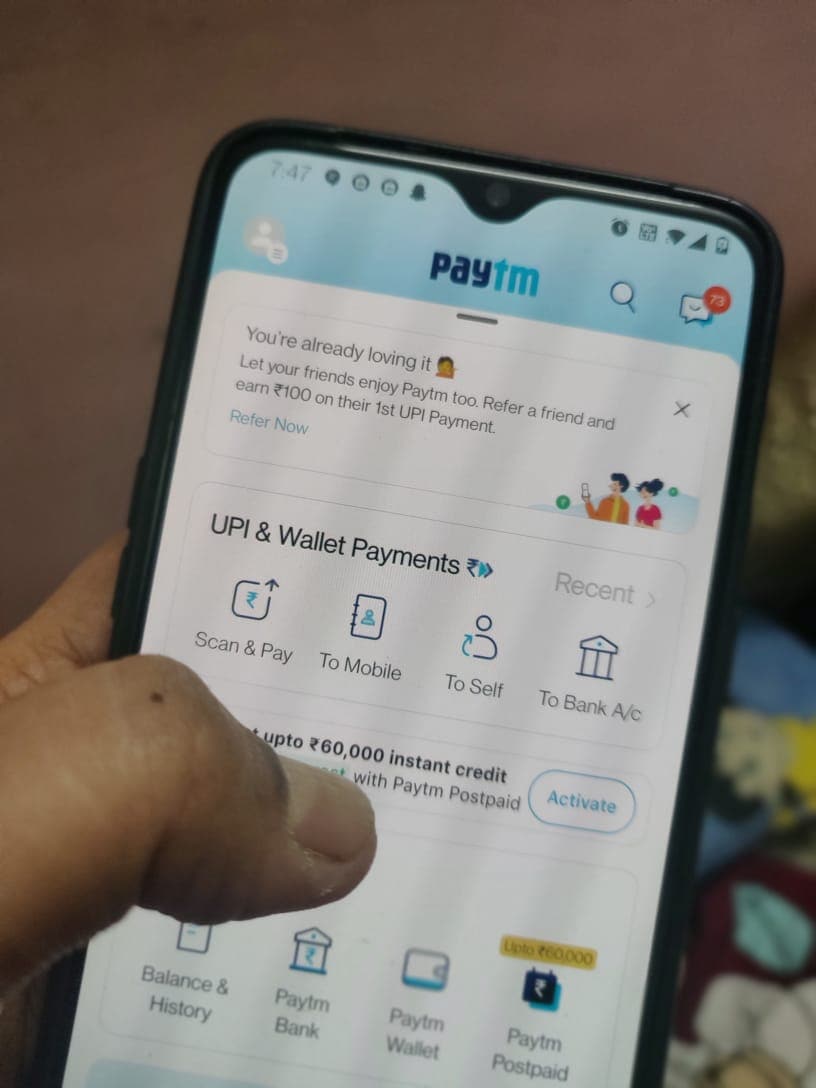
Paytm Money said the move to migrate investors from its own technology back-end to BSE StAR, a mutual fund exchange platform, is the reason why it is asking its direct mutual fund clients to open demat accounts.
The discount broker, in a July 4 announcement, had said it is discontinuing direct mutual fund advisory services and stopping the use of its registered investment advisor code. Instead, it will use its broking code to execute direct mutual fund transactions—investments not routed through any agent or distributor.
Citing SEBI regulations, it said mutual fund clients will require demat registration and additional KYC. The move drew questions from some financial advisers about the need for demat accounts.
Varun Sridhar, chief executive officer at Paytm Money, told BQ Prime that any investor coming on to exchange platform requires a unique client code, which is generated by the broker. Paytm Money has been registered as a broker and will now use its broker code to generate UCC for its mutual fund clients. And the migration to new platform will require additional KYC including e-sign under regulatory requirements.
"We are in the process of integrating with BSE StAR, the largest mutual fund execution platform in the country, to continue providing direct mutual fund services to our investors and stay compliant."
The company won't be charging demat charges or commissions on mutual fund transactions for this migration. Customers will continue to remain direct mutual fund investors, Sridhar said.
Paytm Money said it has waived all charges and fees for this demat account as long as clients are investing only in mutual funds. The MF units will continue to be in statement of account form and not in demat form. Only investors transacting directly in stocks will be charged based on the current equity tariff, which is very competitive anyway, the company said.
Earlier, Paytm Money had said SEBI requires all its direct mutual fund investors to provide additional information as part of their KYC to be compliant with its regulations and to register themselves as a broking client with Paytm Money by opening a demat account. "This process is necessary to ensure continuance of your SIPs on the BSE StAR platform."
Investors should comply with the regulations by July 25 to not lose access to their direct mutual funds, including systematic investment plans or SIPs, it said.
Paytm Money, according to its website, is used by 30 lakh direct mutual fund investors and has facilitated more than 6 crore transactions. The company said investors who want to opt out can place a redemption request, which will be processed in three trading days.
Paytm Money will have to migrate nearly 50% of its today's base under registered investment adviser code to BSE StAR. The remaining already have trading accounts and are compliant with KYC, said Sridhar.
The move is part of Paytm to reduce operations cost, Sridhar said. It currently spends on technology platform development and incur payment gateway charges on behalf of the mutual fund investors, he said.
This will help Paytm Money reduce payment gateway charges as migration to BSE StAR will move these costs to the AMC, said Sridhar. The discount broker will not have to invest in technology platform further and rely in BSE StAR for future development.
What Investment Advisers Say
Investment advisers, however, see it as an attempt to migrate users to a paid service that also offers an opportunity to cross-sell.
Ravi Saraogi, co-founder at Samasthiti Advisors, a SEBI-registered investment adviser and a chartered financial analyst, told BQ Prime that BSE StAR doesn't require a separate demat account and mutual fund units can be held in physical form.
"If Paytm Money wants its direct MF investor base to open demat accounts to boost its broking business, it should just say so rather than trying to obfuscate," Saraogi had tweeted earlier.
Harshvardhan Roongta, a certified financial planner at Roongta Securities, said the move will help Paytm cross-sell to its users. “They will get users on their platform and then hope that you will trade shares using their account. That's also why they're bearing the cost of creating demat accounts right now.”
It is also possible that Paytm Money "reverses the no-fee rule for setting up a demat account in the future", Roongta said.

-
A New Samvat Wishlist: Inclusive Prosperity And Human Development

India has strengthened its economic foundations through infrastructure, digital access and enterprise. Its next growth chapter must deepen productivity, create better livelihoods and widen participation in prosperity.
-
Love, Sex Aur Dhokha: The Audacious Plot To Spy On Jensen Huang
A Taipei dinner, a Singapore chip buyer and a suspected Chinese asset: inside the alleged spy operation that got close to NVIDIA's Jensen Huang.
-
Ten Things I Learnt This Samvat
Patience can be a trap. Cheap stocks can stay cheap. Leverage can wipe you out. What did Samvat 2082 teach us? Niraj Shah writes on 10 lessons from the year gone by.
-
Talking Points This Week: Tech Nerves, FII Buying, And A Faraway Banking Shock
The global markets are not shining this Diwali. The exception in the large markets is, India.
-
Midterm Rally Lasted A Day. The Hard Reality Of A Divided US May Last Two Years | Opinion
Between a contested AI boom, a debt ceiling that arrives in 2027 and a president with every incentive to act alone, the next two years may prove more volatile than the first day's rally suggests.
-
Blue Wave Will Derail the AI Trade but Won't Dismantle the AI Era | Unhedged Position
The Democrats' sweep of the US Congress will see politics collide with economic forces both over the long and short term.
-
It's Time To Take The GST Council's Bet On Trust Global
Payment records can prove India's services exports, and clear, proportionate rules can bring foreign digital sellers into the tax net.
-
Opinion | India at 38: From Innovation Overperformer to Innovation Powerhouse
India now has 453 VC-backed deep science startups, 18 of them late-stage, after 117 percent growth since 2020. Laurus Labs, at USD 9.3 billion, is the most valuable deep science company in any middle-income economy outside China.
-
Navigating Energy Crossroads: S Jaishankar's Call For Diversified Supply Chains At G20 Ministerial Meeting
As geopolitical fault lines continue to test maritime trade routes and commodity flows, Jaishankar's message remains pertinent: true economic resilience requires open markets, protected transit lines, and a genuine commitment to multilateral cooperation rather than coercion.









