Patanjali Foods Down 5% After BSE, NSE Freeze Promoters' Shares
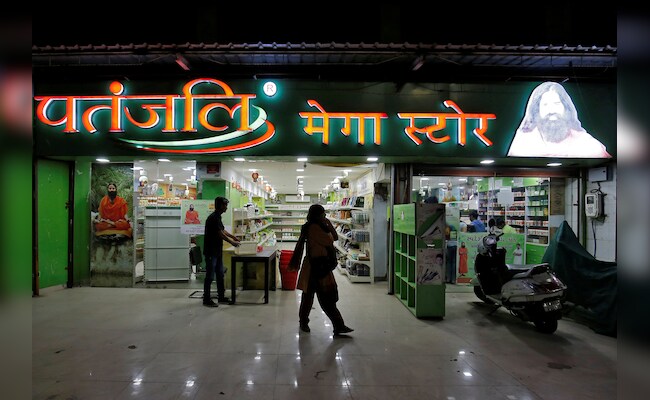
Shares of India's Patanjali Foods Ltd fell as much as 5% on Thursday, a day after the edible oil maker said the country's stock exchanges froze promoters' shares as they still held a stake of around 80% in the company.
India's markets regulator, the India's Securities and Exchange Board of India (SEBI), mandates the minimum public shareholding in listed companies at 25%.
The stock is down 22.4% year to date.
Patanjali, in an exchange filing on Wednesday, said it received a notification from both the BSE, formerly known as the Bombay Stock Exchange, and the National Stock Exchange, informing it about the share freeze.
As per the notification, about 292.6 million shares would be affected, the company said.
The deadline for minimum public float norms passed towards the end of January 2023, as the three-year period after company's relisting ended.
However, the company on Wednesday said the action by stock exchanges would not have any impact on its financial position.
The promoters are confident of achieving minimum public shareholding within next few months, it said, adding that the promoters' equity shares were already locked in till April 2023 as per SEBI norms, and none of the shares were pledged.
Patanjali Ayurved, the company's parent firm, acquired Ruchi Soya Industries in 2019 and renamed it Patanjali Foods in 2022.
This is not the first time that Patanjali Foods has stepped into regulatory crosshairs.
In September 2021, SEBI issued a warning to the company after its co-founder, well-known yoga guru Baba Ramdev, attempted via a viral sermon to get his followers to invest in Ruchi Soya's share sale during its January 2020 relisting.
In March 2022, SEBI had asked Patanjali to allow retail investors to withdraw their bids from the 43 billion rupee ($519.84 million) share sale.
The regulator's move followed instances of unsolicited messages being sent to Patanjali Ayurved's users to invest in Ruchi Soya's share sale.
(Except for the headline, this story has not been edited by NDTV staff and is published from a syndicated feed.)

-
Talking Points This Week: Tech Nerves, FII Buying, And A Faraway Banking Shock

The global markets are not shining this Diwali. The exception in the large markets is, India.
-
Midterm Rally Lasted A Day. The Hard Reality Of A Divided US May Last Two Years | Opinion
Between a contested AI boom, a debt ceiling that arrives in 2027 and a president with every incentive to act alone, the next two years may prove more volatile than the first day's rally suggests.
-
Blue Wave Will Derail the AI Trade but Won't Dismantle the AI Era | Unhedged Position
The Democrats' sweep of the US Congress will see politics collide with economic forces both over the long and short term.
-
It's Time To Take The GST Council's Bet On Trust Global
Payment records can prove India's services exports, and clear, proportionate rules can bring foreign digital sellers into the tax net.
-
Opinion | India at 38: From Innovation Overperformer to Innovation Powerhouse
India now has 453 VC-backed deep science startups, 18 of them late-stage, after 117 percent growth since 2020. Laurus Labs, at USD 9.3 billion, is the most valuable deep science company in any middle-income economy outside China.
-
Navigating Energy Crossroads: S Jaishankar's Call For Diversified Supply Chains At G20 Ministerial Meeting
As geopolitical fault lines continue to test maritime trade routes and commodity flows, Jaishankar's message remains pertinent: true economic resilience requires open markets, protected transit lines, and a genuine commitment to multilateral cooperation rather than coercion.
-
Indians Are Travelling, But Not Every Journey Is A Holiday | The Week In Whys
Pilgrims, patients and working women are the real travellers, and the system hasn't quite caught up with them.
-
Getting To Work Costs Women More | The Reason Why
It is not just about women paying more than men. It is about women paying much more in cities than in villages.
-
AI Bias In Investing Cannot Be Eliminated, But It Can Be Governed
Framing is a particularly important example as identical financial information presented in terms of gains rather than losses can lead an LLM to reach a different assessment.









