Patanjali-Backed Ruchi Soya Hits Capital Market To Raise Rs 4,300 Crore
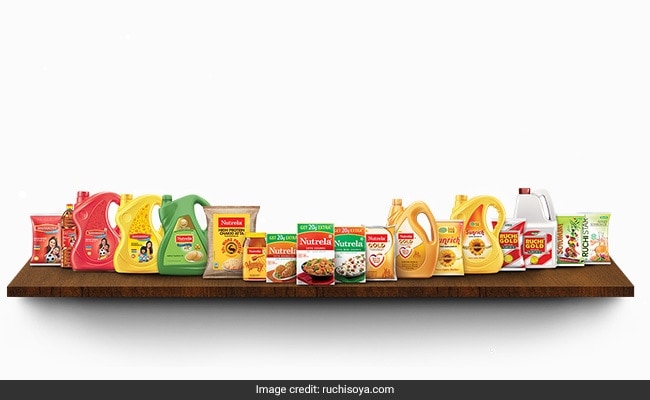
Yoga teacher Ramdev-led Patanjali Ayurved-owned Ruchi Soya on Thursday hit the capital market to raise Rs 4,300 crore through its follow-on public offer (FPO) as it aims to become a debt-free company.
The issue closes on March 28. The price band has been fixed at Rs 615 to Rs 650 per share.
Addressing a press conference here, Ramdev said the company has launched its FPO despite volatility in the stock market because of the war between Russia and Ukraine.
He said the company has already raised Rs 1,290 crore from anchor investors on Wednesday and expressed confidence that its FPO would be a huge success as people have faith in its products and brand.
Ramdev said the proceeds of the FPO would be utilised to retire the term loan of Rs 3,300 crore.
"Ruchi Soya will become debt-free," he asserted.
Asked why the price band has been kept lower than the current market prices, Ramdev said this has been done to give a good return to investors.
Ruchi Soya shares closed on Wednesday Rs 897.45 apiece on the BSE.
"We have turnaround the Ruchi Soya after acquiring it through insolvency proceedings," Ramdev said.
He said the company became bankrupt because of the mistakes committed by the previous management.
"We are running the company with transparency, accountability and corporate governance," he said.
Currently, Patanjali Group owns about 98.9 per cent stake in Ruchi Soya.
Public shareholders own about 1.1 per cent stake.
Post the FPO, Patanjali Group's holding in Ruchi Soya will come down to about 81 per cent, and the public will hold about 19 per cent.
The Securities and Exchange Board of India (SEBI) has given the nod for the launch of the Ruchi Soya FPO in August 2021, after the company filed the draft red herring prospectus (DRHP) in June 2021.
The firm is coming out with the public issue to meet SEBI's norm of minimum public shareholding of 25 per cent in a listed entity. It has around three years to pare promoters' stake to 75 per cent.
Ruchi Soya will use the proceeds from the issue for furthering the company's business by repayment of certain outstanding loans, meeting its incremental working capital requirements and other general corporate purposes.
In 2019, Patanjali acquired Ruchi Soya, which is listed on the stock exchanges, through an insolvency process for Rs 4,350 crore.
Ruchi Soya primarily operates in the business of processing oilseeds, refining crude edible oil for use as cooking oil, manufacturing soya products and value-added products. The company has an integrated value chain in palm and soya segments, having a farm-to-fork business model.
It has brands like Mahakosh, Sunrich, Ruchi Gold and Nutrela.

-
Why Amazon And Flipkart Are Struggling To Beat Meesho In India's Smaller Cities

With 274 million users and lowest-cost logistics, Meesho is defending its value commerce crown against giants like Amazon and Flipkart.
-
High US Salaries, No Green Card Certainty: The Financial Calculation Facing Indian H-1B Families
The suspension of PERM processing at eight technology employers does not cancel existing H-1B visas. What it does is force a question many Indian families have been avoiding: is the US salary worth tying your career and family plans to one employer?
-
Swiggy vs Eternal: Food Delivery's Two Rivals Are No Longer In The Same Race
Eternal is building a private AI assistant, dark.ai. Swiggy is still working out how to make Instamart pay, with an operating loss of Rs 895 crore in the July-September quarter while Blinkit stayed profitable.
-
Where You Live Shapes How You Get To Work | The Reason Why
Two-wheelers are the most popular way to get to work in India, accounting for nearly 43% of workplace commutes.
-
Unhedged Position: Can India See An Indonesia-Style Time Correction?
The Nifty is trading below levels it first clocked in 2024. Is there, then, as I have suggested in the headline, potential that the current time correction drags on painfully for the next three-five, even ten years?
-
Navigating Friction And Energy Realities: An Analysis Of Marco Rubio's October Visit To India
Occurring at a critical juncture marked by stalled trade negotiations and escalating geopolitical pressures over global energy supplies, the visit offers a profound window into modern US-India relations.
-
India Exports Capital. Why Not Export Trusteeship?
The big question, then, is whether India can build an institution that global borrowers, investors, banks, and lawyers can trust, even without an Indian connection.
-
France's Economy & Politics Are In Crisis | The Reason Why
Let's look at how the French economy and politics evolved under Nicolas Sarkozy, Franois Hollande and Emmanuel Macron.
-
You May Inherit The Business. You Must Earn Its Credibility.
Succession tests the founder's ability to share authority as much as it tests the next generation's readiness to assume it.
-
Signing Deals Is One Thing; Making Them Work Is Another | The Week In Whys
Sometimes, things don't turn out as planned. Indian companies have lost some bids to rivals, some projects won't produce until 2030.










