Panel Redrafting Income Tax Law Unlikely To Cut Rates
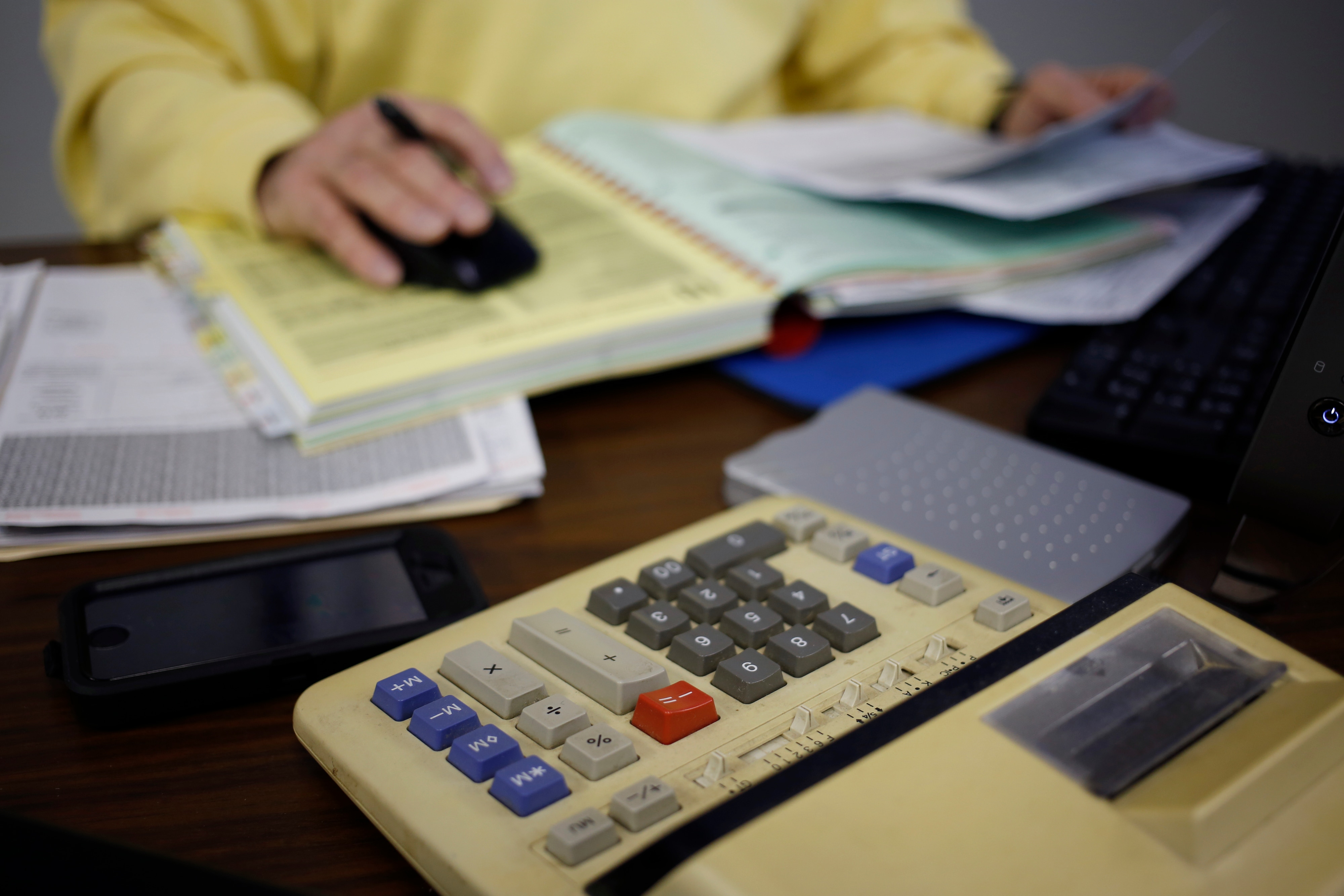
The task force set up to redraft the income tax law will focus on removing the ambiguities, rather than suggesting dramatic policy changes or tweaking of tax rates, panel's convenor Akhilesh Ranjan said on Tuesday.
Ranjan said the six-member task force, formed to redraft the over 50-year-old income tax law, will meet shortly to draft a new legislation which will be more comprehensible.
"Tax rate is prima-facie not the main focus area of this task force...(task force will focus on) simplification which can remove the ambiguities," Ranjan told reporters in New Delhi.
He said there are clauses, provisos and explanations which have been added to the Income Tax Act, 1961 over time which need to be streamlined in simple language.
"We have been adding provisions after provisions, explanations after explanations, they have become inconsistent, ambiguous. So let us clarify the real intent of the law. In that process there may be some new policy initiatives while trying to make things clear,” he said.
"The focus is not on coming out with a new tax policy but focus is on making the law more comprehensible," said Ranjan, who is member (legislation) in the Central Board of Direct Taxes.
The task force was set up by the finance ministry in November 2018.
On Nov. 26, Ranjan was appointed as the convenor and has been mandated to submit the report by Feb. 28.
Asked if the panel would submit any report before the interim budget on Feb.1, Ranjan said it was unlikely. The NDA government would be presenting its interim Budget for 2018-19 on Feb. 1.
The full 2018-19 Budget would be presented after the general elections due sometime in the mid of 2019. In September last year, Prime Minister Narendra Modi, had said in an event that the Income Tax Act, 1961 needed to be redrafted.
Other members of the task force include chartered accountant Girish Ahuja, EY Chairman and Regional Managing Partner Rajiv Memani, tax advocate Mukesh Patel, ICRIER Consultant Mansi Kedia, and retired IRS and advocate GC Srivastava.
"I am having a meeting (of task force) very shortly. I'm sure that they have done a lot of work and I would like to know what is the work that has been done till now and we will take it forward," Ranjan said.
The panel was tasked to draft direct tax laws in line with the laws prevalent in other countries, incorporating international best practices, and keeping in mind the economic needs of the country. In 2009, former finance minister P Chidambaram had proposed a direct taxes code to replace the cumbersome income tax law to embody the principle of keeping taxes low and removing exemptions.
The NDA government, since coming to power in 2014, has already implemented general anti-avoidance rules. In 2016, Finance Minister Arun Jaitley also promised to lower corporate tax rate to 25 percent in five years. Currently, income up to Rs 2.5 lakh per annum is exempted from tax for individuals.

-
High US Salaries, No Green Card Certainty: The Financial Calculation Facing Indian H-1B Families

The suspension of PERM processing at eight technology employers does not cancel existing H-1B visas. What it does is force a question many Indian families have been avoiding: is the US salary worth tying your career and family plans to one employer?
-
Swiggy vs Eternal: Food Delivery's Two Rivals Are No Longer In The Same Race
Eternal is building a private AI assistant, dark.ai. Swiggy is still working out how to make Instamart pay, with an operating loss of Rs 895 crore in the July-September quarter while Blinkit stayed profitable.
-
Where You Live Shapes How You Get To Work | The Reason Why
Two-wheelers are the most popular way to get to work in India, accounting for nearly 43% of workplace commutes.
-
Unhedged Position: Can India See An Indonesia-Style Time Correction?
The Nifty is trading below levels it first clocked in 2024. Is there, then, as I have suggested in the headline, potential that the current time correction drags on painfully for the next three-five, even ten years?
-
Navigating Friction And Energy Realities: An Analysis Of Marco Rubio's October Visit To India
Occurring at a critical juncture marked by stalled trade negotiations and escalating geopolitical pressures over global energy supplies, the visit offers a profound window into modern US-India relations.
-
India Exports Capital. Why Not Export Trusteeship?
The big question, then, is whether India can build an institution that global borrowers, investors, banks, and lawyers can trust, even without an Indian connection.
-
France's Economy & Politics Are In Crisis | The Reason Why
Let's look at how the French economy and politics evolved under Nicolas Sarkozy, Franois Hollande and Emmanuel Macron.
-
You May Inherit The Business. You Must Earn Its Credibility.
Succession tests the founder's ability to share authority as much as it tests the next generation's readiness to assume it.
-
Signing Deals Is One Thing; Making Them Work Is Another | The Week In Whys
Sometimes, things don't turn out as planned. Indian companies have lost some bids to rivals, some projects won't produce until 2030.
-
FOMC Wall, PERM Suspension, Hospital Stocks | Talking Points This Week
A PERM suspension would directly affect green-card sponsorship rather than H-1B visas, so the near-term earnings impact could remain relatively limited. The key question is whether this marks a new phase in US scrutiny of Indian IT.









