Paint Industry At Crossroads: Is The Time Ripe For Consolidation?
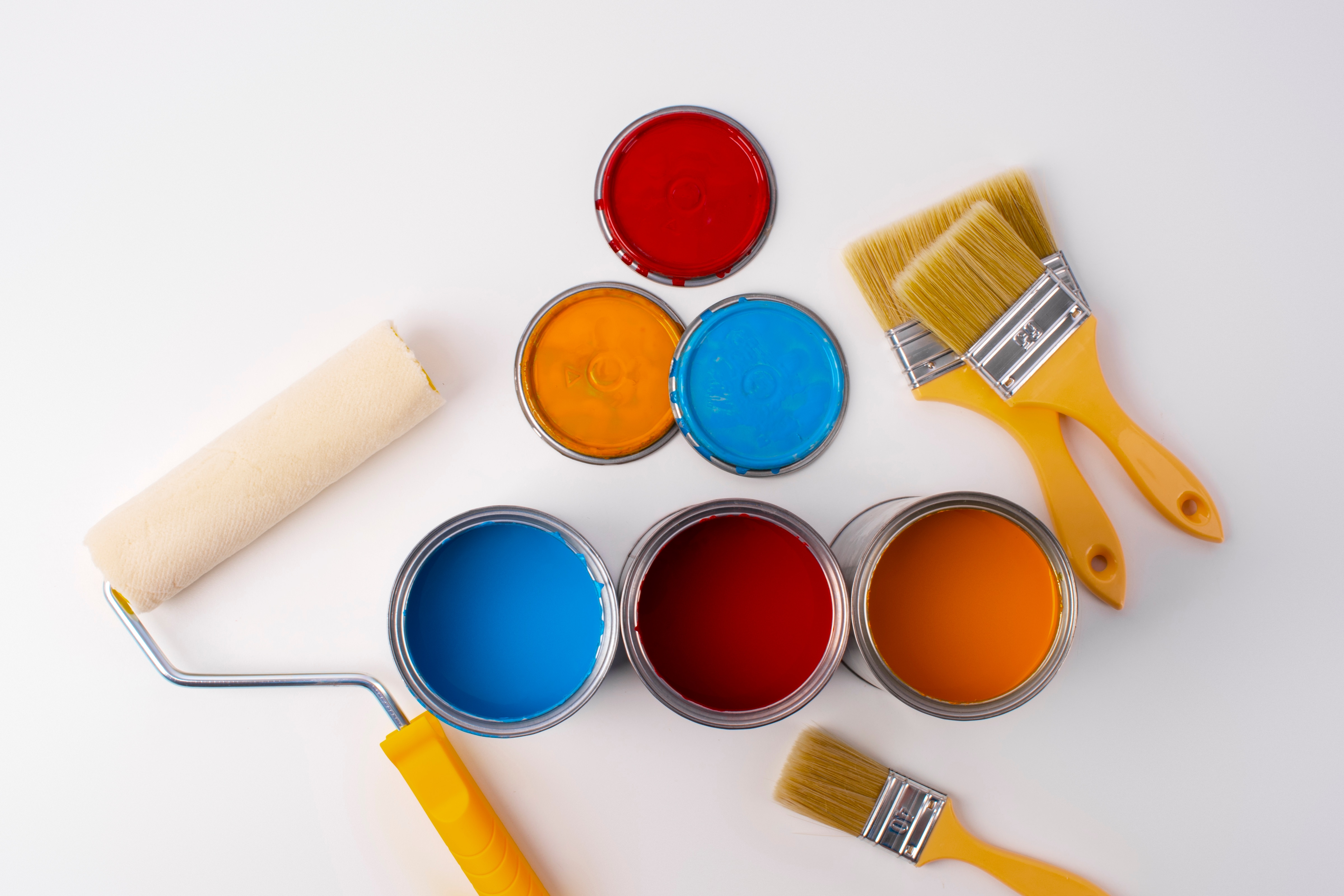
With rising competition and signs of moderating demand, India's paint industry appears poised for a phase of consolidation. As new challengers like Birla Opus gain ground and legacy giants such as Asian Paints and Berger Paints lose their market share, the landscape is shifting—and fast.
Who Could Be The Next Acquisition Targets?
Among the smaller paint manufacturers, Indigo Paints, Sirca Paints, and Shalimar Paints have emerged as potential acquisition candidates. Despite commanding modest market share of 1.9%, 0.6%, and 0.9% respectively, these companies offer meaningful regional reach and brand recall.
Indigo Paints, with over 18,000 dealers and a market cap of Rs 5,573 crore, is currently trading at a valuation of 20.84x.
Sirca Paints, with a niche focus and dealer base of over 4,000, is valued at 23.68x with a market cap of Rs 2,100 crore.
Shalimar Paints, though much smaller in valuation at Rs 825 crore, remains an iconic name in India's decorative paints history.
Why Does Consolidation Make Sense Now?
A combination of factors is pushing the case for mergers and acquisitions. Competition has become intense with new entrants like Birla Opus, backed by the Aditya Birla Group, already capturing 6.1% market share. Market leaders like Asian Paints and Berger have seen marginal dips in market share as they grapple with rising input costs and muted rural demand. Demand outlook for FY26 remains cautious, forcing larger players to explore inorganic growth. Crucially, management commentaries from both Asian Paints and Berger Paints have explicitly indicated openness to acquisitions if the right opportunity arises.
Who Has The Appetite—And The Cash?
With strong brand equity and expansive dealer networks, large incumbents are well-positioned to play consolidators.
Asian Paints remains the undisputed market leader with over 51.7% market share and 1,69,000 dealers. It holds Rs 782 crore in cash and trades at a robust valuation of 36x.
Berger Paints, holding 17.6% market share and a Rs 66,660 crore market cap, also commands a 36x valuation with Rs 500 crore in cash reserves.
Kansai Nerolac, though slightly more conservative, has Rs 290 crore in cash and a lower valuation multiple of 17x—potentially giving it more headroom for value-based acquisitions.
Capacity Expansion Also At Play
As paint companies ramp up future capacities to capture mid-to-long-term demand, acquisitions could also offer strategic access to additional production bandwidth. For instance, Indigo Paints plans to expand from 0.3 MMT to 0.5 MMT, while Asian Paints and Berger are eyeing expansions to 2.7 MMT and 1.6 MMT respectively.
With consolidation themes gaining traction, the coming quarters may witness decisive moves—either through outright acquisitions or strategic alliances. For the smaller players, this could be an opportunity to scale up through synergies, while larger firms stand to expand reach, brand portfolio, and market resilience.
As the paint industry stares at an inflection point, one thing is clear: the brushstrokes of consolidation may soon redefine the entire canvas.

-
High US Salaries, No Green Card Certainty: The Financial Calculation Facing Indian H-1B Families

The suspension of PERM processing at eight technology employers does not cancel existing H-1B visas. What it does is force a question many Indian families have been avoiding: is the US salary worth tying your career and family plans to one employer?
-
Swiggy vs Eternal: Food Delivery's Two Rivals Are No Longer In The Same Race
Eternal is building a private AI assistant, dark.ai. Swiggy is still working out how to make Instamart pay, with an operating loss of Rs 895 crore in the July-September quarter while Blinkit stayed profitable.
-
Where You Live Shapes How You Get To Work | The Reason Why
Two-wheelers are the most popular way to get to work in India, accounting for nearly 43% of workplace commutes.
-
Unhedged Position: Can India See An Indonesia-Style Time Correction?
The Nifty is trading below levels it first clocked in 2024. Is there, then, as I have suggested in the headline, potential that the current time correction drags on painfully for the next three-five, even ten years?
-
Navigating Friction And Energy Realities: An Analysis Of Marco Rubio's October Visit To India
Occurring at a critical juncture marked by stalled trade negotiations and escalating geopolitical pressures over global energy supplies, the visit offers a profound window into modern US-India relations.
-
India Exports Capital. Why Not Export Trusteeship?
The big question, then, is whether India can build an institution that global borrowers, investors, banks, and lawyers can trust, even without an Indian connection.
-
France's Economy & Politics Are In Crisis | The Reason Why
Let's look at how the French economy and politics evolved under Nicolas Sarkozy, Franois Hollande and Emmanuel Macron.
-
You May Inherit The Business. You Must Earn Its Credibility.
Succession tests the founder's ability to share authority as much as it tests the next generation's readiness to assume it.
-
Signing Deals Is One Thing; Making Them Work Is Another | The Week In Whys
Sometimes, things don't turn out as planned. Indian companies have lost some bids to rivals, some projects won't produce until 2030.
-
FOMC Wall, PERM Suspension, Hospital Stocks | Talking Points This Week
A PERM suspension would directly affect green-card sponsorship rather than H-1B visas, so the near-term earnings impact could remain relatively limited. The key question is whether this marks a new phase in US scrutiny of Indian IT.









