PacWest Leads Regional Bank Rebound After Bruising Rout
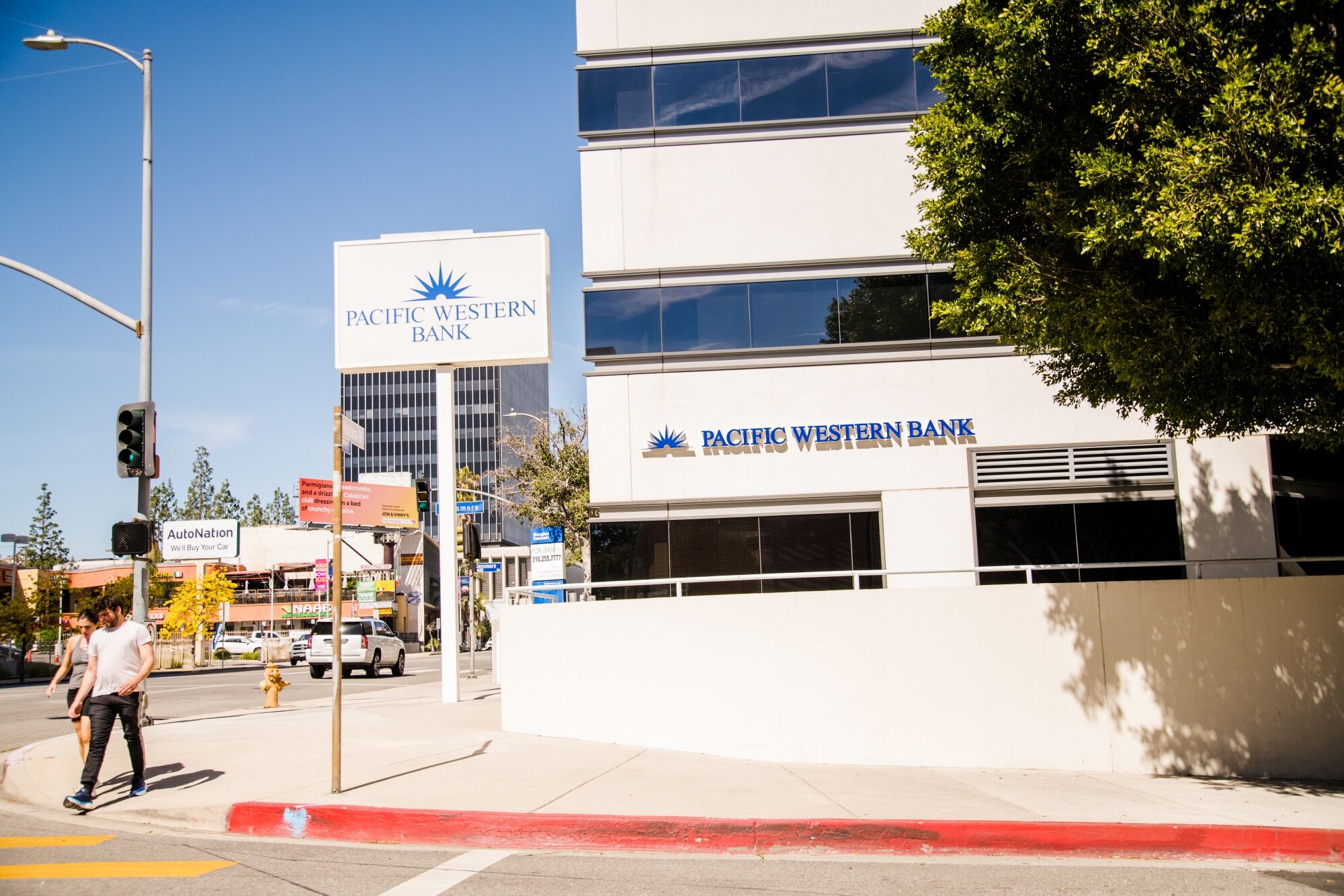
(Bloomberg) -- PacWest Bancorp led a rebound across US regional banking stocks after a bruising week of losses, joining in a broader rally across US stocks futures ahead of jobs data due later in the day.
PacWest's shares gained as much as 26% in US premarket trading on Friday, while peers Western Alliance Bancorp and First Horizon Corp. rose 15% and 7%.
The investor panic around regional banks started in March with fears about a few lenders that had big unrealized losses on bond investments or large proportions of uninsured depositors. Despite moves from regulators to address those issues, investors cited new concerns including banks' high exposure to real estate lending and general uneasiness about deposits leaving for higher-yielding alternatives.
The government's seizure and sale of First Republic Bank earlier this week and a report that PacWest was exploring strategic options revived market nervousness, sending peers tumbling. The rout spread to bigger lenders, with the KBW Bank Index recording an 11% drop this week.

PacWest shares plunged 51% on Thursday in its worst one-day loss on record, after the Beverly Hills-based lender confirmed it's in talks with several potential investors. Western Alliance slumped 38%, paring an earlier drop after denying a report that it's exploring strategic options. First Horizon plummeted after its proposed $13.4 billion merger with Toronto-Dominion Bank fell apart.
While some investors including hedge fund billionaire Bill Ackman have cautioned that there could be more pain to come, others have pointed out that the plunge has gone too far. Federal Reserve Chair Jerome Powell said that the resolution of First Republic after regulators seized the lender was an “important step toward drawing a line” under bank turmoil.
“The tension between poor market sentiment and strong liquidity at regional banks is difficult to reconcile as investors take a draconian view of banks' capital and operating models,” Bloomberg Intelligence analyst Herman Chan said.
In what could come as a relief for smaller lenders, Bloomberg News reported Thursday that the Federal Deposit Insurance Corp. is poised to exempt them from kicking in extra money to replenish the deposit insurance fund. Those with less than $10 billion in assets wouldn't have to pay, the report said.
The FDIC is planning to release as soon as next week a highly anticipated proposal for refilling the fund, which was partly depleted by the failures of Silicon Valley Bank and Signature Bank, people familiar with the matter said.
Equity trades betting against regional lenders have netted about $7 billion in paper profits so far this year, according to research by S3 Partners. But possible policy remediation may bring an end to those crowded shorts, some experts said.
Read more: Short Sellers Targeting US Banks Are Risking a Painful Squeeze
“While it's hard to see a catalyst to turn around the regional banks right now, it is a very popular and very crowded short which might be due for a squeeze at some point,” said Chris Murphy, co-head of derivatives strategy at Susquehanna International Group.
In a bid to calm antsy investors, PacWest this week said that core deposits have risen since March and it “has not experienced out-of-the-ordinary deposit flows following the sale of First Republic Bank and other news.” Insured deposits rose to 75%, the firm said.
Western Alliance said that it hasn't seen unusual deposit flows following First Republic's collapse. Insured deposits represent over 74% of its total, the company said.
--With assistance from Joanna Ossinger, Ishika Mookerjee and Michael J. Moore.
(Updates with FDIC proposal in seventh paragraph.)
More stories like this are available on bloomberg.com
©2023 Bloomberg L.P.

-
Ten Things I Learnt This Samvat

Patience can be a trap. Cheap stocks can stay cheap. Leverage can wipe you out. What did Samvat 2082 teach us? Niraj Shah writes on 10 lessons from the year gone by.
-
Talking Points This Week: Tech Nerves, FII Buying, And A Faraway Banking Shock
The global markets are not shining this Diwali. The exception in the large markets is, India.
-
Midterm Rally Lasted A Day. The Hard Reality Of A Divided US May Last Two Years | Opinion
Between a contested AI boom, a debt ceiling that arrives in 2027 and a president with every incentive to act alone, the next two years may prove more volatile than the first day's rally suggests.
-
Blue Wave Will Derail the AI Trade but Won't Dismantle the AI Era | Unhedged Position
The Democrats' sweep of the US Congress will see politics collide with economic forces both over the long and short term.
-
It's Time To Take The GST Council's Bet On Trust Global
Payment records can prove India's services exports, and clear, proportionate rules can bring foreign digital sellers into the tax net.
-
Opinion | India at 38: From Innovation Overperformer to Innovation Powerhouse
India now has 453 VC-backed deep science startups, 18 of them late-stage, after 117 percent growth since 2020. Laurus Labs, at USD 9.3 billion, is the most valuable deep science company in any middle-income economy outside China.
-
Navigating Energy Crossroads: S Jaishankar's Call For Diversified Supply Chains At G20 Ministerial Meeting
As geopolitical fault lines continue to test maritime trade routes and commodity flows, Jaishankar's message remains pertinent: true economic resilience requires open markets, protected transit lines, and a genuine commitment to multilateral cooperation rather than coercion.
-
Indians Are Travelling, But Not Every Journey Is A Holiday | The Week In Whys
Pilgrims, patients and working women are the real travellers, and the system hasn't quite caught up with them.
-
Getting To Work Costs Women More | The Reason Why
It is not just about women paying more than men. It is about women paying much more in cities than in villages.









