Optimism Returning To Bond Markets After Rout In 2022
Many of the world's big bond fund managers, from BlackRock to Vanguard, are optimistic that sovereign debt markets have turned a corner after a rout in 2022 with peak inflation and interest rates finally in sight.
Prices of U.S. 30-year Treasuries have gained over 10% in the past month, while UK-based fixed income funds saw inflows of 1.09 billion pounds ($1.33 billion) in November, the highest in two years, according to fund network Calastone.
After a year that has seen the worst ever bond market returns after its No. 1 enemy - inflation - soared, optimism is returning. Signs that inflation pressures are abating means central banks can let up on aggressive rate rises.
"It's too early to call the end of potential pressure on interest rates but the extreme volatility is over and ... the bludgeoning of the financial system by the Fed is over," said Rick Rieder, chief investment officer of global fixed income at BlackRock, which manages $8 trillion worth of assets.
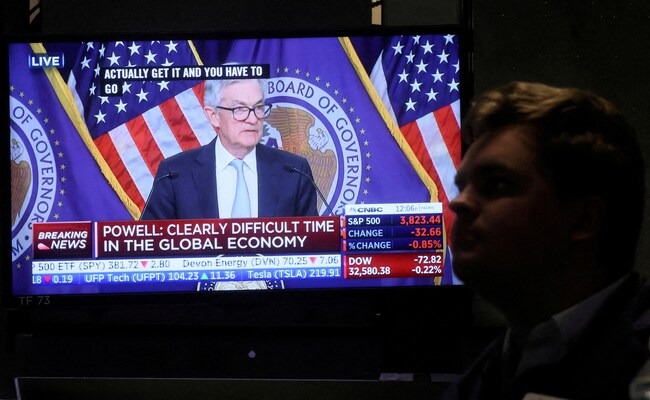
An anticipated half-point Federal Reserve rate hike on Wednesday, will take its policy rate to 4.25%-4.50%, from near zero in March, the swiftest rise since Fed Chair Paul Volcker battled an even worse inflation flare-up over four decades ago.
BlackRock sees short-term government bonds as attractive; Europe's largest fund manager, Amundi, says "bonds are back" in 2023.
TIPPING POINT
Aggressive tightening to contain inflation, exacerbated by war in Ukraine, triggered a paradigm shift for bonds, ending more than a decade of tame inflation and record-low borrowing costs.
Deutsche Bank calls 2022 the first global bond bear market in 70 years.
As bond prices slid, U.S., German and British 10-year bond yields jumped roughly 200 basis points each in the biggest annual surge since 1994, putting debt markets under strain.
"Trading was difficult in a sense that the market was not properly functioning. Futures are the most common tool for hedging but there was time when it didn't work," said Tomohiro Mikajiri, Barclays' head of yen and non-yen fixed income trading, Japan.
In Europe, negative rates, where investors effectively pay an issuer if they hold their debt to maturity, became history. A year ago 6 trillion euros worth of euro area debt, or 67% of the market, had sub-zero yields.
Japan, which stuck with an ultra-lose policy, remains the only major bond market with negative yields.
"The big plague of negative yields has largely gone away, so (it's) not the historic bond bull market we saw at the start of the 1980s, but very attractive yields compared with the last period," said Andrew Balls, chief investment officer for fixed income at PIMCO, which manages $1.69 trillion.
OPPORTUNITY
As bond yields stabilise at higher levels, many investors have increased their exposure.
Jeffrey Sherman, Deputy CIO at DoubleLine, which manages almost $100 billion in assets, said his portfolio combines exposure to high-quality credit and Treasuries.
Vanguard's CIO Greg Davis said the "bright spot" was that investors were being compensated for holding bonds now.
"We're in an environment where you've gotten yields back to something that's more normalized versus artificially depressed," he said.
Others favoured corporate bonds, especially investment-grade firms with short-dated debt yields now over 5%, deeming them safer to invest in compared with earlier this year as a recession looms.
Amundi's group CIO Vincent Mortier said the fund manager was overweight government bonds and investment grade credit.
Amundi, which manages 1.9 trillion euros of assets, expects a revival of the 60/40 stocks-bonds investment portfolio, following what some deemed its worst performance in a century as both bond and equity prices tanked. The split has been a key feature of investing for decades.
ONCE BITTEN, TWICE SHY
But with bonds failing to provide safety in 2022, caution remains. Hefty debt supply just as central banks wind down trillions of dollars in bonds held on their balance sheets, means headwinds remain.
Estimates for European bond sales after accounting for central bank purchases in 2023 are as high as over 500 billion euros.
"Depending on the scenario you're looking at this could mean a doubling of the amount that private investors will need to absorb compared to previous years," said Union Investment chief economist Joerg Zeuner.
Investors have also shown a readiness to punish governments they perceive as fiscally imprudent as a recent rout in British bonds showed.
Hedge fund managers attending a recent private UBS conference, said now was not the time to buy long-dated debt, according to a conference video seen by Reuters.
Finally, watch inflation, which caught many by surprise and could prove sticky, fund managers said.
"There are positive signs (on inflation), but I don't think there's any time for complacency," said Jim Leaviss, CIO Public Fixed Income at M&G Investments.
(Except for the headline, this story has not been edited by NDTV staff and is published from a syndicated feed.)

-
Navigating Friction And Energy Realities: An Analysis Of Marco Rubio's October Visit To India

Occurring at a critical juncture marked by stalled trade negotiations and escalating geopolitical pressures over global energy supplies, the visit offers a profound window into modern US-India relations.
-
India Exports Capital. Why Not Export Trusteeship?
The big question, then, is whether India can build an institution that global borrowers, investors, banks, and lawyers can trust, even without an Indian connection.
-
France's Economy & Politics Are In Crisis | The Reason Why
Let's look at how the French economy and politics evolved under Nicolas Sarkozy, Franois Hollande and Emmanuel Macron.
-
You May Inherit The Business. You Must Earn Its Credibility.
Succession tests the founder's ability to share authority as much as it tests the next generation's readiness to assume it.
-
Signing Deals Is One Thing; Making Them Work Is Another | The Week In Whys
Sometimes, things don't turn out as planned. Indian companies have lost some bids to rivals, some projects won't produce until 2030.
-
FOMC Wall, PERM Suspension, Hospital Stocks | Talking Points This Week
A PERM suspension would directly affect green-card sponsorship rather than H-1B visas, so the near-term earnings impact could remain relatively limited. The key question is whether this marks a new phase in US scrutiny of Indian IT.
-
Everything, Everywhere, All At Once: Dalal Street's Week To Forget | Joining The Dots
Visa curbs, a Starlink spat and cancer drug caps: what connects this week's shocks for Indian markets
-
India Is Going Abroad For Critical Minerals. But It May Take Years To Pay Off | The Reason Why
Although India's steps are in the right direction, they remain modest compared with India's growing dependence.
-
When Everyone Has AI, What Gives You An Edge?
India's young workforce is entering an uncertain world of work where powerful AI tools are becoming widely accessible. The advantage will belong to those who combine deep expertise with digital fluency, and the distinctly human capabilities that technology cannot manufacture.
-
Wrong Labels, High Pesticide Residues Holding Back Agri Exports | The Reason Why
India needs stronger domestic food-safety and labelling standards, with best practices becoming part of everyday business for farmers, traders and food companies.










