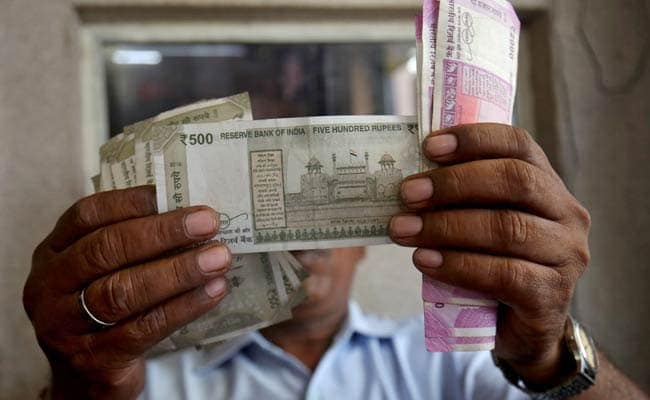
Indian rupee is hovering around 70 per US dollar for a month now. Last year it traded in the range of 66.7 and 74.5. Some of the movements in the exchange rate in the last quarter of 2018 were sharp and sudden, an outcome of unexpected news and unanticipated shocks. So what is in store for the rest of 2019?
In a floating exchange rate system, the value of a currency is determined by demand and supply. If there are no surprises or shocks to either side, then the currency will remain largely stable, but this is rarely the case.
First such potential shock to Indian rupee and currencies of the other developing countries may come when the United Kingdom withdraws from the European Union. Originally, the UK was set to leave the EU on March 28. Given the turmoil in the UK parliament about the way in which the exit should take place, the uncertainty about the timing of exit, and its impact on the UK and the rest of Europe remains high.
In addition, the economies of both China and the United States are slowing down as the ill-effects of trade wars beginning to show. The magnitude of economic slowdown may make foreign investors nervous and in the face of uncertainty, investors tend to take money back to home countries. This may again lower supply of dollars in emerging countries in coming months, resulting in a depreciation of currencies.
Throughout the year, the respective central banks will weigh on these and other factors, and take a call on interest rates, thereby influencing the relative returns in the debt markets. On the domestic front the general election will be held during the next two months, the outcome of which may result in a sudden rush inflow or outflow of dollars.
Whether or not we receive a steady inflow of dollars depends on whether the world believes India is a good place to invest in terms of potential future returns relative to opportunities offered by other countries. We use foreign savings to fund some of our domestic investment, in the absence of which Indians must save more (and hence, lower consumption). The inflow of foreign savings, if invested well, contributes to productivity gains increasing our country's long-term growth potential.
What is the best way to ensure an increase in the supply of dollars in India? Simply by raising India's exports at a faster pace. Unfortunately, despite rupee depreciation and global growth picking up in recent years, our net IT exports have stagnated around $17-18 billion per quarter since 2014-15 and the non-oil goods exports have risen less than 1.5 per cent every year since 2013-14. Now, with global growth slowing down, it would be even more difficult to raise our share in world of exports which is stuck around 1.6 per cent.
To stabilise the rupee, should the RBI supply more dollars if it is in short supply or mop up extra dollars? Large interventions by the central banks are unwise. For example, when the RBI sells dollars, it reduces rupee liquidity in the market that happened last year. Unless reverse operations are done to restore market liquidity, it risks raising domestic interest rate and hurt domestic investment. In contrast, when the RBI buys dollars, it injects excess rupees in the economy, leading to a risk of inflation.
On the demand side, our requirement for dollars is determined by India's import bill, which is inherently linked with the price of our largest import, crude oil. Given that the quantity of oil imports are relatively insensitive to price in the short run, if oil price increases our import bill balloons and vice-a-versa. If nothing else changes, then the rupee will slide or strengthen depending on how fast the oil price rises or drops, as was seen the last quarter of 2018.
The safest bet to stabilise rupee is to be obsessed with raising productivity, export competitiveness, and lower the fragility of our financial sector. But despite this, be aware that the exchange rate, same as life in general, would always remain unpredictable.
(Dr Vidya Mahambare is professor of economics at Great Lakes Institute of Management, Chennai)
Disclaimer: The opinions expressed within this article are the personal opinions of the author. The facts and opinions appearing in the article do not reflect the views of NDTV and NDTV does not assume any responsibility or liability for the same.
Essential Business Intelligence, Continuous LIVE TV, Sharp Market Insights, Practical Personal Finance Advice and Latest Stories — On NDTV Profit.