In IL&FS, Story Of India's Own Belt-and-Road Debt Fiasco
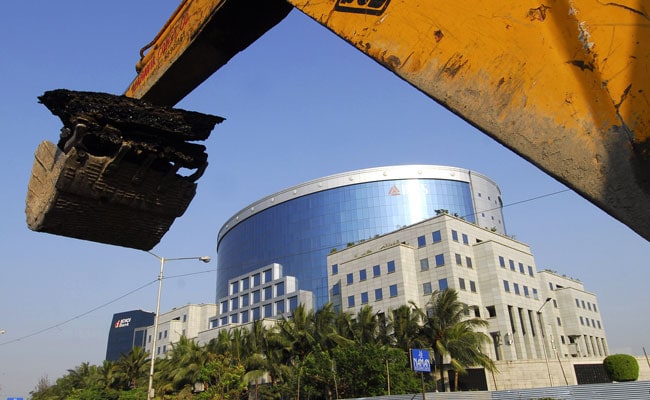
It was as a newspaper-office intern in New Delhi in 1992 that I witnessed the birth of India's homegrown belt-and-road initiative. The program was midwifed by an up-and-coming lender that few had then heard of: Infrastructure Leasing & Financial Services Ltd.
It wasn't called belt-and-road, a term that would gain currency much later as a catchphrase for China's opaquely financed global infrastructure ambitions. There's a lot of scrutiny now of those energy and transportation projects, and a growing discomfort that Beijing may be ensnaring developing countries in a debt trap. So it's remarkable that India - itself a vocal critic of belt-and-road - allowed a local financier to do something similar on home turf, with little accountability or supervision.
A perennial paucity of budgetary resources has forced taxpayers to outsource infrastructure - not to the Chinese, but to local public-private partnerships led by IL&FS. However, in many instances, only the returns became private. Risks remained with the public.
Those risks have now come back to bite. IL&FS and its associates have $12.5 billion in debt, of which $500 million is due over the next six months. The group has only $27 million of liquidity at hand, sparking a debt-repayment crisis that threatens to engulf banks and mutual funds to insurance and pension funds. Chairman Ravi Parthasarathy, paid $3.65 million last fiscal year, left abruptly in July after being with the company since its inception.
When I first encountered it, the five-year-old IL&FS was barely getting started with what would become its unique model: a financier that also conceived, executed and owned large projects. It offered to do all those things in 1992, when New Delhi and its suburb of Noida agreed to build a connecting expressway across the river Yamuna. The IL&FS-controlled Noida Toll Bridge Co. opened a gleaming eight-lane motorway nine years later.
Driving on it was divine, but it soon became apparent shareholders were getting a risk-free ride at commuters' expense, with the project guaranteeing 20 per cent returns to equity investors including IL&FS. When the Delhi and Noida governments gave the land, they had expected the expressway to be returned to them in 30 years. In 2008, though, it looked like the asset was going to be in private hands for at least 70 years. In 2016, a court called out the daylight robbery and ordered the toll plazas to be dismantled. Stock of the first publicly traded toll road shot up above 70 rupees in 2007; it changes hands for less than 9 rupees now.

(When the Delhi and Noida governments gave the land, they had expected the expressway to be returned to them in 30 years.)
It's unclear whether IL&FS learned anything from that fiasco. Gift City, Prime Minister Narendra Modi's pet project to set up an international finance center in his home state of Gujarat, saw the state government lease land at throwaway prices to an IL&FS-controlled company. A former head of Gift City board's audit committee had to leave after he made noises about the one-sided contract, and complained about the engineering and architectural services vendor appointed by IL&FS not fulfilling its obligations or returning money paid.
I could go on. Foreign investors, as well as locals such as Life Insurance Corp. of India, and Mahindra & Mahindra Ltd., joined IL&FS as equity partners in a socially worthwhile and economically necessary water treatment plant in Tirupur, a textile town in Tamil Nadu. But now the investors say they've been diluted against their knowledge because IL&FS - also a lender - wants to maximize value for itself. A challenge by one investor alleging oppression by IL&FS and the Tamil Nadu government has reached the Supreme Court.

(IL&FS investors say they've been diluted against their knowledge.)
The unlisted IL&FS parent is beyond stock market scrutiny. And while it doesn't fall within the regulatory regime for deposit-taking institutions, it's categorized as systemically important. Yet there's never been any real oversight of it; an infrastructure-financier that's also an operator with 169 subsidiaries, associates and joint ventures is too complex for any watchdog or credit-rating firm.
Its majority owners are state-owned, and that's given IL&FS the aura of a quasi-sovereign. Life Insurance Corp. is IL&FS's biggest shareholder, yet its officials privately rue the fact that they were diluted in Tirupur to the point they left the operating company's board. The same state-run insurer will probably have to rescue it now. On Saturday, IL&FS changed its chairman once again.
Were IL&FS a Chinese company in a developing country, there would be an uproar by now about exploitative contracts, and the trail of waste left in their wake. But this is an Indian company in India, playing on the nation's desperation for decent infrastructure. As a young intern in Delhi 25 years ago, when I yearned for a quick passage across the river, I had no idea the bridge to a better life would one day extract such a heavy toll.
(Andy Mukherjee is a Bloomberg Gadfly columnist covering industrial companies and financial services. He previously was a columnist for Reuters Breakingviews. He has also worked for the Straits Times, ET NOW and Bloomberg News.)
Disclaimer: The opinions expressed within this article are the personal opinions of the author. The facts and opinions appearing in the article do not reflect the views of NDTV and NDTV does not assume any responsibility or liability for the same.

-
Talking Points This Week: Tech Nerves, FII Buying, And A Faraway Banking Shock

The global markets are not shining this Diwali. The exception in the large markets is, India.
-
Midterm Rally Lasted A Day. The Hard Reality Of A Divided US May Last Two Years | Opinion
Between a contested AI boom, a debt ceiling that arrives in 2027 and a president with every incentive to act alone, the next two years may prove more volatile than the first day's rally suggests.
-
Blue Wave Will Derail the AI Trade but Won't Dismantle the AI Era | Unhedged Position
The Democrats' sweep of the US Congress will see politics collide with economic forces both over the long and short term.
-
It's Time To Take The GST Council's Bet On Trust Global
Payment records can prove India's services exports, and clear, proportionate rules can bring foreign digital sellers into the tax net.
-
Opinion | India at 38: From Innovation Overperformer to Innovation Powerhouse
India now has 453 VC-backed deep science startups, 18 of them late-stage, after 117 percent growth since 2020. Laurus Labs, at USD 9.3 billion, is the most valuable deep science company in any middle-income economy outside China.
-
Navigating Energy Crossroads: S Jaishankar's Call For Diversified Supply Chains At G20 Ministerial Meeting
As geopolitical fault lines continue to test maritime trade routes and commodity flows, Jaishankar's message remains pertinent: true economic resilience requires open markets, protected transit lines, and a genuine commitment to multilateral cooperation rather than coercion.
-
Indians Are Travelling, But Not Every Journey Is A Holiday | The Week In Whys
Pilgrims, patients and working women are the real travellers, and the system hasn't quite caught up with them.
-
Getting To Work Costs Women More | The Reason Why
It is not just about women paying more than men. It is about women paying much more in cities than in villages.
-
AI Bias In Investing Cannot Be Eliminated, But It Can Be Governed
Framing is a particularly important example as identical financial information presented in terms of gains rather than losses can lead an LLM to reach a different assessment.









