Opinion: Amazon Learns It Cannot Beat Mukesh Ambani On His Home Turf
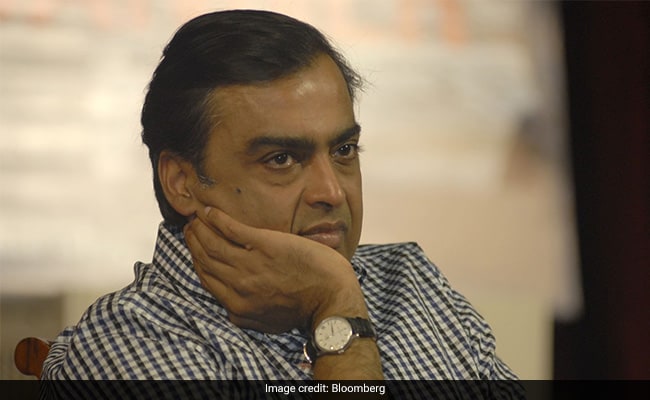
In the end, Indian billionaire Mukesh Ambani settled the dispute over who gets to own the assets of beleaguered Future Retail Ltd. not in an arbitration tribunal in Singapore, or in a courtroom in New Delhi, but in a shopping aisle.
Future Retail had been subleasing store space from the tycoon's Reliance Industries Ltd. Indeed, it was kept operating only on Ambani's forbearance because Future couldn't come up with the rent. But with Amazon.com continuing to block Reliance's $3.4 billion purchase of Future's assets, Ambani decided to make the acquisition a fait accompli: He terminated the leases and is taking control of the properties.
It was a dramatic denouement to a three-year-old saga. Amazon was Future's original rescuer, investing $192 million into a gift voucher unit controlled by its founder Kishore Biyani so he could use the money to steady the debt-laden Indian retailer.
The condition of that 2019 deal was that assets — about 1,500 stores nationwide — wouldn't be sold to Ambani, who owns India's largest retail empire. When Biyani did exactly that after Covid-19 decimated operations, Amazon began proceedings against Future for breach of contract. The Reliance deal was in limbo — until Ambani decided he'd had enough.
The desperation was palpable in the messages Future sent Reliance. “Please confirm that there will not be any reduction in consideration payable,” said a March 2 missive from Future, as reported by Saritha Rai and P R Sanjai of Bloomberg News. Then, one paragraph later, “It is important for our stakeholders to have visibility on the final consideration.” Was Future Retail living under a rock? Its bailout by Ambani was always clearly a commercial deal, not a humanitarian mission. It was Future's job to take care of its stakeholders, including creditors.
And where's Amazon in all this? By now, it must have learned that taking on Ambani on his home turf was futile. Once the ground had shifted from under its feet, Amazon offered an out-of-court settlement over its funds infusion in Future Coupons Pvt. — which had been its first move in the drama. Amazon couldn't have rescued Future Retail directly because India's draconian foreign direct investment rules were in the way. So it did the next best thing: funding privately held Coupons and, thus, indirectly exercising some control over Retail.
That control proved to be tenuous. After it agreed to Reliance's deal, Future wanted to wriggle out of the contract with Amazon. Its independent directors complained to India's trustbuster that the multinational firm had deliberately misled the authority about the true nature of the Coupons deal, which effectively put Amazon in the driver's seat at Retail, violating India's 2018 foreign direct investment law. The regulator promptly suspended its earlier approval of Amazon's investment, and the Delhi High Court halted the Singapore arbitration panel's work. (Singapore's reputation as an Asian arbitration hub draws many cross-border deals to the city-state.)
But if the near-bankrupt firm with a net worth of negative $280 million was betting that Rescuer No. 2 would wait patiently as it sorted out its legal troubles with Benefactor No. 1, it misjudged the situation. According to a March 9 disclosure by Future Retail, 342 of its large stores and 493 of smaller outlets — constituting 55% to 65% of retail revenue — have so far received termination notices of sub-leases from Reliance entities.
It's disingenuous for Future to now appear shocked, shocked, that its preferred savior is moving in before consummating the formal purchase, doing everything to make an omelet that can't be unscrambled by any authority: Possession, after all, is nine-tenths of the law. Amazon had given the loss-making firm an option as late as January for a further $914 million bailout, but Future's independent directors judged the offer to be inadequate, given the ballooning debt. As things stand, it's for Future's 2025 dollar bondholders to figure out if they'll be made whole. Trading around 60 cents to the dollar through the stealth acquisition, the notes don't seem to be indicate a surfeit of creditor confidence.
How does a physical takeover work? There's inventory, furniture, lighting and point-of-sale equipment, all pledged to creditors. “Your insistence of removing all such assets from the stores may not be practically possible and such removal may result in irreversible losses in terms of value,” says a March 5 letter to Reliance, this time by Future Lifestyle Fashions Ltd. “We would request your goodselves not to take any actions with respect to the assets as well as premises till we can discuss ….”
There's nothing left for the “goodselves” at Reliance to discuss. The upshot is this: On the prodding of Future Retail, the Indian justice system put a bullet through the country's arbitration law, never giving it a chance to settle a simple commercial dispute. The consequences are for Future — and India — to bear.
It's now clear that, when faced with muscular opponents, the odds of enforcing a contract in the country are slim. Nobody ought to complain if foreigners are skeptical of India's reported strides in “ease of doing business.” But then, it's a fast-modernizing market of 1.4 billion consumers. Amazon can't give up on it. The Seattle-based firm alleged in a March 15 newspaper ad that Future was trying to remove the “substratum of the dispute” by transferring its stores to Ambani in a “clandestine manner.” The e-commerce giant also informed India's top court that truce talks had failed. It's hard to say if Amazon's continued protests will dissuade Future's lenders from blessing the de facto change of control — or if it's already too late for that.
As for Future, it doesn't have much of one. Going extinct is a feature of capitalism. But the ignominious manner in which an Indian pioneer of modern retail got taken apart store by store because of the wrong choices it made should be a case study. However, before academics get busy, creditors need to find out where the shopping racks and the cash machines are kept. It's their collateral, after all, and the overarching lesson of this contest has been that everyone should grab what they can. While stocks last.

-
Blue Wave Will Derail the AI Trade but Won't Dismantle the AI Era | Unhedged Position

The Democrats' sweep of the US Congress will see politics collide with economic forces both over the long and short term.
-
It's Time To Take The GST Council's Bet On Trust Global
Payment records can prove India's services exports, and clear, proportionate rules can bring foreign digital sellers into the tax net.
-
Opinion | India at 38: From Innovation Overperformer to Innovation Powerhouse
India now has 453 VC-backed deep science startups, 18 of them late-stage, after 117 percent growth since 2020. Laurus Labs, at USD 9.3 billion, is the most valuable deep science company in any middle-income economy outside China.
-
Navigating Energy Crossroads: S Jaishankar's Call For Diversified Supply Chains At G20 Ministerial Meeting
As geopolitical fault lines continue to test maritime trade routes and commodity flows, Jaishankar's message remains pertinent: true economic resilience requires open markets, protected transit lines, and a genuine commitment to multilateral cooperation rather than coercion.
-
Indians Are Travelling, But Not Every Journey Is A Holiday | The Week In Whys
Pilgrims, patients and working women are the real travellers, and the system hasn't quite caught up with them.
-
Getting To Work Costs Women More | The Reason Why
It is not just about women paying more than men. It is about women paying much more in cities than in villages.
-
AI Bias In Investing Cannot Be Eliminated, But It Can Be Governed
Framing is a particularly important example as identical financial information presented in terms of gains rather than losses can lead an LLM to reach a different assessment.
-
Joining The Dots | Dark Skies, Steady Diya: Why Hope Holds This Diwali
With war, a weak rupee and foreign outflows weighing on sentiment, policymakers at the NDTV World Summit and market veterans at NDTV Profit Ignite: Diwali Edition offered the same advice: stay invested and filter out the noise.
-
The Curious Case of Equitas Small Finance Bank And A CEO Who Quit For Stock
PN Vasudevan believes persistent investor concerns over a perceived conflict of interest had become a governance overhang on Equitas Small Finance Bank's stock, even as the lender improved profitability and asset quality.










