$680 Million Question of What Anil Ambani Knew
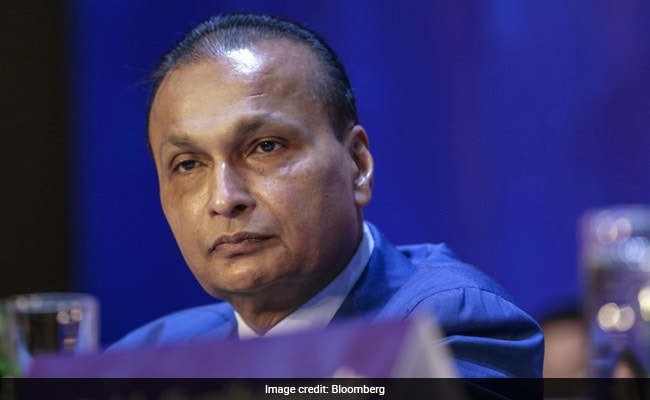
Anil Ambani, the younger brother of Asia's richest man, faces a $680 million legal test to answer one and only one question: Just what did he know about what his employees were doing on his behalf? Other Indian tycoons will take an abiding interest in his defense.
The $680 million is the amount Industrial & Commercial Bank of China Ltd. is seeking to recover from the former Indian billionaire by invoking what they say is a personal guarantee he gave in 2012 to secure a $925 million loan for Reliance Communications Ltd., his mobile services firm that's now in bankruptcy. Ambani, whose older sibling Mukesh controls Reliance Industries Ltd., India's most valuable company, claims he never knowingly provided any guarantee.
In his version, he had only authorized his employees to furnish a non-binding "personal comfort letter" to lenders, including ICBC, China Development Bank and the Export-Import Bank of China. Somehow, that letter of comfort morphed into what the banks now argue to be an iron-clad guarantee under English law. "A truly remarkable feature of Mr. Ambani's case,'' London Judge David Waksman said in his order Monday, "is that he has himself proffered no explanation as to why he should have been deceived in this way."
As to how personal assets were put at risk unbeknownst to the boss until RCom defaulted in 2017, the order noted that Ambani's lawyer had argued that his client's "position was that 'he hasn't got a clue' how all of this came about." Judge Waksman stopped short of awarding the summary judgment requested by ICBC, though not before characterizing Ambani's evidence as "inexplicably incomplete, implausible and highly unlikely."
A trial will commence next year. Pending the verdict, the court may ask some or all of the claim to be deposited with it.
Ambani's representative focused on the the judge's decision to dismiss the banks' application for a summary judgment. "Mr. Ambani has contested the proceedings and put up a strong legal defense, and will continue to contest the proceedings and seek leave to defend, without any conditions as to making of deposits or payments being imposed," the representative said in a statement, according to Bloomberg News.

This is the younger Ambani's second brush with the pitfalls of personal guarantee. Earlier this year, he managed to avoid a three-month prison term when his elder brother showed up just in time to settle the $80 million claim of Ericsson AB. The Swedish telecom equipment maker had obtained a contempt-of-court order to put Ambani in jail if the payment - which he had personally guaranteed - wasn't received by March 19.
Other Indian business families should treat Ambani's travails as a cautionary tale.
When India's economy was booming, and firms were greedy to use leverage to grow, many of their controlling shareholders liberally gave out personal guarantees to lenders. But the rosy assumptions behind aggressive, debt-fueled expansion have come unstuck for many borrowers in an economy that has slowed down sharply. The Ruia family recently lost its crown jewel - a 10 million-tons-a-year integrated steel plant in western India - to ArcelorMittal.
Even here, the former asset owners had backed their borrowings with personal guarantees, and State Bank of India, the main lender, had even made an attempt to enforce them. With Mittal's $6 billion check in the bank, that recovery may have now become a moot point. But from Dec. 1, personal guarantees on corporate loans will be adjudicated under Indian bankruptcy law. That will put a healthy fear in the minds of Indian businessmen about borrowing too recklessly. Their own assets could end up getting liquidated together with those of their companies.
As for Ambani, he'll get his day in an English court to prove his lack of awareness. The bar is high, though. "I consider it extremely unlikely that his role was really limited to simply chairing board meetings with little or no interest or role in what RCom was doing, especially in the context of a major refinancing which was needed urgently," Judge Waksman noted.
This has all the ingredients of an engaging courtroom drama.
(Andy Mukherjee is a Bloomberg Opinion columnist covering industrial companies and financial services. He previously was a columnist for Reuters Breakingviews. He has also worked for the Straits Times, ET NOW and Bloomberg News.)
Disclaimer: The opinions expressed within this article are the personal opinions of the author. The facts and opinions appearing in the article do not reflect the views of NDTV and NDTV does not assume any responsibility or liability for the same.

-
Talking Points This Week: Tech Nerves, FII Buying, And A Faraway Banking Shock

The global markets are not shining this Diwali. The exception in the large markets is, India.
-
Midterm Rally Lasted A Day. The Hard Reality Of A Divided US May Last Two Years | Opinion
Between a contested AI boom, a debt ceiling that arrives in 2027 and a president with every incentive to act alone, the next two years may prove more volatile than the first day's rally suggests.
-
Blue Wave Will Derail the AI Trade but Won't Dismantle the AI Era | Unhedged Position
The Democrats' sweep of the US Congress will see politics collide with economic forces both over the long and short term.
-
It's Time To Take The GST Council's Bet On Trust Global
Payment records can prove India's services exports, and clear, proportionate rules can bring foreign digital sellers into the tax net.
-
Opinion | India at 38: From Innovation Overperformer to Innovation Powerhouse
India now has 453 VC-backed deep science startups, 18 of them late-stage, after 117 percent growth since 2020. Laurus Labs, at USD 9.3 billion, is the most valuable deep science company in any middle-income economy outside China.
-
Navigating Energy Crossroads: S Jaishankar's Call For Diversified Supply Chains At G20 Ministerial Meeting
As geopolitical fault lines continue to test maritime trade routes and commodity flows, Jaishankar's message remains pertinent: true economic resilience requires open markets, protected transit lines, and a genuine commitment to multilateral cooperation rather than coercion.
-
Indians Are Travelling, But Not Every Journey Is A Holiday | The Week In Whys
Pilgrims, patients and working women are the real travellers, and the system hasn't quite caught up with them.
-
Getting To Work Costs Women More | The Reason Why
It is not just about women paying more than men. It is about women paying much more in cities than in villages.
-
AI Bias In Investing Cannot Be Eliminated, But It Can Be Governed
Framing is a particularly important example as identical financial information presented in terms of gains rather than losses can lead an LLM to reach a different assessment.









