Under New Management — Russia Now Runs OPEC
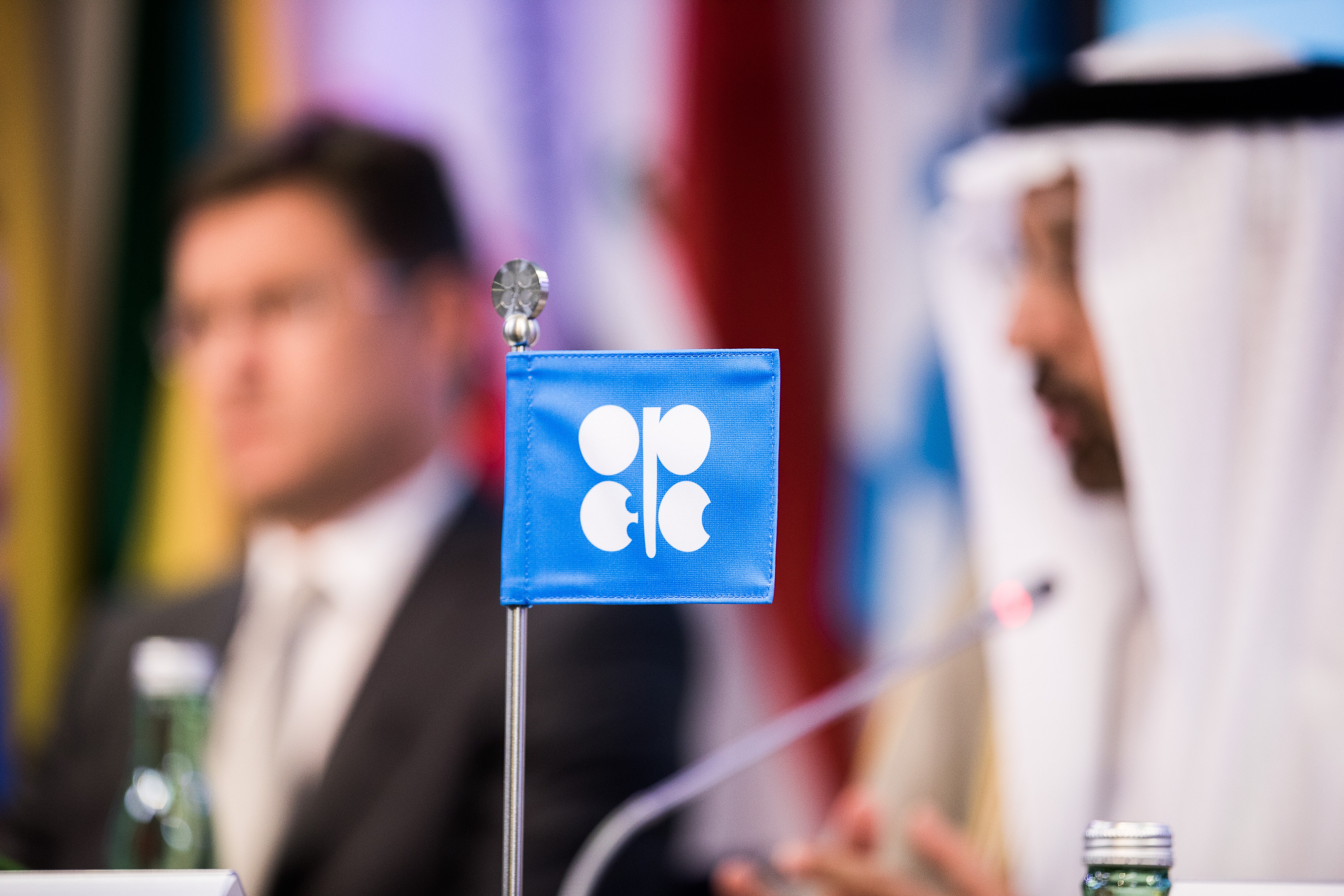
(Bloomberg Opinion) -- If anyone doubted that OPEC is now little more than a zombie organization, the last 10 days have proved it.
The group has shown itself incapable of making it own decisions. Its smaller members have borne the brunt of an agreement to cut output that was only achieved after Russia took control of discussions from the heart of OPEC's head office. Then, even after Saudi Arabia announced it would reduce supply by nearly a million barrels a day by January, oil traders merely shrugged.
It is a sad result for an organization that once made governments tremble. Here's how it unfolded.
OPEC oil ministers gathered in the group's secretariat building on a wintry Thursday in Vienna. Weakening demand growth and soaring U.S. production prompted agreement that they needed to reduce production in order to balance the market in 2019. What they didn't see eye to eye on was how to share that burden.
Saudi Arabia insisted that all members should play an equal part, cutting by the same percentage from a new baseline set at October's production level. Naysayers argued that, given how the group's biggest producer had boosted its own output by more than a million barrels a day since May, it should therefore bear the brunt of the cuts needed to get the market back into balance. Furthermore, Iran led a contingent of countries claiming their special circumstances warranted exemptions.
The stand-off looked very similar to the one that had scuppered a deal in Doha in April 2016 – something that nobody wanted to repeat. But by the end of that Thursday, Dec. 6, officials had failed to reach an agreement and Saudi oil minister Khalid Al-Falih said he was “not confident” one was possible. The gala dinner at the Liechtenstein Palace was sparsely attended, with both the Saudi and Iranian delegations, among others, skipping the event.
Friday, the day originally scheduled for the group to meet with its partners, began little better. OPEC ministers were once again locked away in discussions. The talks went nowhere, and the OPEC+ meeting got pushed back to the afternoon.
Then the Russians arrived.
Bilateral discussions to hammer out negotiating positions are a regular feature of the days and hours before the main OPEC gatherings. They take place in the suites of Vienna's grandest hotels, where the various delegations are holed up. In recent years, the Russians have been part of this scene.
But when Russian Energy Minister Alexander Novak arrived Friday morning, he moved in to the office of OPEC's Secretary General. If ever there was a symbol of OPEC's demise, it was this. He then summoned first Iran's oil minister, then Saudi Arabia's, for about 45 minutes each. Two hours later, the group reached a deal. And Iran, Libya and Venezuela got their exemptions, even if they didn't appear in the final communiqué.
The agreement that emerged is, on paper, fair and reasonable. OPEC will cut production by 800,000 barrels a day from a new baseline of October 2018 production, with participating members cutting by 3 percent. The group's partners will reduce their supply by 2 percent, contributing a further 400,000 barrels a day. That combined reduction is just about enough to balance supply and demand in the first half of next year.
Saudi Arabia went even further. Al-Falih said the kingdom's production would fall to 10.2 million barrels a day in January, down from 11.1 million last month.
That looks like a huge cut, but it is still 150,000 barrels a day above its target under the original deal.
And this is where the inequality of the new OPEC+ deal becomes apparent. Saudi Arabia, Russia, the United Arab Emirates and Iraq boosted their combined output by almost 1.6 million barrels a day between May and October. That not only contributes to the current glut, it also gives them much higher starting points for the latest cuts than for the previous ones. Other OPEC members all face lower starting points.
The effect has been to shift a disproportionate share of the burden of OPEC's supply management since 2016 onto the group's smaller producers.
Handing control of OPEC decision making to the Kremlin has come at a high cost for the group, and most particularly for its smaller members. Some of the latter were already feeling marginalized. This latest deal will do nothing to change their view and the divisions between the organization's “haves” and “have nots” will only widen.
Russia has done very well out of this. It agreed to cut output by 230,000 barrels a day from its October output level of 11.42 million. That would reduce its production to 11.19 million barrels a day, a figure that is just 15,000 barrels below its original 2016 baseline — a cut of just 0.1 percent.
Contrast that with OPEC member Algeria, which produces around a tenth as much oil as Russia. Its new target will be 1.023 million barrels a day. That's a cut of 66,000 barrels a day, or 6.1 percent below the 2016 baseline.
And what did this all achieve?
Oil markets have reacted with indifference. After a brief rally when the deal was revealed, Brent subsequently sank back below the level it was trading at before the meeting began. Perhaps traders don't believe the group will be able to implement the arrangement, or are waiting to see evidence that it's taken effect.
OPEC has lost a lot for very little gain.
To contact the editor responsible for this story: Jennifer Ryan at jryan13@bloomberg.net
This column does not necessarily reflect the opinion of the editorial board or Bloomberg LP and its owners.
Julian Lee is an oil strategist for Bloomberg. Previously he worked as a senior analyst at the Centre for Global Energy Studies.
©2018 Bloomberg L.P.

-
Where You Live Shapes How You Get To Work | The Reason Why

Two-wheelers are the most popular way to get to work in India, accounting for nearly 43% of workplace commutes.
-
High US Salaries, No Green Card Certainty: The Financial Calculation Facing Indian H-1B Families
The suspension of PERM processing at eight technology employers does not cancel existing H-1B visas. What it does is force a question many Indian families have been avoiding: is the US salary worth tying your career and family plans to one employer?
-
Unhedged Position: Can India See An Indonesia-Style Time Correction?
The Nifty is trading below levels it first clocked in 2024. Is there, then, as I have suggested in the headline, potential that the current time correction drags on painfully for the next three-five, even ten years?
-
Navigating Friction And Energy Realities: An Analysis Of Marco Rubio's October Visit To India
Occurring at a critical juncture marked by stalled trade negotiations and escalating geopolitical pressures over global energy supplies, the visit offers a profound window into modern US-India relations.
-
India Exports Capital. Why Not Export Trusteeship?
The big question, then, is whether India can build an institution that global borrowers, investors, banks, and lawyers can trust, even without an Indian connection.
-
France's Economy & Politics Are In Crisis | The Reason Why
Let's look at how the French economy and politics evolved under Nicolas Sarkozy, Franois Hollande and Emmanuel Macron.
-
You May Inherit The Business. You Must Earn Its Credibility.
Succession tests the founder's ability to share authority as much as it tests the next generation's readiness to assume it.
-
Signing Deals Is One Thing; Making Them Work Is Another | The Week In Whys
Sometimes, things don't turn out as planned. Indian companies have lost some bids to rivals, some projects won't produce until 2030.
-
FOMC Wall, PERM Suspension, Hospital Stocks | Talking Points This Week
A PERM suspension would directly affect green-card sponsorship rather than H-1B visas, so the near-term earnings impact could remain relatively limited. The key question is whether this marks a new phase in US scrutiny of Indian IT.
-
Everything, Everywhere, All At Once: Dalal Street's Week To Forget | Joining The Dots
Visa curbs, a Starlink spat and cancer drug caps: what connects this week's shocks for Indian markets









