OPEC Okays Modest Rise In Oil Supply From July After Iran Cooperates
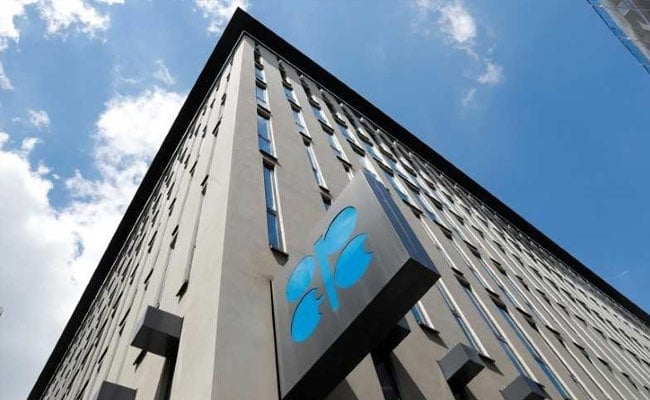
VIENNA: OPEC agreed on Friday on a modest increase in oil production from July after its leader Saudi Arabia persuaded arch-rival Iran to cooperate amid calls from major consumers to help reduce the price of crude and avoid a supply shortage. Two OPEC sources said the group agreed that OPEC and its allies led by Russia should increase production by about 1 million barrels per day (bpd), or 1 per cent of global supply.
The real increase will be smaller because several countries that recently underproduced oil will struggle to return to full quotas while other producers will not be allowed to fill the gap, OPEC sources have said.
The United States, China and India had urged OPEC to release more supply to prevent an oil deficit that would hurt the global economy.
Saudi Arabia and Russia said they were happy to pump more but Iran had criticised the idea as it faces export-crippling US sanctions.
Iran, OPEC's third-largest producer, had demanded OPEC reject calls from US President Donald Trump for an increase in oil supply, arguing that Trump had contributed to a recent rise in prices by imposing sanctions on Iran and Venezuela.
Trump slapped fresh sanctions on Tehran in May and market watchers expect Iran's output to drop by a third by the end of 2018. That means the country has little to gain from a deal to raise OPEC output, unlike top oil exporter Saudi Arabia.
However, Saudi Energy Minister Khalid al-Falih appears to have convinced his Iranian peer Bijan Zanganeh to support the increase just hours before Friday's OPEC meeting.
OPEC and its allies have since last year been participating in a pact to cut output by 1.8 million bpd. The measure has helped rebalance the market in the past 18 months and lifted oil to around $75 per barrel from as low as $27 in 2016.
But unexpected outages in Venezuela, Libya and Angola have effectively brought supply cuts to around 2.8 million bpd in recent months.
Brent oil prices were up 1.9 per cent on Friday as the output boost had been largely priced in and was seen as modest.
"It will be enough for now but not enough for the fourth quarter to address a decline in Iranian and Venezuelan exports," said Gary Ross, head of global oil analytics at S&P Global.
"There isn't a lot of spare capacity in the world. If we lose a million bpd of output from Venezuela and Iran in the fourth quarter, where will all these barrels come from? We are in for higher prices for longer," he said.
The OPEC meeting began around 1000 GMT and was continuing after two and a half hours.
(Also Read: OPEC Meet - Dharmendra Pradhan Calls For Sustainable Oil Prices)
MARKET SQUEEZE
Falih has warned the world could face a supply deficit of up to 1.8 million bpd in the second half of 2018 and that OPEC's responsibility was to address consumers' worries.
"We want to prevent the shortage and the squeeze that we saw in 2007-2008," Falih said, referring to a time when oil rallied close to $150 per barrel.
OPEC's deal to release more supply centres on the idea of returning to 100 per cent compliance with existing, agreed cuts. Current compliance is around 40-50 per cent above target because of production outages in Venezuela, Libya and Angola.
Zanganeh has said that if OPEC returned to regular compliance, the group would raise output by around 460,000 bpd. Iran has objected to having members with additional capacity such as Saudi Arabia fill Venezuelan output gaps.
(Also Read: Arun Jaitley Hints At No Reduction In Oil Excise Duty)
Falih also said the real increase for OPEC and non-OPEC would be smaller than the nominal gain of 1 million bpd. He said OPEC could meet again in September to adjust the deal.
OPEC sources also said Iran had demanded that US sanctions be mentioned in the group's post-meeting communique.
The United States, which rivals Russia and Saudi Arabia for the position of world No.1 oil producer, is not participating in the current supply pact.
(Except for the headline, this story has not been edited by NDTV staff and is published from a syndicated feed.)

-
Blue Wave Will Derail the AI Trade but Won't Dismantle the AI Era | Unhedged Position

The Democrats' sweep of the US Congress will see politics collide with economic forces both over the long and short term.
-
It's Time To Take The GST Council's Bet On Trust Global
Payment records can prove India's services exports, and clear, proportionate rules can bring foreign digital sellers into the tax net.
-
Opinion | India at 38: From Innovation Overperformer to Innovation Powerhouse
India now has 453 VC-backed deep science startups, 18 of them late-stage, after 117 percent growth since 2020. Laurus Labs, at USD 9.3 billion, is the most valuable deep science company in any middle-income economy outside China.
-
Navigating Energy Crossroads: S Jaishankar's Call For Diversified Supply Chains At G20 Ministerial Meeting
As geopolitical fault lines continue to test maritime trade routes and commodity flows, Jaishankar's message remains pertinent: true economic resilience requires open markets, protected transit lines, and a genuine commitment to multilateral cooperation rather than coercion.
-
Indians Are Travelling, But Not Every Journey Is A Holiday | The Week In Whys
Pilgrims, patients and working women are the real travellers, and the system hasn't quite caught up with them.
-
Getting To Work Costs Women More | The Reason Why
It is not just about women paying more than men. It is about women paying much more in cities than in villages.
-
AI Bias In Investing Cannot Be Eliminated, But It Can Be Governed
Framing is a particularly important example as identical financial information presented in terms of gains rather than losses can lead an LLM to reach a different assessment.
-
Joining The Dots | Dark Skies, Steady Diya: Why Hope Holds This Diwali
With war, a weak rupee and foreign outflows weighing on sentiment, policymakers at the NDTV World Summit and market veterans at NDTV Profit Ignite: Diwali Edition offered the same advice: stay invested and filter out the noise.
-
The Curious Case of Equitas Small Finance Bank And A CEO Who Quit For Stock
PN Vasudevan believes persistent investor concerns over a perceived conflict of interest had become a governance overhang on Equitas Small Finance Bank's stock, even as the lender improved profitability and asset quality.










