OPEC Extends Oil Output Cut By Nine Months To Fight Glut
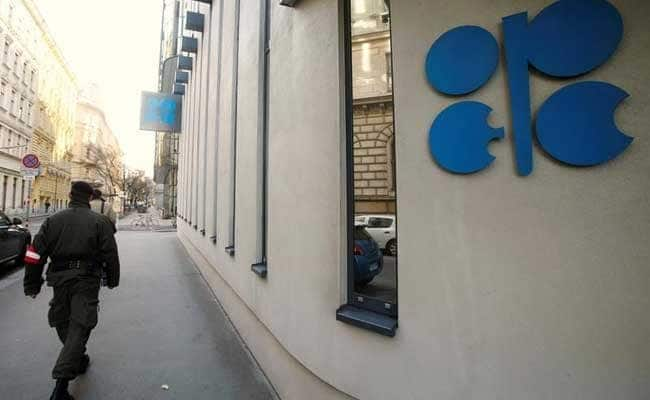
Vienna: OPEC decided on Thursday to extend cuts in oil output by nine months to March 2018, OPEC delegates said, as the producer group battles a global glut of crude after seeing prices halve and revenues drop sharply in the past three years.
The cuts are likely to be shared again by a dozen non-members led by top oil producer Russia, which reduced output in tandem with the Organization of the Petroleum Exporting Countries from January.
OPEC's cuts have helped push oil back above $50 a barrel this year, giving a fiscal boost to producers, many of which rely heavily on energy revenues and have had to burn through foreign-currency reserves to plug holes in their budgets.
Oil's earlier price decline, which started in 2014, forced Russia and Saudi Arabia to tighten their belts and led to unrest in some producing countries including Venezuela and Nigeria.
The price rise this year has spurred growth in the U.S. shale industry, which is not participating in the output deal, thus slowing the market's rebalancing with global crude stocks still near record highs.
By 1050 GMT, Brent crude had fallen 1.5 percent to around $53 per barrel as market bulls were disappointed OPEC would not deepen the cuts or extend them by as long as 12 months.
OPEC oil ministers were continuing their discussions in Vienna. Non-OPEC producers were scheduled to meet OPEC later in the day.
In December, OPEC agreed its first production cuts in a decade and the first joint cuts with non-OPEC, led by Russia, in 15 years. The two sides decided to remove about 1.8 million barrels per day from the market in the first half of 2017, equal to 2 percent of global production.
Despite the output cut, OPEC kept exports fairly stable in the first half of 2017 as its members sold oil from stocks.
The move kept global oil stockpiles near record highs, forcing OPEC first to suggest extending cuts by six months, but later proposing to prolong them by nine months and Russia offering an unusually long duration of 12 months.
"There have been suggestions (of deeper cuts), many member countries have indicated flexibility but ... that won't be necessary," Saudi Energy Minister Khalid al-Falih said before the meeting.
He added that OPEC members Nigeria and Libya would still be excluded from cuts as their output remained curbed by unrest.
Falih also said Saudi oil exports were set to decline steeply from June, thus helping to speed up market rebalancing.
OPEC sources have said the Thursday meeting will highlight a need for long-term cooperation with non-OPEC producers.
The group could also send a message to the market that it will seek to curtail its oil exports.
"Russia has an upcoming election and Saudis have the Aramco share listing next year so they will indeed do whatever it takes to support oil prices," said Gary Ross, head of global oil at PIRA Energy, a unit of S&P Global Platts.
OPEC has a self-imposed goal of bringing stocks down from a record high of 3 billion barrels to their five-year average of 2.7 billion.
"We have seen a substantial drawdown in inventories that will be accelerated," Falih said. "Then, the fourth quarter will get us to where we want."
(This story has not been edited by NDTV staff and is auto-generated from a syndicated feed.)

-
Talking Points This Week: Tech Nerves, FII Buying, And A Faraway Banking Shock

The global markets are not shining this Diwali. The exception in the large markets is, India.
-
Midterm Rally Lasted A Day. The Hard Reality Of A Divided US May Last Two Years | Opinion
Between a contested AI boom, a debt ceiling that arrives in 2027 and a president with every incentive to act alone, the next two years may prove more volatile than the first day's rally suggests.
-
Blue Wave Will Derail the AI Trade but Won't Dismantle the AI Era | Unhedged Position
The Democrats' sweep of the US Congress will see politics collide with economic forces both over the long and short term.
-
It's Time To Take The GST Council's Bet On Trust Global
Payment records can prove India's services exports, and clear, proportionate rules can bring foreign digital sellers into the tax net.
-
Opinion | India at 38: From Innovation Overperformer to Innovation Powerhouse
India now has 453 VC-backed deep science startups, 18 of them late-stage, after 117 percent growth since 2020. Laurus Labs, at USD 9.3 billion, is the most valuable deep science company in any middle-income economy outside China.
-
Navigating Energy Crossroads: S Jaishankar's Call For Diversified Supply Chains At G20 Ministerial Meeting
As geopolitical fault lines continue to test maritime trade routes and commodity flows, Jaishankar's message remains pertinent: true economic resilience requires open markets, protected transit lines, and a genuine commitment to multilateral cooperation rather than coercion.
-
Indians Are Travelling, But Not Every Journey Is A Holiday | The Week In Whys
Pilgrims, patients and working women are the real travellers, and the system hasn't quite caught up with them.
-
Getting To Work Costs Women More | The Reason Why
It is not just about women paying more than men. It is about women paying much more in cities than in villages.
-
AI Bias In Investing Cannot Be Eliminated, But It Can Be Governed
Framing is a particularly important example as identical financial information presented in terms of gains rather than losses can lead an LLM to reach a different assessment.