OPEC+ Considers Large Production Cut, Sparking Pushback From U.S.
(Bloomberg) --
OPEC+ is considering its biggest production cut since 2020, a move Washington is trying to head off with furious diplomatic efforts.
The group is set to discuss a cut to its output limits of as much as 2 million barrels a day, using current targets as a starting point. While a significant reduction, the actual impact on global supply would be smaller because several countries are already pumping below their quotas.
US officials are making calls to counterparts in the Gulf trying to push back against the move, according to people familiar with the situation.
OPEC+ is also considering smaller curbs of 1 million to 1.5 million barrels a day, delegates said. Even a cut on that scale would be a blow to a global economy that is already suffering historic inflation shocks. Washington is looking at potential responses, as President Joe Biden tries to tame pump prices ahead of mid-term elections in November.
“It is hard to overstate how anxious the Biden administration is about a potential resurgence in oil prices,” Bob McNally, founder of Rapidan Energy, said in Vienna. “A large OPEC+ cut would antagonize the White House, though officials may wait to see how prices respond afterward before pulling the trigger on policy responses.”
It's a particular blow for Biden after his visit to Saudi Arabia earlier this year in search of a new oil deal. And it underscores the strains in the US-Saudi relationship, set against the enduring strength of the kingdom's ties with Moscow despite the war. Russia's Deputy Prime Minister Alexander Novak is due to attend the meeting in Austria, adding to the diplomatic angst.
In Vienna, there was little sign the US pressure was working. United Arab Emirates Energy Minister Suhail Al Mazrouei insisted the decision was “technical.”
“It's very important that it remains as a technical decision and it's not political,” he told reporters. “That's why it's important to look at technical side of the equation and look at any concerns regarding the economy and the status of the economy.”
US Response
Already, White House officials have asked the US Energy Department to analyze whether a ban on exports of gasoline, diesel and other refined petroleum products would lower prices, Bloomberg reported on Tuesday. It's a controversial idea but one that's gaining traction in some corners of the Biden administration.
As OPEC+ ministers meet in Vienna, European and US leaders are working to curb the revenues that Moscow receives from oil to try to weaken President Vladimir Putin's war machine. The EU approved a new sanctions package that will severely curtail Russia's ability to sell crude, while the US is working with allies to implement a price cap on Russian oil.
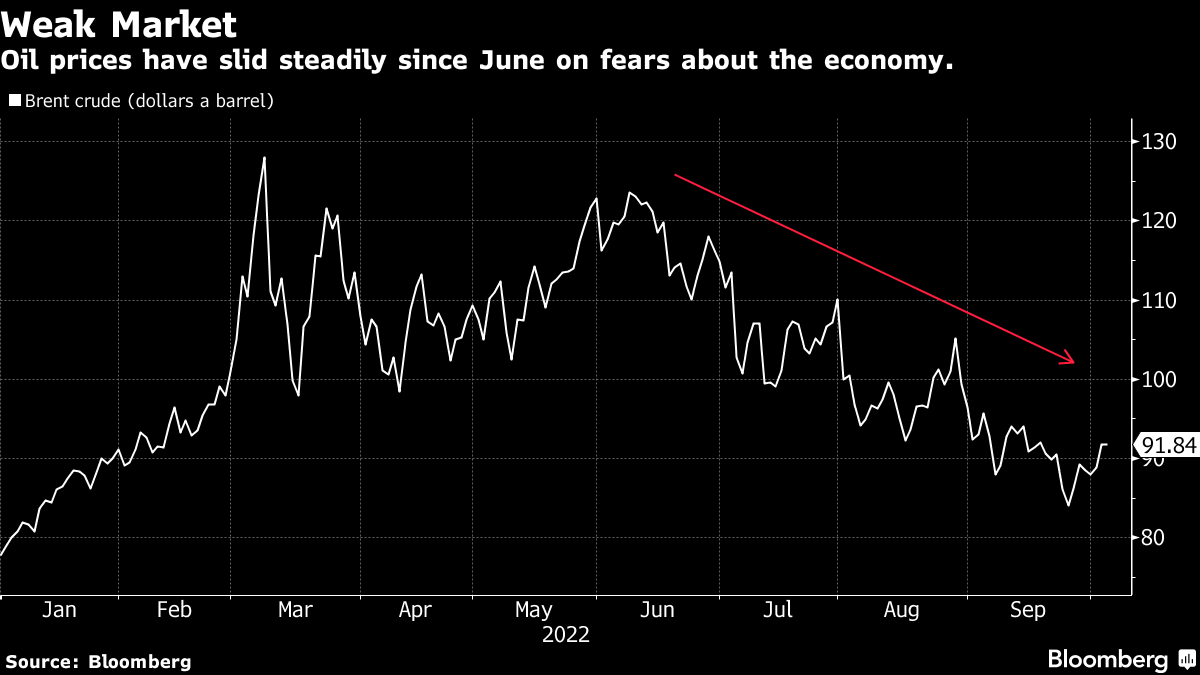
Oil futures, which jumped on Tuesday as the scale of the cuts being discussed emerged, eased 0.5% on Wednesday.
The US may also consider resorting again to using its Strategic Petroleum Reserve to tame prices, according to some analysts.
“The move from OPEC+ could trigger US countermeasures, including the additional releases from the Strategic Petroleum Reserve,” JP Morgan analysts said in a note.
A massive cut would reflect the group's concerns about the global slowdown and its impact on demand. But in reality the impact on the market would be less than the headline number. That's because several members are already pumping far below their official quotas, meaning they could automatically be in compliance with their new limit without having to curb production. Still, it would be the cartel's largest reduction since the deep cuts agreed at the outset of the Covid-19 pandemic in 2020.
“This is an important meeting,” United Arab Emirates Energy Minister Suhail Al Mazrouei told reporters in Vienna on Wednesday.
(adds minister comment)
More stories like this are available on bloomberg.com
©2022 Bloomberg L.P.

-
Love, Sex Aur Dhokha: The Audacious Plot To Spy On Jensen Huang

A Taipei dinner, a Singapore chip buyer and a suspected Chinese asset: inside the alleged spy operation that got close to NVIDIA's Jensen Huang.
-
Ten Things I Learnt This Samvat
Patience can be a trap. Cheap stocks can stay cheap. Leverage can wipe you out. What did Samvat 2082 teach us? Niraj Shah writes on 10 lessons from the year gone by.
-
Talking Points This Week: Tech Nerves, FII Buying, And A Faraway Banking Shock
The global markets are not shining this Diwali. The exception in the large markets is, India.
-
Midterm Rally Lasted A Day. The Hard Reality Of A Divided US May Last Two Years | Opinion
Between a contested AI boom, a debt ceiling that arrives in 2027 and a president with every incentive to act alone, the next two years may prove more volatile than the first day's rally suggests.
-
Blue Wave Will Derail the AI Trade but Won't Dismantle the AI Era | Unhedged Position
The Democrats' sweep of the US Congress will see politics collide with economic forces both over the long and short term.
-
It's Time To Take The GST Council's Bet On Trust Global
Payment records can prove India's services exports, and clear, proportionate rules can bring foreign digital sellers into the tax net.
-
Opinion | India at 38: From Innovation Overperformer to Innovation Powerhouse
India now has 453 VC-backed deep science startups, 18 of them late-stage, after 117 percent growth since 2020. Laurus Labs, at USD 9.3 billion, is the most valuable deep science company in any middle-income economy outside China.
-
Navigating Energy Crossroads: S Jaishankar's Call For Diversified Supply Chains At G20 Ministerial Meeting
As geopolitical fault lines continue to test maritime trade routes and commodity flows, Jaishankar's message remains pertinent: true economic resilience requires open markets, protected transit lines, and a genuine commitment to multilateral cooperation rather than coercion.
-
Indians Are Travelling, But Not Every Journey Is A Holiday | The Week In Whys
Pilgrims, patients and working women are the real travellers, and the system hasn't quite caught up with them.









